

This jacket potato recipe gives you crackly, salted skin and a light, fluffy centre every time. It includes five crowd-pleasing topping ideas, clear oven and air-fryer instructions, and simple fixes for the most common baked-potato problems. Whether you call it a jacket potato or a baked potato, this is inexpensive British comfort food at its best.
Why this jacket potato recipe works
The best jacket potatoes need two contrasting textures: a dry, crisp shell and a steaming, fluffy middle. The method is simple. Choose a floury potato, dry it well, prick it, rub it with oil and salt, then bake it directly on the oven rack at high heat. Foil traps steam, so leave it off when crisp skin is the goal.
- High heat: 220°C/200°C fan browns and crisps the skin.
- Floury potatoes: Maris Piper, King Edward and Russet varieties produce a lighter centre than waxy potatoes.
- Oil and salt: a thin coating makes the jacket savoury and crisp.
- A quick fluff: split the potato as soon as it is cooked, squeeze the ends gently and loosen the inside with a fork.
Jacket potato ingredients
Serves 4 | Prep: 10 minutes | Cook: 60–75 minutes
- 4 large floury baking potatoes, about 275–350g each
- 2 teaspoons vegetable or olive oil
- 1 teaspoon flaky or coarse salt
- 30g butter, optional
- Black pepper, to taste
How to make the perfect jacket potato
- Heat the oven. Preheat to 220°C/200°C fan/gas 7. Put a baking tray on the lower shelf to catch any drips.
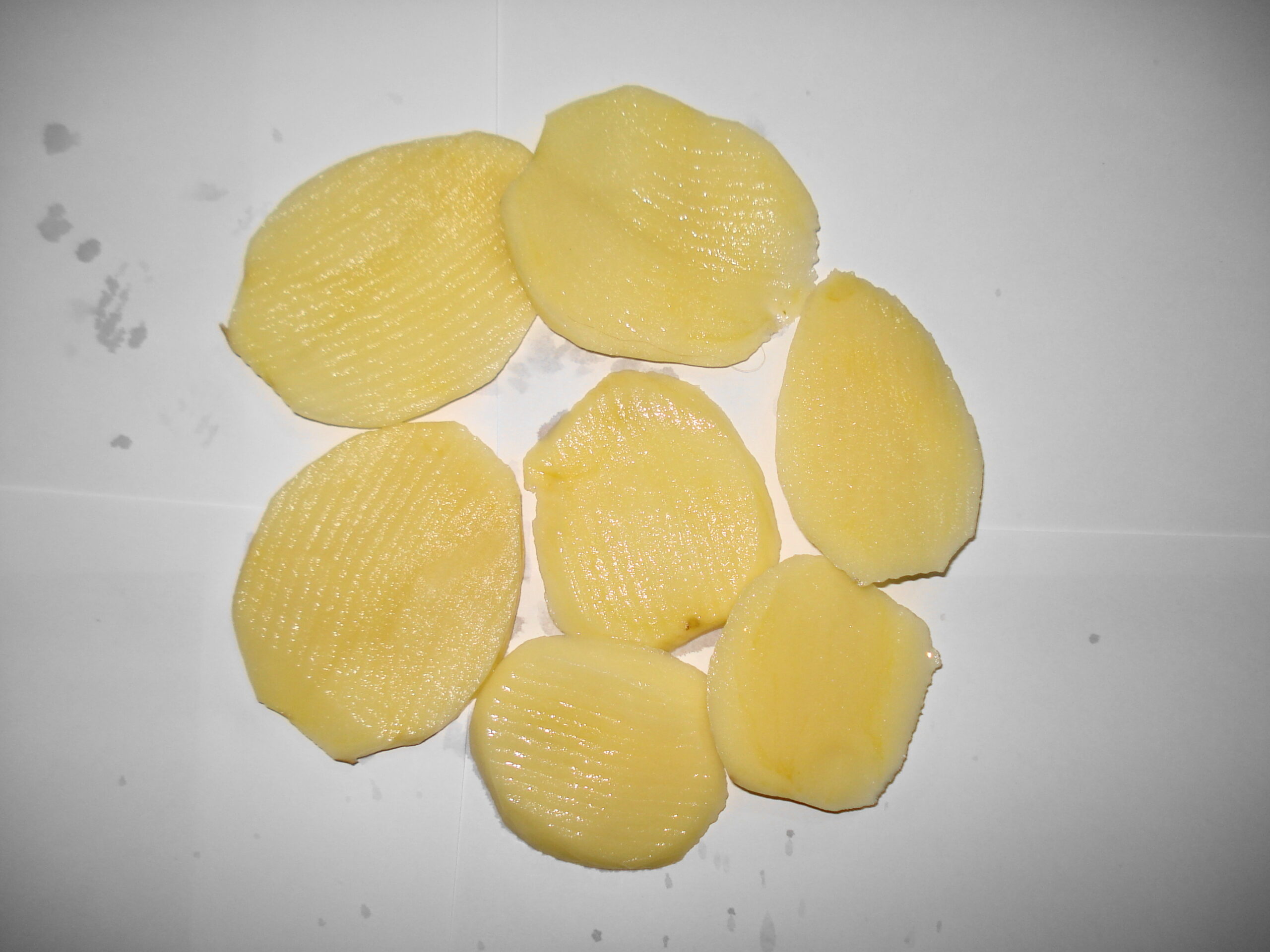
- Prepare the potatoes. Scrub the skins under cold water, cut away any damaged spots and dry thoroughly. Prick each potato 6–8 times with a fork.
- Season. Rub each potato with a little oil, then sprinkle all over with salt.
- Bake directly on the rack. Place the potatoes on the middle oven rack. Bake for 60–75 minutes, turning once after 40 minutes. Very large potatoes may need 80–90 minutes.
- Test for doneness. The skin should feel crisp and the centre should yield when squeezed with an oven glove. A skewer should slide through without resistance. If using a thermometer, the centre should be about 96–99°C.
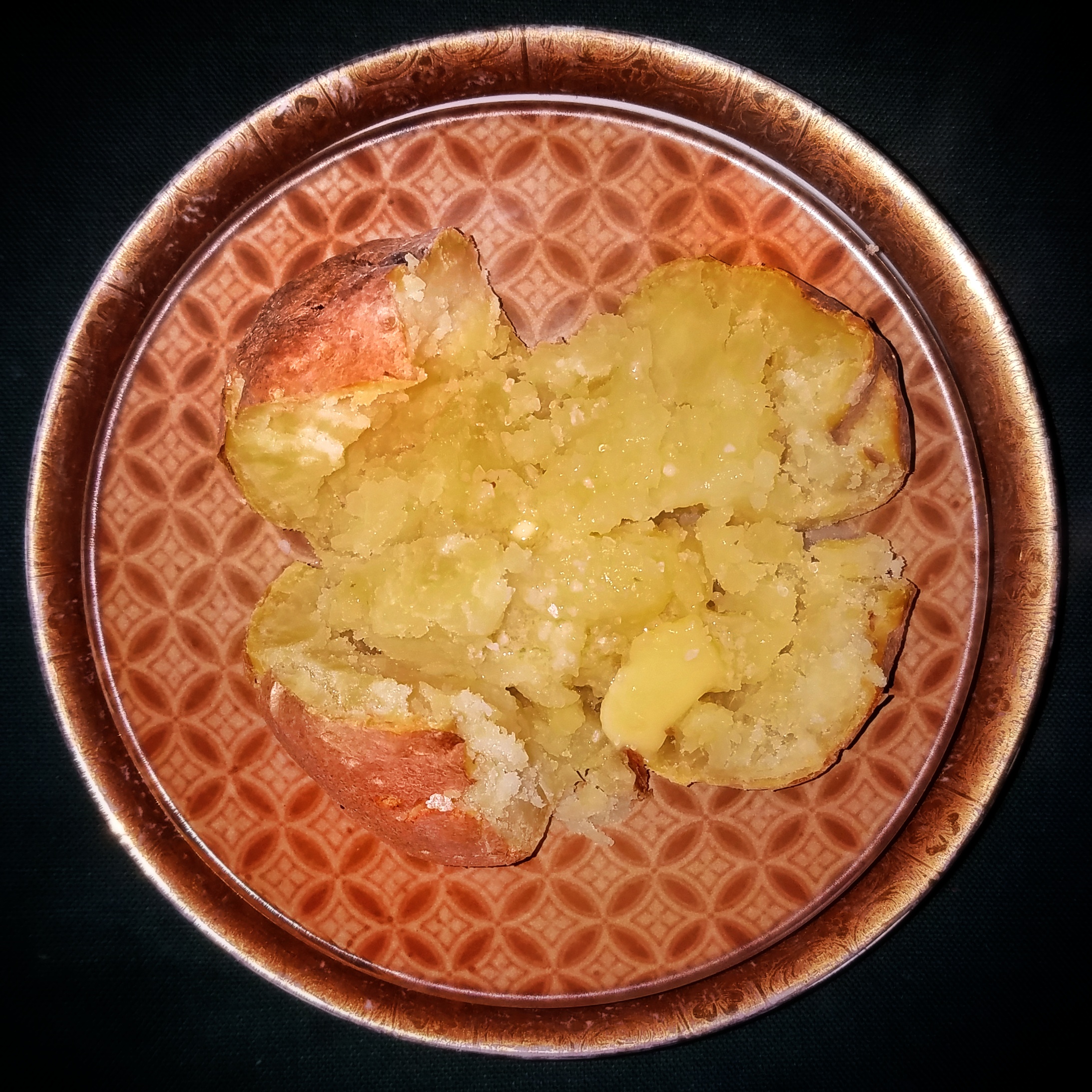
- Split and fluff immediately. Cut a deep cross in the top. Squeeze the sides carefully, add butter and black pepper, then fluff with a fork before adding your chosen topping.
Five loaded jacket potato toppings
1. Beans and Cheddar
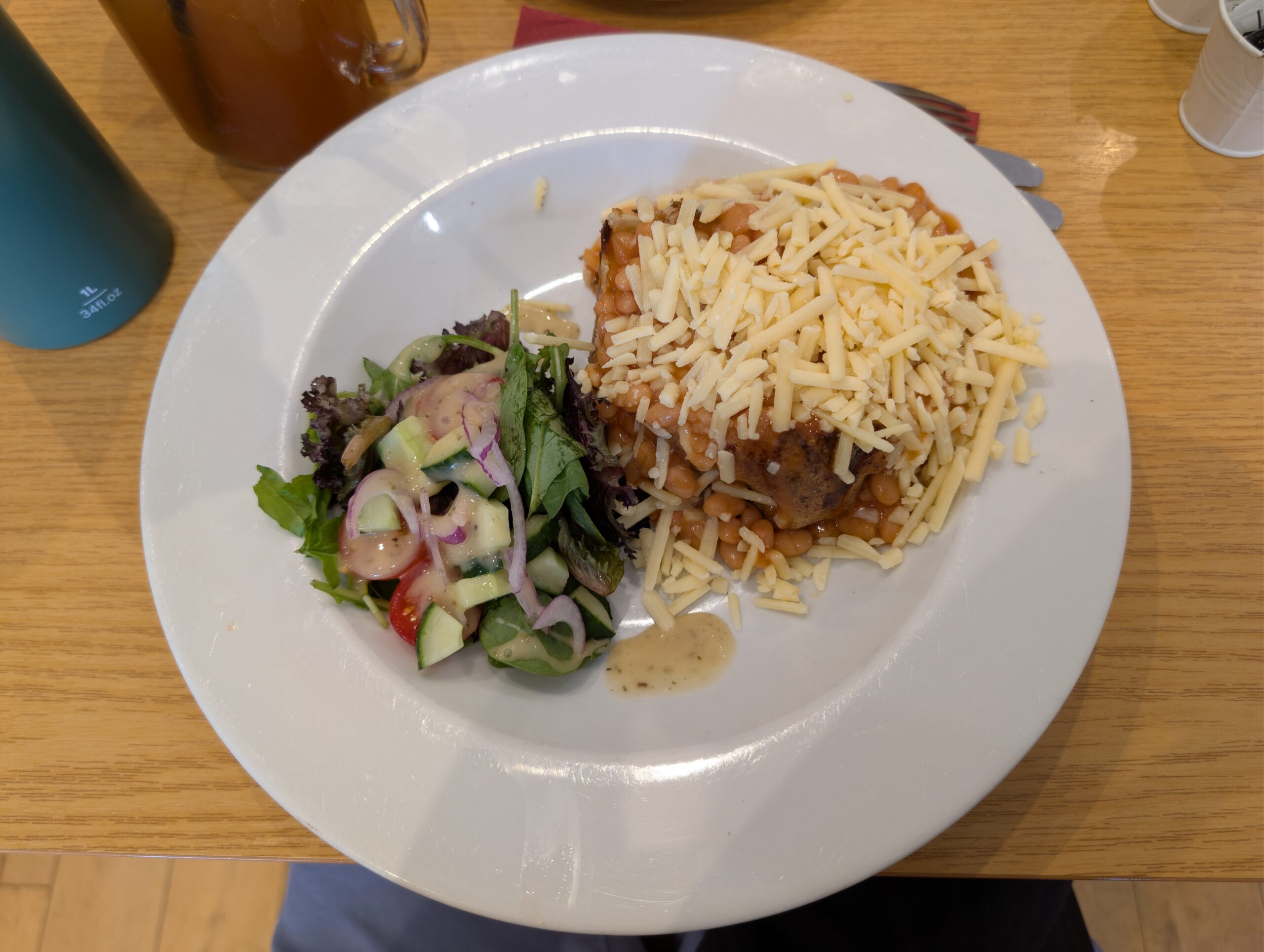
Warm 400g baked beans until piping hot. Spoon over four split potatoes and finish with 100g grated mature Cheddar. Add sliced spring onion or a pinch of smoked paprika. It is the classic British jacket potato topping and a reliable family dinner.
2. Tuna, sweetcorn and mayo
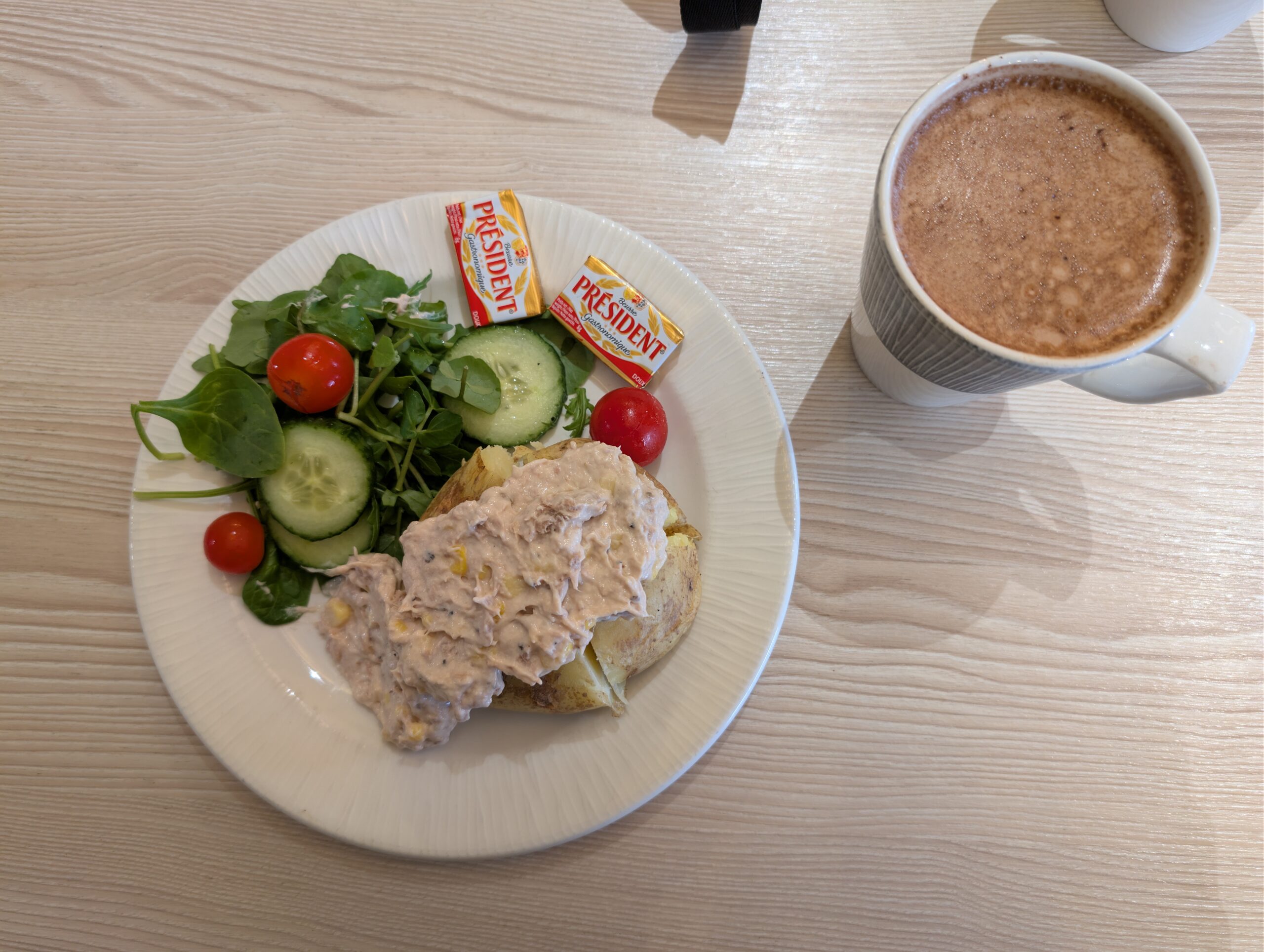
Drain two 145g tins of tuna and mix with 150g drained sweetcorn, 4 tablespoons mayonnaise, 1 tablespoon lemon juice and black pepper. Divide among the potatoes. Add chopped chives or grated Cheddar if you like.
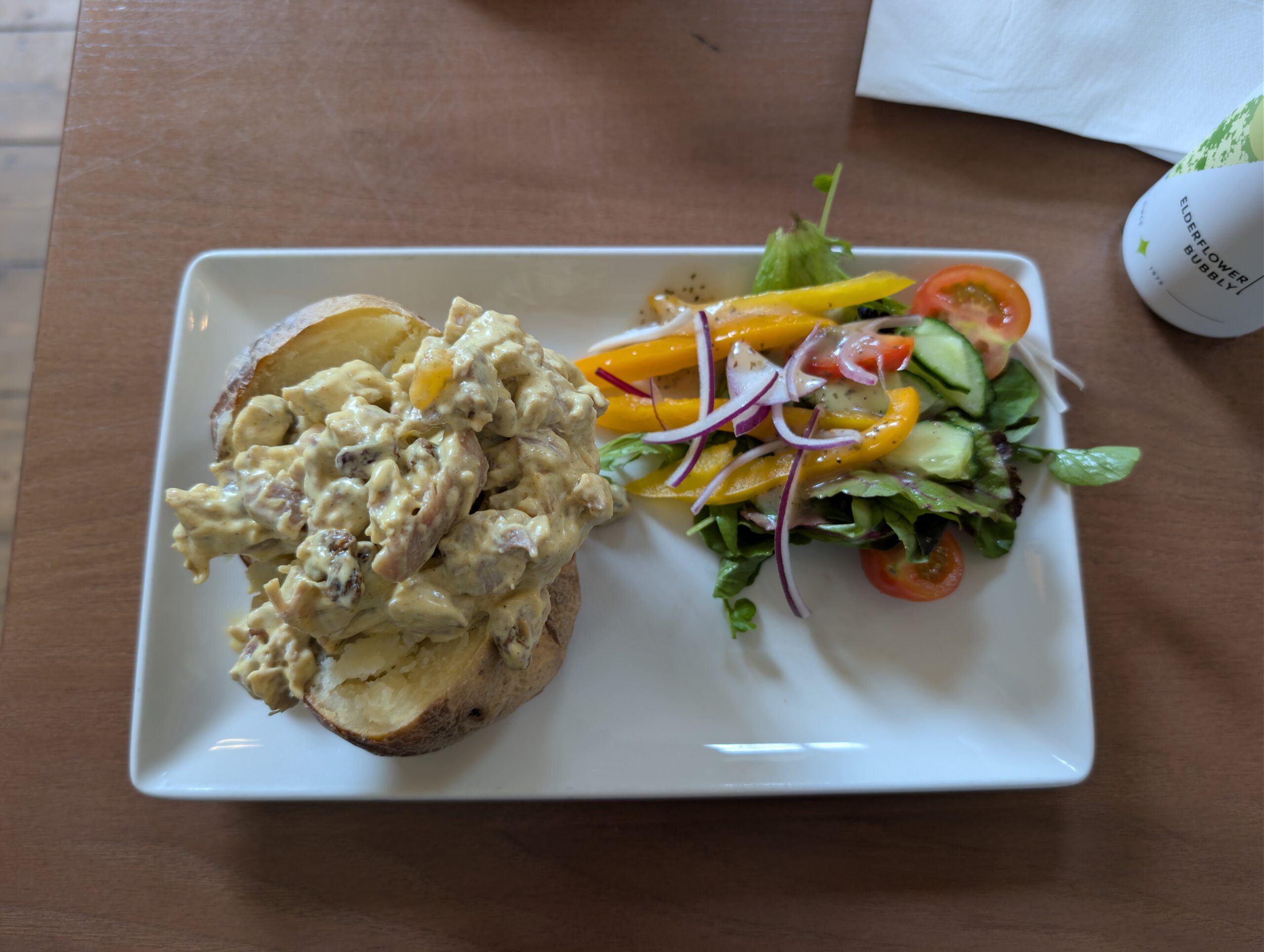
3. Coronation-style chicken
Mix 300g cooked shredded chicken with 5 tablespoons Greek yoghurt or mayonnaise, 1½ teaspoons mild curry powder, 1 tablespoon mango chutney and 2 tablespoons sultanas. Add lemon juice to taste. This is also a smart way to use leftover roast chicken. For another creamy chicken dinner, see our easy butter chicken recipe.
4. Creamy garlic mushrooms
Slice 300g mushrooms. Fry in 1 tablespoon oil over medium-high heat for 6–8 minutes until browned. Add 1 crushed garlic clove, cook for 30 seconds, then stir in 80g crème fraîche and a handful of spinach. Season and spoon over the potatoes. Browse more ideas in our vegetarian and vegan recipes.
5. Speedy chickpea curry
Fry 1 chopped onion in 1 tablespoon oil until soft. Stir in 2 teaspoons curry powder, a drained 400g tin of chickpeas and 250g passata. Simmer for 10 minutes, season, then finish with coriander. This inexpensive topping pairs well with a spoonful of yoghurt and fits neatly into a quick and easy dinner.
Air-fryer jacket potato method
Prepare and season the potatoes as above. Air fry at 200°C for 45–60 minutes, turning every 20 minutes. Cooking time depends on potato size and air-fryer model. Cook in a single layer with space for air to circulate. For faster results, microwave the pricked potatoes for 6–8 minutes first, turn halfway, then air fry at 200°C for 15–20 minutes to crisp the skins.
Microwave then oven method
Short on time? Microwave four pricked potatoes on a microwave-safe plate for 10–14 minutes, turning halfway. Transfer them carefully to a 220°C/200°C fan oven, rub with oil and salt, then bake for 20–25 minutes. The skin will be much better than a microwave-only potato, although the traditional oven method produces the driest, crispiest result.
Expert tips for crispy jacket potatoes
- Do not wrap them in foil. Foil steams the skin and keeps it soft.
- Dry after washing. Surface moisture slows browning.
- Use similar sizes. The potatoes will cook at roughly the same rate.
- Do not crowd the rack. Leave space around each potato for hot air.
- Open them straight away. A cooked potato left closed continues to steam and can become dense.
- Re-crisp when needed. Return a soft-skinned potato to the oven for 10 minutes at 220°C/200°C fan.
What to serve with jacket potatoes
A loaded potato can be a complete meal, but a crisp green salad, coleslaw, steamed broccoli or roasted vegetables balances the plate. Our collection of easy vegetable side dishes has more options. If you are planning a British comfort-food night, our crispy fish and chips recipe is another favourite.
Storage and reheating
Cool leftover baked potatoes within two hours and refrigerate them in a covered container for up to 3 days. Store wet toppings separately when possible. Reheat potatoes in a 200°C/180°C fan oven for 20–25 minutes or in an air fryer at 190°C for 8–12 minutes, until piping hot throughout. The microwave is faster but softens the skin. Do not reheat a potato more than once.
Plain baked potatoes can be frozen for up to 3 months, though the texture will be slightly softer after thawing. Cool completely, wrap well, freeze, then thaw in the fridge before reheating in the oven.
Jacket potato recipe FAQs
How long does a jacket potato take in the oven?
A 275–350g potato usually takes 60–75 minutes at 220°C/200°C fan. Very large potatoes may need up to 90 minutes.
Which potatoes are best for jacket potatoes?
Floury varieties such as Maris Piper, King Edward and Russet give the fluffiest centre. Waxy potatoes hold their shape but can feel heavier inside.
Should I prick potatoes before baking?
Yes. A few fork holes let steam escape and reduce the small risk of a potato splitting in the oven.
Why is my jacket potato hard in the middle?
It needs more time. Return it to the oven in 10-minute intervals. Potatoes vary in size, density and starting temperature, so use texture rather than the clock alone.
Can I prepare jacket potatoes ahead?
Yes. Bake them, cool promptly and chill for up to 3 days. Reheat in the oven or air fryer for the best skin. Prepare cold toppings separately.
Printable-style recipe summary
Perfect crispy jacket potatoes
- Prep: 10 minutes
- Cook: 60–75 minutes
- Serves: 4
- Temperature: 220°C/200°C fan/gas 7
Scrub and dry four large floury potatoes. Prick, rub with 2 teaspoons oil and 1 teaspoon coarse salt, then bake directly on the rack for 60–75 minutes. Split immediately, fluff with a fork and add butter, seasoning and your favourite topping.
Image licences: all five photographs used in this article are available under the Creative Commons CC0 1.0 public-domain dedication via Wikimedia Commons.