

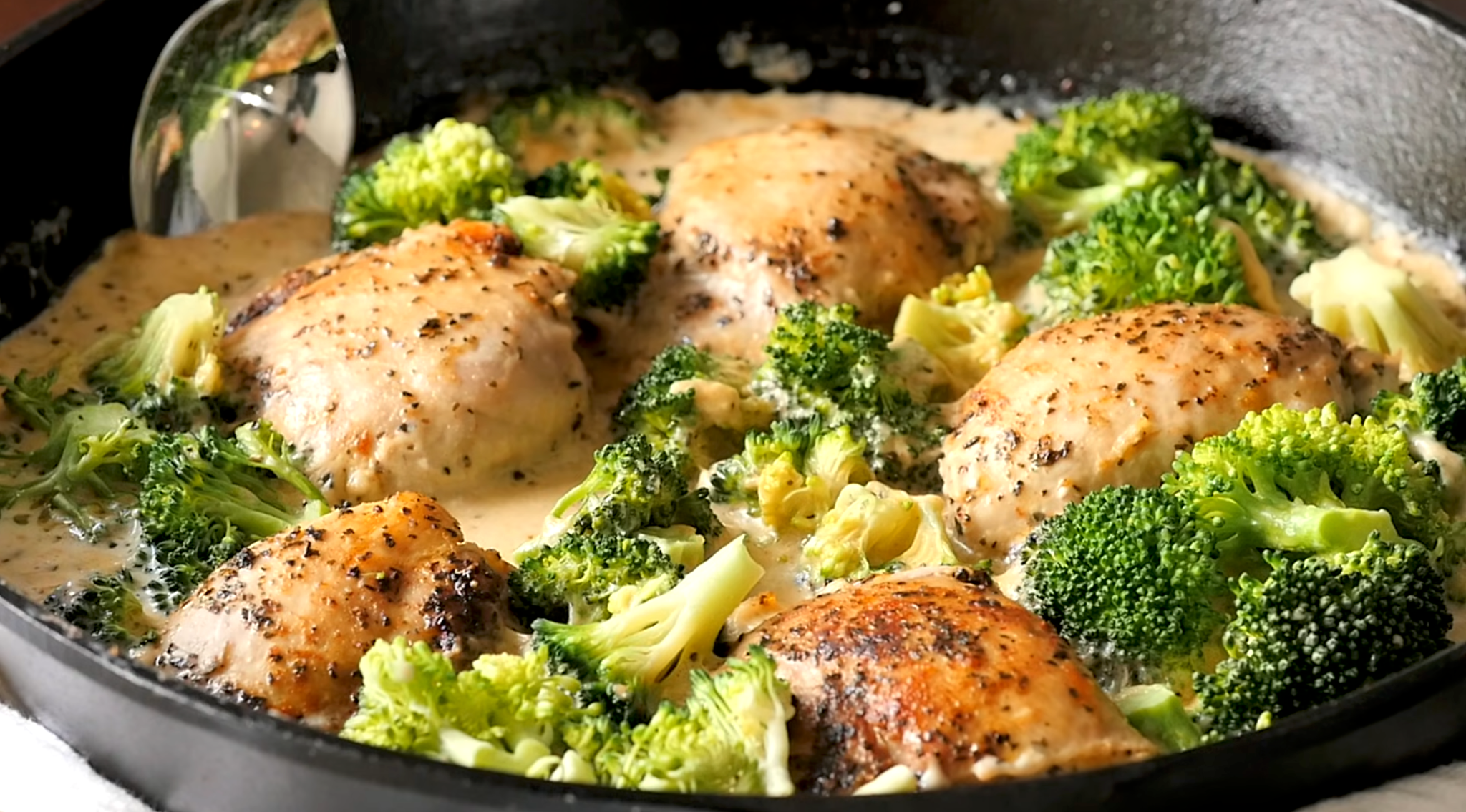
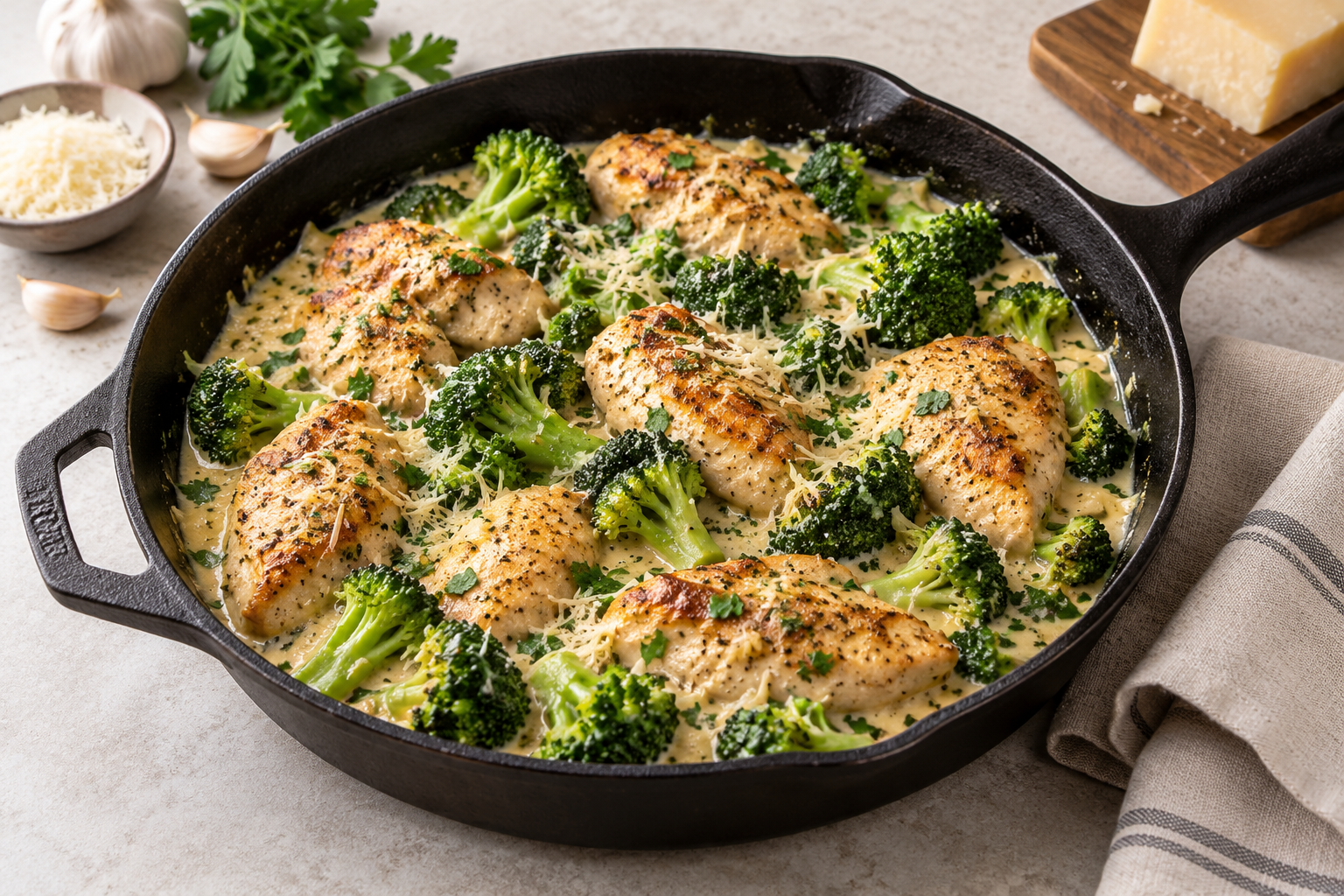
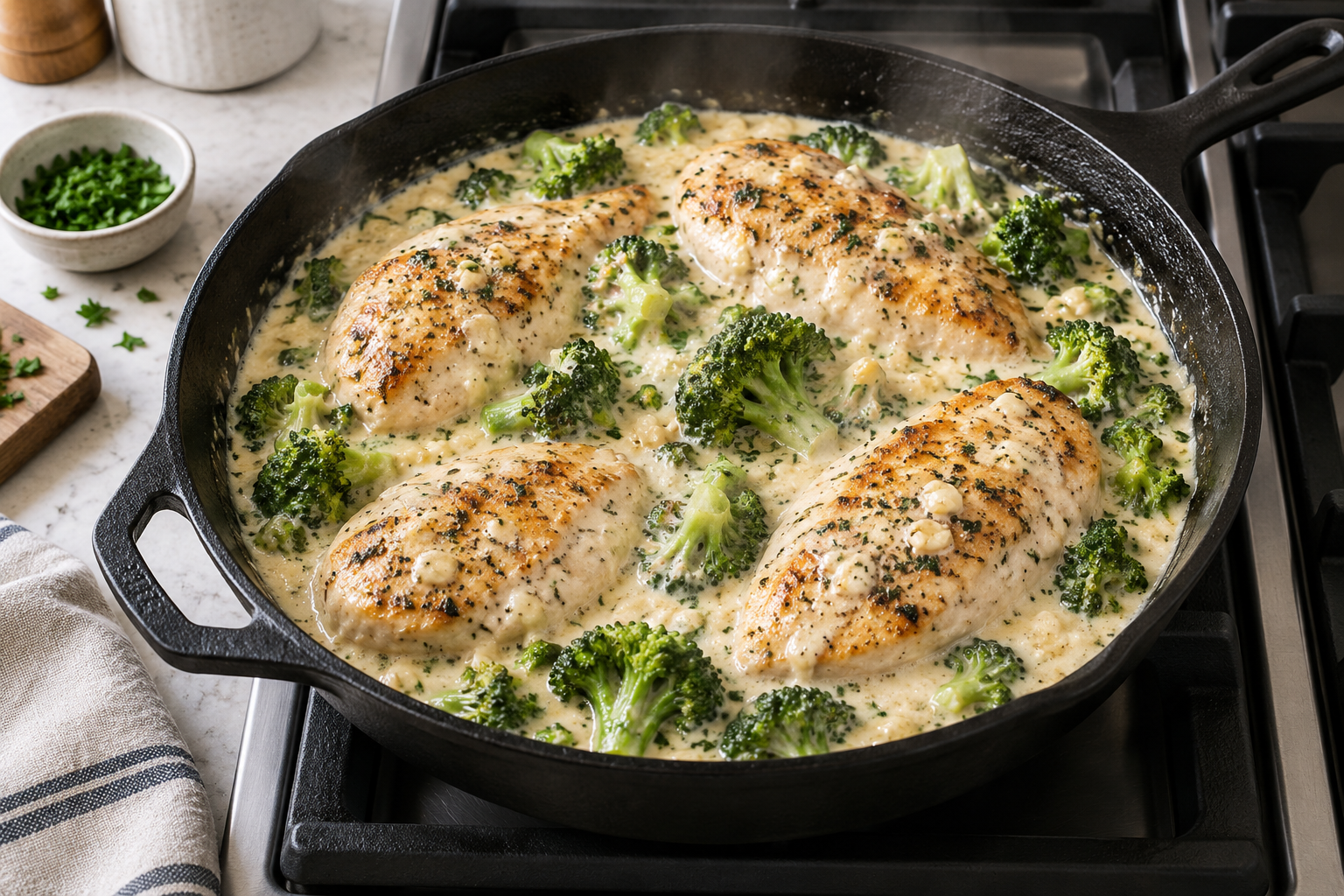
Creamy garlic Parmesan chicken and broccoli is a one-pan dinner made with golden chicken breast, fresh broccoli and a rich garlic cheese sauce. This version uses no wine, contains about 9 g of carbohydrate per serving and takes roughly 35 minutes from start to finish. It suits busy weeknights, low-carb meal plans and anyone who wants a complete chicken dinner without cooking several separate dishes.
The recipe uses everyday ingredients and one large frying pan. You sear the chicken first, make the sauce in the same pan, cook the broccoli until tender-crisp, then return the chicken to finish gently. Keeping each stage in the same pan preserves the browned flavour left by the chicken and reduces washing up.
This detailed guide covers ingredient choices, exact metric measurements, step-by-step photographs, keto serving ideas, meal-prep instructions, storage, reheating and common problems. If you want another protein-rich option for the week, try our high-protein overnight oats for breakfast or the air fryer chicken tenders for a crisp chicken dinner.
Why This Creamy Garlic Parmesan Chicken Recipe Works
- One-pan method: the chicken, sauce and broccoli all cook in the same large skillet.
- Ready in about 35 minutes: the method stays practical for weeknights.
- Low in carbohydrate: the recipe contains no flour, breadcrumbs, pasta or added sugar.
- High in protein: each generous serving provides approximately 62 g of protein.
- No wine or alcohol: chicken stock and lemon give the sauce balance.
- Fresh broccoli included: you get the main protein and vegetable in one dish.
- Meal-prep friendly: leftovers keep for up to three days and reheat well over gentle heat.
Recipe at a Glance
- Preparation time: 15 minutes
- Cooking time: 20 minutes
- Total time: 35 minutes
- Servings: 4
- Cooking method: one-pan skillet
- Main category: keto and low-carb
- Allergens: milk
Ingredients
Use a wide, heavy frying pan measuring about 28 to 30 cm across. The chicken needs room to brown rather than steam, and the broccoli needs enough surface area to cook evenly.
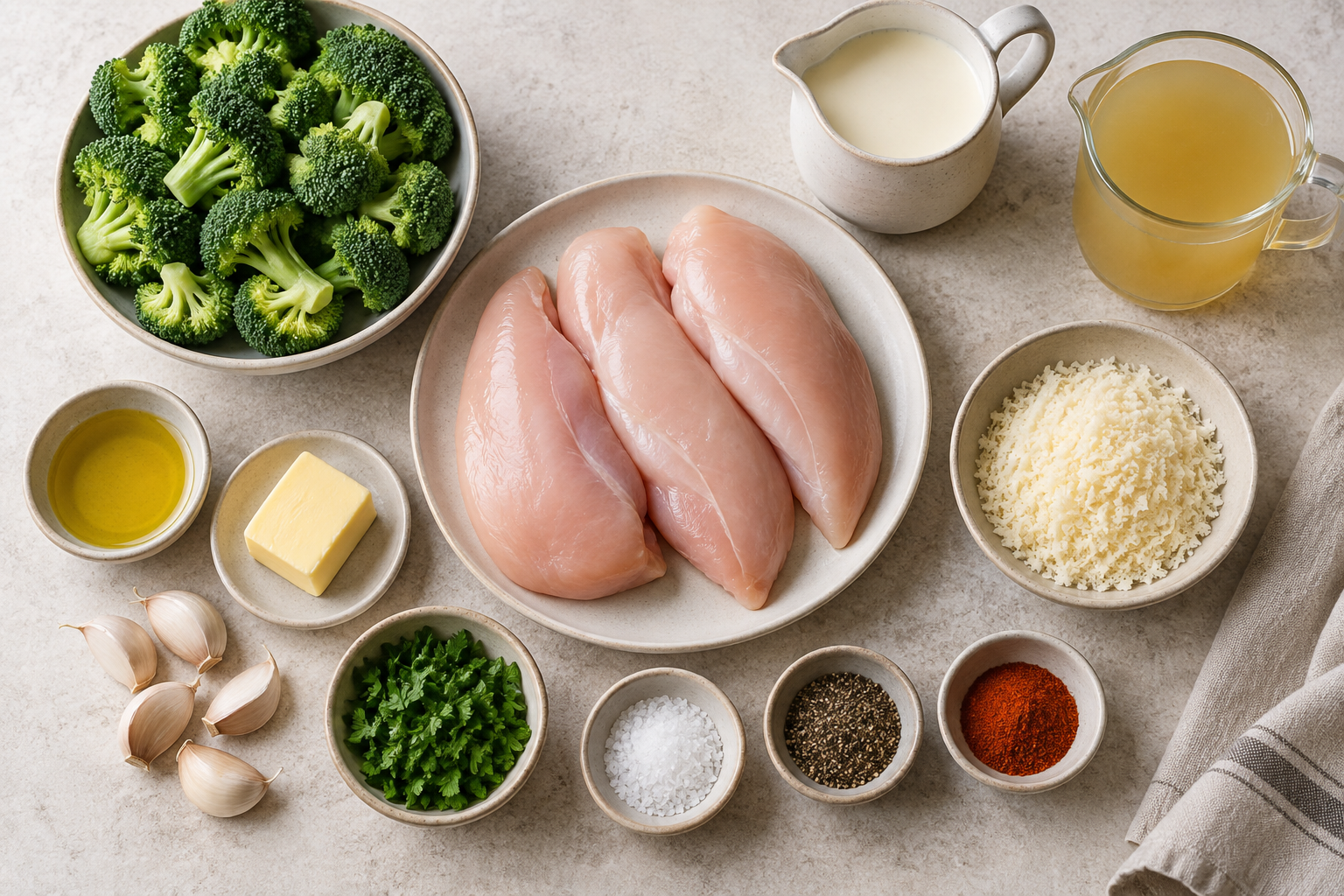
- 800 g skinless chicken breasts: about four medium breasts, sliced horizontally into cutlets if they are very thick.
- 500 g broccoli: cut into small, evenly sized florets. Peel and slice the tender part of the stalk rather than discarding it.
- 1 tablespoon olive oil: for searing the chicken.
- 20 g unsalted butter: adds flavour and carries the garlic through the sauce.
- 5 garlic cloves: finely chopped or grated. Use four for a milder result or six for a stronger garlic flavour.
- 200 ml chicken stock: choose a low-salt stock because Parmesan already contributes salt.
- 250 ml double cream: gives the sauce body without flour.
- 80 g Parmesan: finely grated from a block so it melts smoothly.
- 1 teaspoon paprika: gives the chicken light colour without making the dish hot.
- 1 teaspoon dried Italian herbs: oregano, basil and thyme work well.
- 1/2 teaspoon fine salt: start with less and adjust after adding the cheese.
- 1/2 teaspoon black pepper: freshly ground if possible.
- 1 tablespoon lemon juice: added at the end to balance the cream.
- 2 tablespoons chopped parsley: for a fresh finish.
Choosing the Chicken
Chicken breast keeps the meal high in protein and cooks quickly. Breasts vary greatly in thickness, so slice very large pieces horizontally to create even cutlets about 2 cm thick. Even thickness matters because a tapered edge can dry out before the centre reaches a safe temperature.
Boneless chicken thighs can replace breast. Use 800 g and allow a few extra minutes of cooking. Thighs contain more fat and remain juicy, but the finished nutrition will change. Do not use bone-in pieces for this quick method because the outside may overcook before the centre is ready.
Choosing Parmesan
Buy a wedge and grate it finely. Pre-grated cheese often contains anti-caking agents that can make a cream sauce grainy. True Parmesan has a firm, savoury flavour, so a modest amount goes a long way. A similar hard Italian-style cheese can be used if that is what you have.
Fresh or Frozen Broccoli
Fresh broccoli gives the best tender-crisp texture. Frozen florets also work, but thaw them and pat them dry first. Extra surface water can thin the sauce. Frozen broccoli is already partly softened, so add it later and simmer only until hot.
How to Make Creamy Garlic Parmesan Chicken and Broccoli
Step 1: Prepare the Chicken
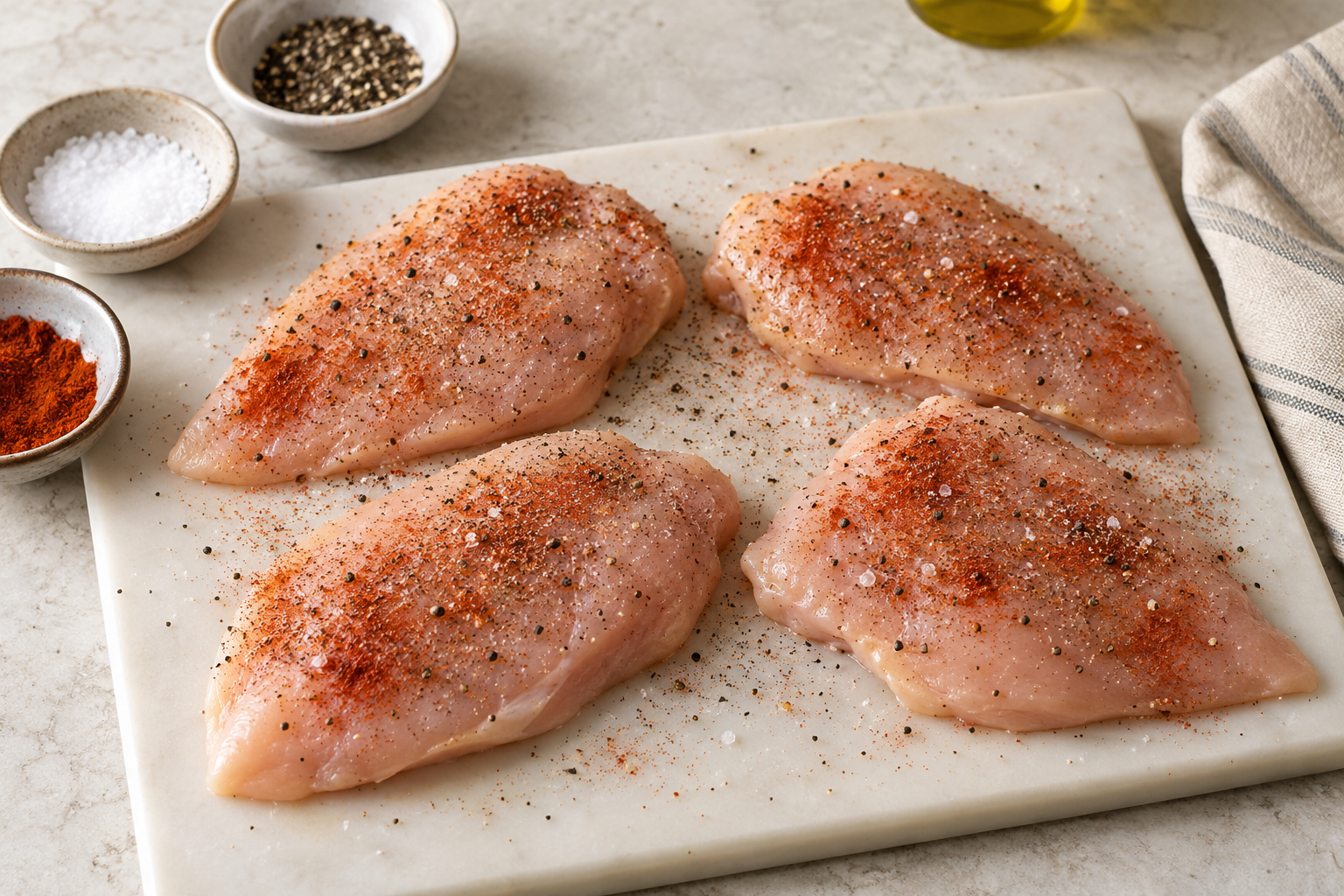
Place the chicken breasts on a clean board. If any piece is thicker than 2 cm, slice it horizontally into two cutlets or cover it with baking paper and gently flatten the thickest section. Pat every piece dry with kitchen paper. Moisture on the surface prevents proper browning.
Mix the paprika, dried herbs, salt and pepper. Sprinkle the seasoning over both sides of the chicken and press it lightly into the surface. Wash your hands, knife and board with hot soapy water before preparing other ingredients.
Step 2: Cut the Broccoli and Grate the Cheese
Cut the broccoli into florets measuring about 3 to 4 cm. Keep them similar in size so they soften at the same rate. Slice the peeled stalk into thin coins. Finely grate the Parmesan and chop the garlic before heating the pan because the sauce comes together quickly.
Step 3: Sear the Chicken
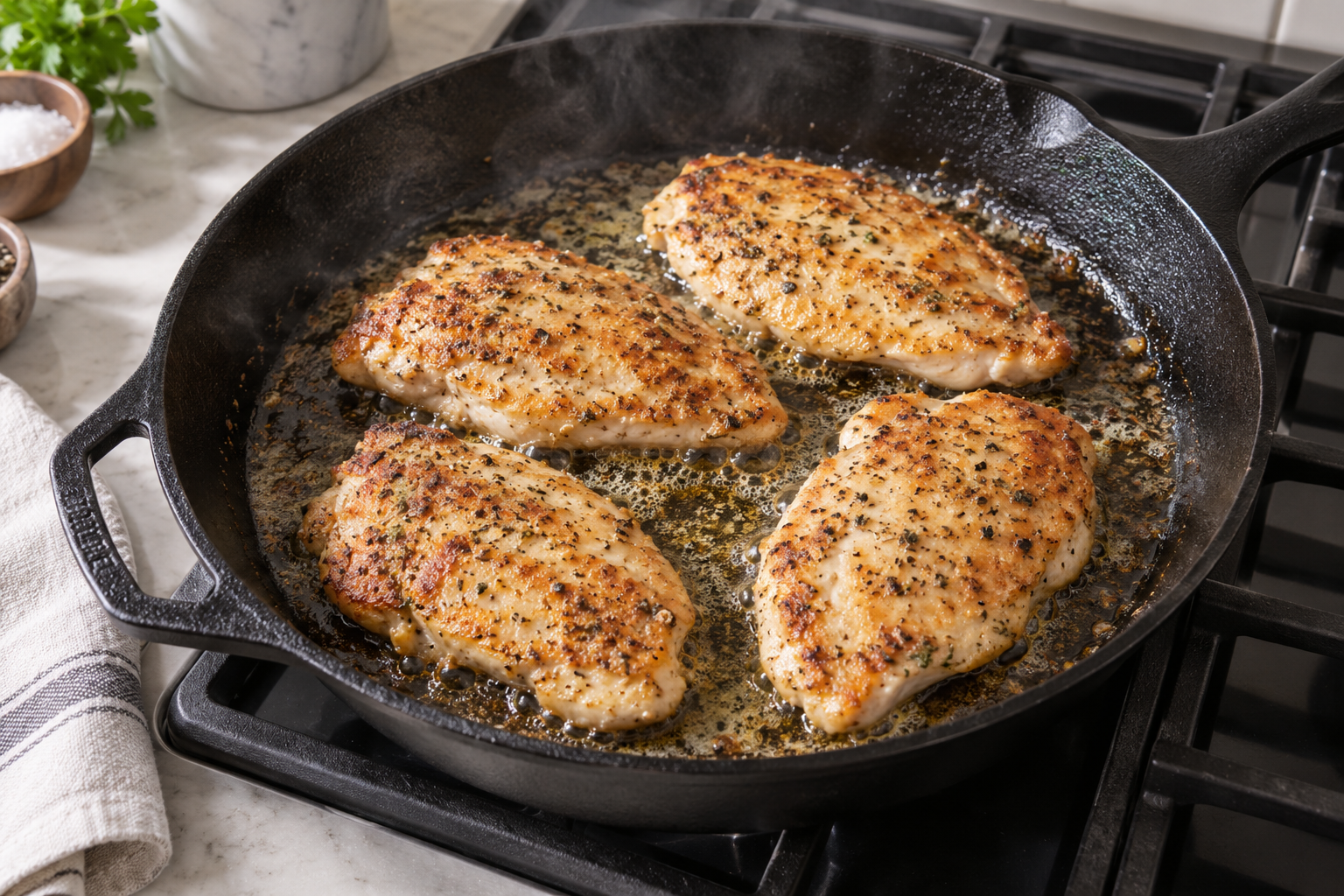
Heat the olive oil in a wide skillet over medium-high heat. Add the chicken in a single layer. If your pan is smaller, cook in two batches rather than crowding it. Leave the cutlets untouched for three to four minutes so a crust can form, then turn and cook the second side for two to three minutes.
The chicken does not need to be fully cooked at this stage. It will finish in the sauce. Transfer it to a clean plate when the outside is golden and the centre is still slightly underdone. Keep any resting juices because they can return to the sauce later.
Step 4: Cook the Garlic
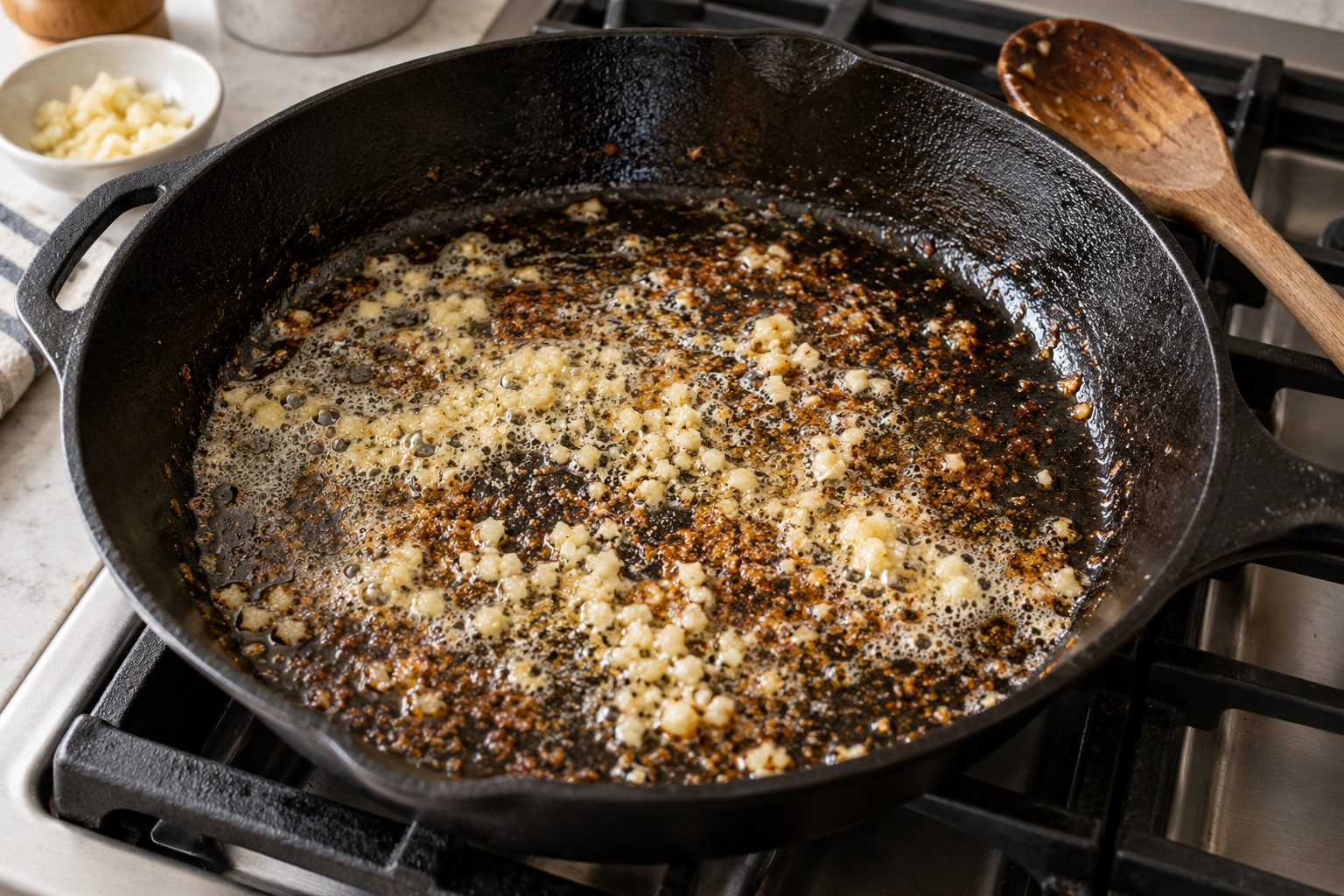
Reduce the heat to medium. Add the butter to the same pan. Once melted, add the chopped garlic and cook for 30 to 45 seconds while stirring. Garlic burns quickly, so do not walk away. It should smell fragrant but remain pale.
The brown patches on the pan are concentrated chicken flavour. The stock in the next step will loosen them. If any section is black rather than brown, carefully wipe only that burnt patch before continuing so it does not make the sauce bitter.
Step 5: Deglaze with Chicken Stock
Pour in the chicken stock. Use a wooden spoon to scrape the browned residue from the base of the pan. Simmer for two to three minutes, allowing the liquid to reduce by roughly one third. This concentrates the savoury flavour and prevents the final sauce from becoming watery.
Step 6: Make the Parmesan Cream Sauce
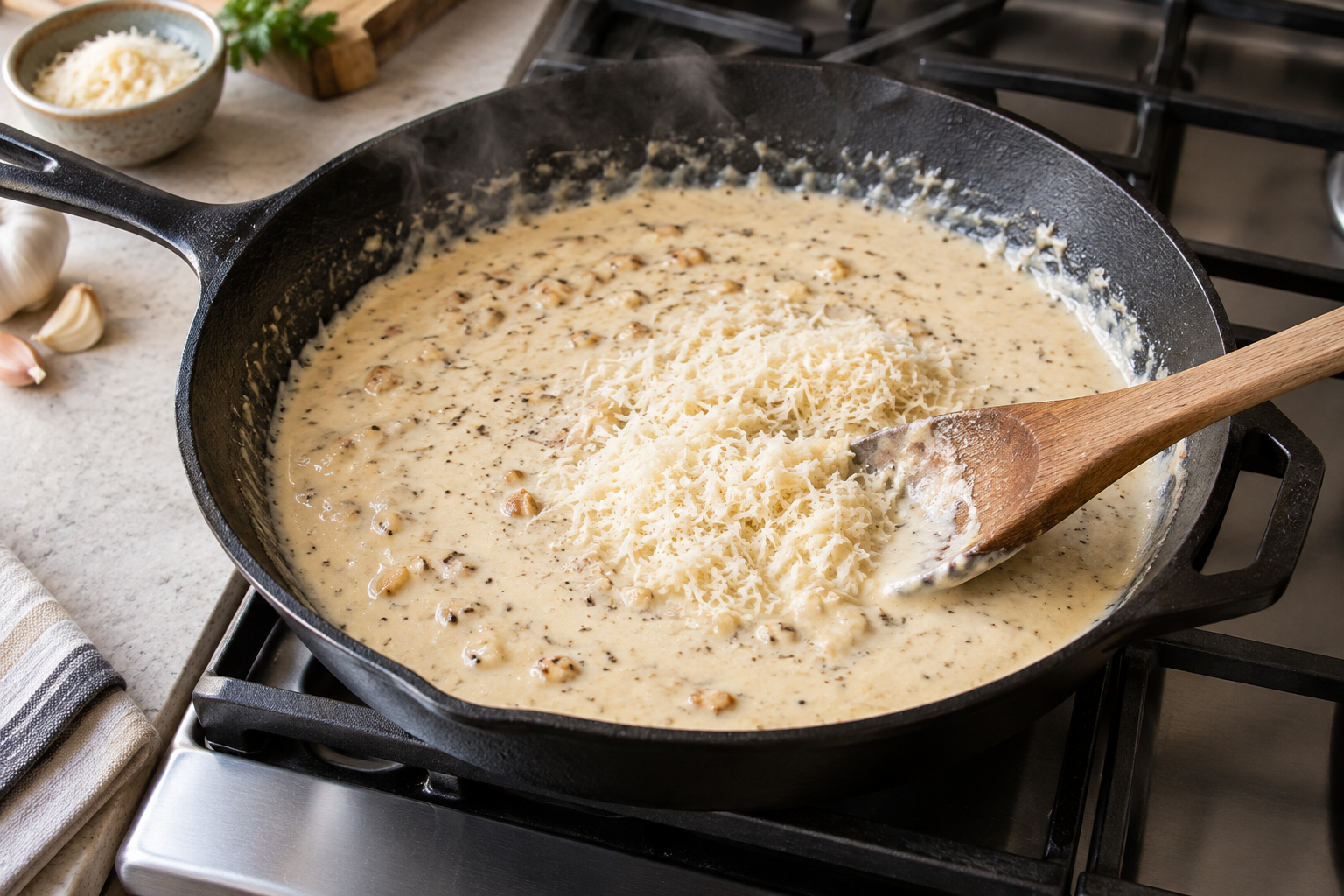
Turn the heat to low and pour in the double cream. Let it warm gently for two minutes, but do not allow it to boil rapidly. Add the Parmesan in three small additions, stirring until each portion melts before adding the next.
The sauce should lightly coat the back of a spoon. It will thicken further while the broccoli and chicken finish cooking. Taste before adding any more salt. Parmesan and stock can already be salty, so adjust only after they are fully incorporated.
Step 7: Add the Broccoli
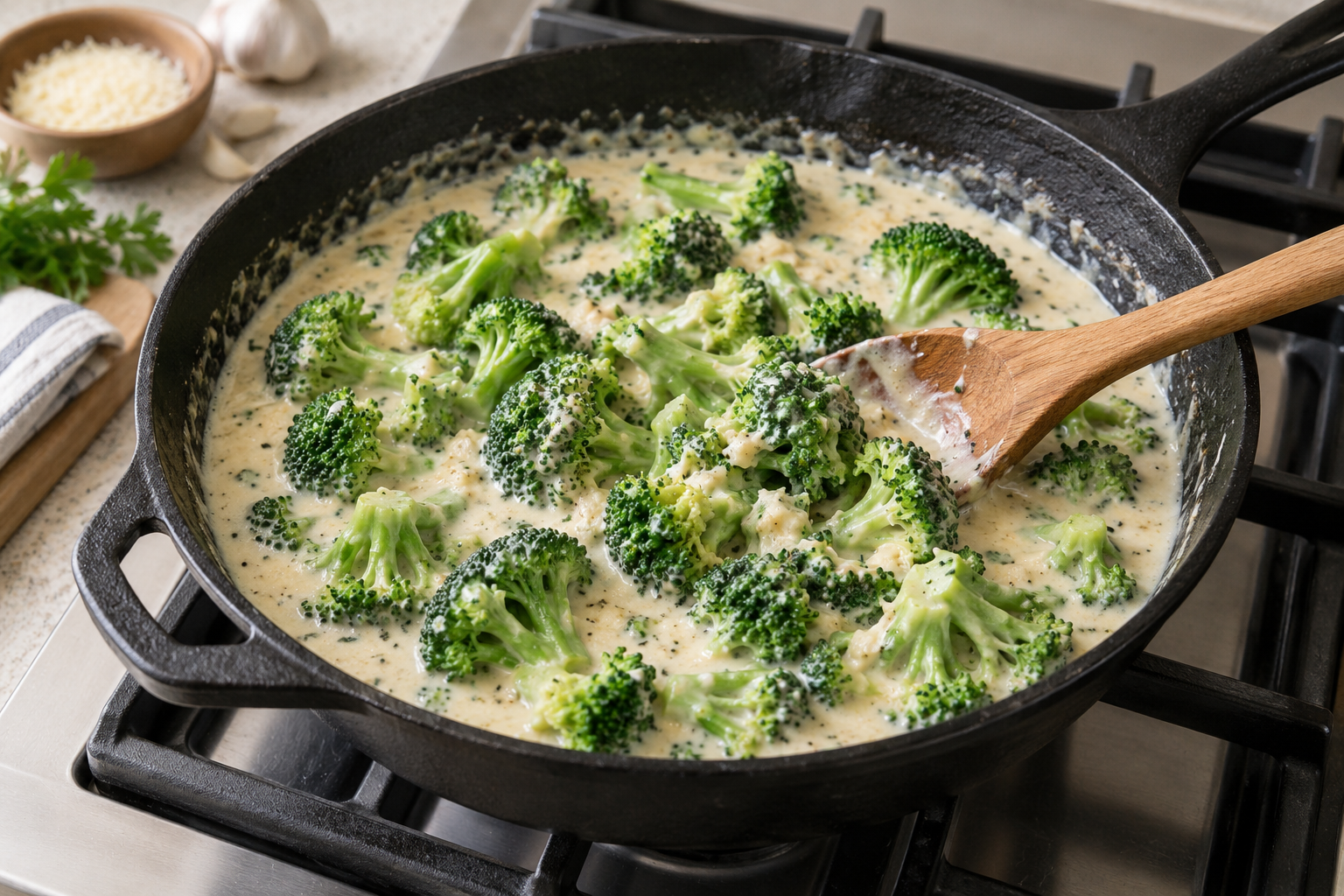
Add the broccoli florets and sliced stalk to the sauce. Stir to coat them, then cover the pan and cook over low to medium-low heat for four minutes. Remove the lid and test a thick stem with the tip of a knife. It should offer slight resistance because it will continue cooking with the chicken.
If the pan looks dry, add two tablespoons of stock. If the sauce looks too loose, leave it uncovered for one minute before returning the chicken. Avoid boiling the cream aggressively because high heat can cause it to separate.
Step 8: Return the Chicken
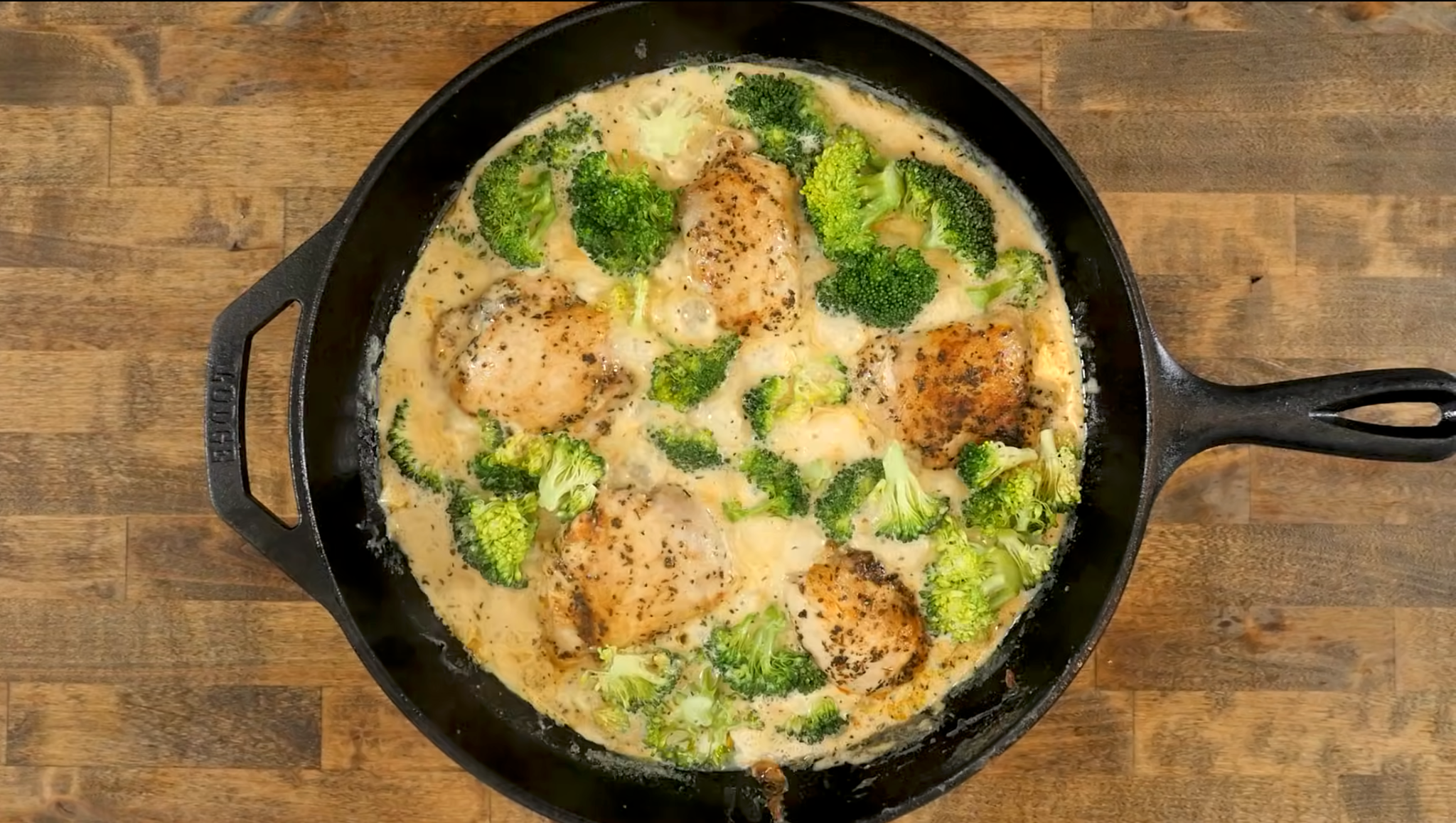
Place the chicken and any juices from the plate back into the skillet. Nestle the cutlets between the broccoli, spoon sauce over the top and simmer gently for three to five minutes. The exact time depends on thickness.
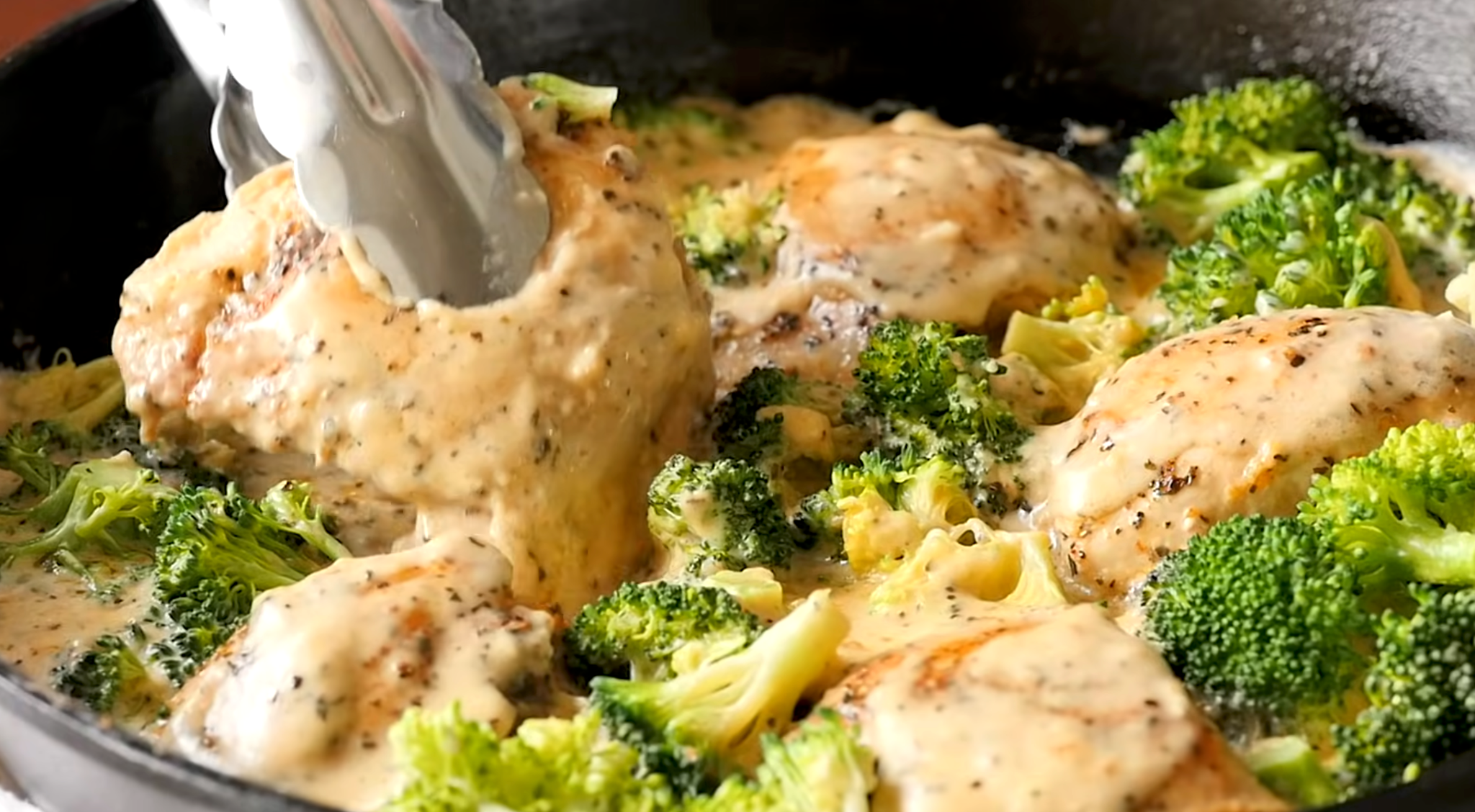
Step 9: Check the Chicken and Finish the Sauce
Check the thickest part of the chicken with a food thermometer. It should reach 75°C. Remove the pan from the heat as soon as it does. Stir in the lemon juice and half of the parsley. Taste the sauce and adjust the pepper or salt if needed.
Let the pan stand for three minutes. This short rest allows the sauce to settle and the chicken juices to redistribute. Sprinkle over the remaining parsley and a small amount of Parmesan before serving.
Nutrition per Serving
One serving, calculated as one quarter of the full recipe, contains approximately:
- Calories: 650 kcal
- Protein: 62 g
- Carbohydrate: 9 g
- Fibre: 4 g
- Estimated net carbohydrate: 5 g
- Fat: 41 g
- Saturated fat: 22 g
- Salt: approximately 1.4 g
These figures are estimates. Chicken size, stock, cream and Parmesan brands change the result. Net carbohydrate is total carbohydrate minus fibre. People following a medically prescribed diet should calculate values from their exact products and follow their clinician’s advice.
Is This Recipe Keto-Friendly?
This creamy garlic Parmesan chicken and broccoli recipe uses low-carbohydrate ingredients and provides about 5 g estimated net carbohydrate per serving. It contains no flour, cornflour, breadcrumbs or sugar. That makes it suitable for many keto and low-carb eating patterns.
Keto targets differ between people. Portion size and side dishes affect the complete meal, so use the nutrition estimate as a starting point rather than a guarantee. Choose stock without added sugar or starch and check the label on pre-grated cheese if you use it.
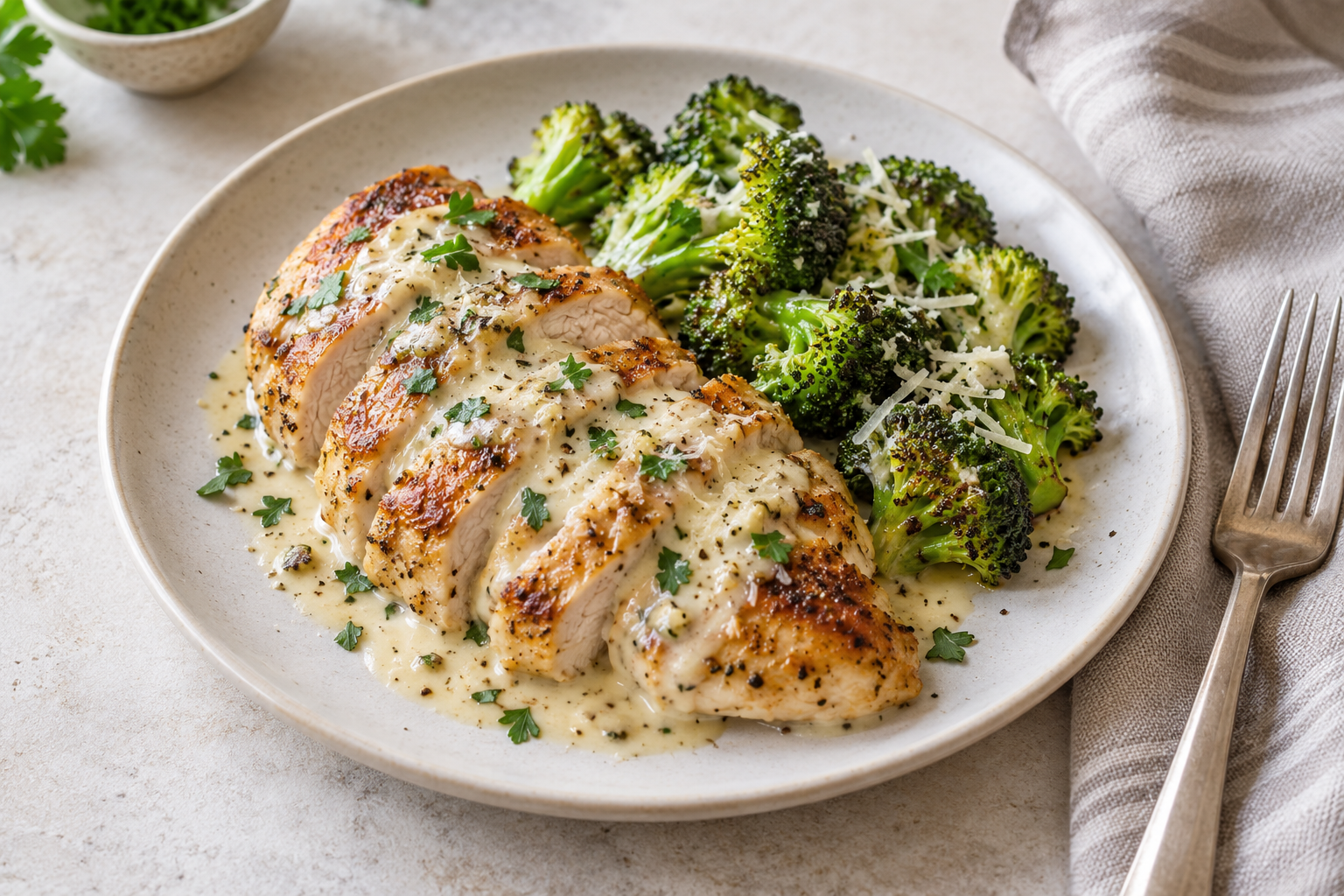
What to Serve with Creamy Chicken and Broccoli
Low-Carb Side Dishes
- Cauliflower rice with parsley and lemon
- Courgette ribbons cooked briefly in olive oil
- Mashed cauliflower with black pepper
- Roasted green beans or asparagus
- A simple leafy salad with cucumber
- Steamed cabbage finished with butter
The sauce is rich, so fresh or lightly cooked vegetables give the best balance. Our guide to eight easy vegetable side dishes offers several ideas, though you should choose the lower-carbohydrate options if following keto closely.
Family Sides
Family members who are not limiting carbohydrate can add rice, pasta, mashed potato or crusty bread. The perfect jacket potato works well with the sauce, and our cheesy garlic bread suits a larger shared meal.
Tips for Juicy Chicken Breast
- Make the thickness even: cut or flatten thick breasts so the centre and edges cook at a similar rate.
- Dry the surface: kitchen paper removes moisture that would otherwise create steam.
- Use a hot pan: preheat before adding the chicken, then listen for a steady sizzle.
- Do not crowd the pan: leave a little space between cutlets and cook in batches if needed.
- Stop the first cook early: the chicken finishes in the sauce, so fully cooking it during searing can make it dry.
- Use a thermometer: remove the pan from the heat when the thickest section reaches 75°C.
- Rest before slicing: three minutes reduces the amount of juice lost onto the plate.
How to Keep the Parmesan Sauce Smooth
Use low heat once the cream enters the pan. A hard boil can split dairy and tighten the proteins in cheese. Grate Parmesan finely and add it gradually. Large handfuls cool the sauce unevenly and can form clumps.
Do not use cold cream straight from the refrigerator if your pan is extremely hot. Reduce the heat first and give the stock a moment to stop boiling. Room-temperature cream is helpful but not required. Stir continuously while the cheese melts.
If the sauce becomes grainy, remove the pan from the heat and stir in one tablespoon of warm cream. Do not add more cheese. Graininess usually comes from excessive heat or pre-grated cheese rather than too little Parmesan.
Recipe Variations
Chicken Thigh Version
Replace breast with 800 g boneless, skinless chicken thighs. Sear them for five minutes on the first side and about four minutes on the second. Return them to the sauce until they reach 75°C. The flavour will be richer and the calorie count higher.
Spinach and Mushroom Version
Sauté 250 g sliced mushrooms after removing the chicken. Let their moisture evaporate before adding the butter and garlic. Stir 100 g baby spinach into the sauce during the final two minutes. This adds vegetables without changing the method greatly.
Sun-Dried Tomato Version
Add 50 g drained, sliced sun-dried tomatoes with the broccoli. Check that they are not packed in a marinade containing wine. Their acidity and concentrated flavour will make the sauce more savoury, so reduce the lemon juice and taste before adding salt.
Lighter Creamy Chicken
Replace half of the double cream with additional chicken stock and add 100 g full-fat cream cheese after reducing the liquid. The sauce will still be creamy but slightly tangier. Low-fat cream cheese is more likely to split.
Spicy Garlic Chicken
Add 1/4 to 1/2 teaspoon chilli flakes with the garlic. The heat should support rather than overpower the Parmesan. Smoked paprika can replace standard paprika for a deeper flavour.
Ingredient Substitutions
- Parmesan: use another finely grated hard Italian-style cheese.
- Double cream: use heavy cream or whipping cream with at least 35% fat.
- Chicken stock: vegetable stock works, though the finished sauce will taste lighter.
- Fresh garlic: use two teaspoons of garlic paste if fresh cloves are unavailable.
- Broccoli: use tenderstem broccoli, cauliflower florets, green beans or asparagus.
- Parsley: use chopped chives or a small amount of fresh basil.
- Butter: use another tablespoon of olive oil, though the sauce will lose some richness.
Meal Prep Instructions
Prepare the complete recipe, cool it for no longer than two hours and divide it between four airtight containers. Keep any extra vegetables in the same container, but store cauliflower rice separately if you prefer a firmer texture.
For the best result, slightly undercook the broccoli during the first preparation. It will soften further during reheating. Slice the chicken before packing only if you want faster reheating; whole cutlets retain more moisture.
This dish offers a strong protein-focused dinner for meal prep. For another plant-based option, prepare the crispy air fryer tofu bowls. The creamy butter bean soup also stores well and adds more fibre to a weekly plan.
Storage and Reheating
Refrigerator
Store cooled leftovers in a sealed container in the refrigerator at 5°C or colder. Eat within three days. Keep the sauce with the chicken so the meat stays moist.
Freezer
You can freeze the chicken and sauce for up to two months, but cream sauce may separate slightly after thawing and broccoli can become soft. Freeze individual portions, thaw them overnight in the refrigerator and stir well while reheating.
Stovetop Reheating
Place a portion in a small pan with one or two tablespoons of chicken stock. Cover and warm over low heat, turning the chicken once. Stir the sauce frequently and stop as soon as the chicken is steaming hot throughout.
Microwave Reheating
Place one portion in a microwave-safe dish, cover loosely and heat at medium power in 45-second intervals. Stir the sauce and rotate the chicken between intervals. Lower power takes slightly longer but reduces the chance of the sauce splitting.
Common Problems and Fixes
The Sauce Is Too Thin
Remove the chicken and broccoli, then simmer the sauce gently for two to four minutes. Stir often. It thickens as water evaporates. Do not add flour if you want to keep the recipe low in carbohydrate.
The Sauce Is Too Thick
Add warm chicken stock one tablespoon at a time until it coats a spoon easily. Cream sauces continue to thicken while standing, so make the sauce slightly looser than you want on the plate.
The Sauce Split
Take the pan off the heat. Add one tablespoon of warm cream and stir slowly. High heat is the common cause. The sauce may not become perfectly smooth again, but it will still taste good.
The Chicken Is Dry
The chicken cooked for too long or the cutlets were uneven. Slice the chicken and coat it with extra sauce. Next time, use a thermometer and remove the pan from the heat at 75°C.
The Broccoli Is Mushy
The florets were too small or cooked for too long. Keep pieces around 3 to 4 cm, cover for only four minutes, then finish them with the chicken. Frozen broccoli needs less time than fresh.
The Dish Tastes Too Salty
Use low-salt stock and wait until the Parmesan has melted before adjusting seasoning. If the finished sauce is too salty, add unsalted cream and extra broccoli. A little lemon can improve balance, but it cannot remove salt.
Frequently Asked Questions
Can I make creamy garlic Parmesan chicken without wine?
Yes. This recipe uses chicken stock to loosen the browned residue from the pan and lemon juice for acidity. No wine or other alcohol is needed.
Can I use chicken thighs?
Yes. Boneless thighs stay juicy and work with the same sauce. They need a little longer to sear and contain more fat than breast.
Can I use frozen broccoli?
Yes. Thaw it and pat it dry, then add it later in the cooking process because it is already partly softened. Simmer only until hot.
What makes the recipe low-carb?
The sauce thickens through cream and Parmesan rather than flour or cornflour. Broccoli provides fibre, and the recipe contains no pasta, rice, potato, breadcrumbs or added sugar.
How many carbohydrates are in one serving?
One quarter of the recipe contains approximately 9 g total carbohydrate and 4 g fibre, giving about 5 g estimated net carbohydrate. Product brands and portion sizes change the figure.
Can I use milk instead of double cream?
Milk is much thinner and more likely to curdle. It will not create the same sauce without a starch thickener. For this flour-free method, cream is the more reliable choice.
Why will my Parmesan not melt?
The cheese may be too coarsely grated, the sauce may be too hot, or the product may contain anti-caking agents. Use finely grated cheese from a block and stir it in gradually over low heat.
Can I make the recipe ahead?
Yes. Cook it up to three days ahead and refrigerate in sealed containers. Reheat gently with a small splash of stock.
Can I add more vegetables?
Yes. Mushrooms, spinach, cauliflower, green beans and asparagus work well. Cook watery vegetables before adding the cream so they do not thin the sauce.
What pan should I use?
A heavy 28 to 30 cm frying pan or skillet works best. Cast iron holds heat well, while stainless steel creates excellent browned residue. A good non-stick pan also works but may produce less browning.
How do I know when the chicken is cooked?
Insert a food thermometer into the thickest part. The centre should reach 75°C. The meat should look opaque, but temperature gives a more reliable result than colour alone.
Can I double the recipe?
Yes, but cook the chicken in batches and use a very large pan or two pans. Crowding eight cutlets in one skillet will trap steam and prevent browning.
More Chicken Recipes to Try
- Butter chicken recipe with a spiced tomato cream sauce.
- Air fryer chicken tenders for a quick crisp dinner.
- Fish and chips for a classic British takeaway-style meal without alcohol in the batter.
Final Recipe Notes
For the best creamy garlic Parmesan chicken and broccoli, focus on temperature. Use medium-high heat to brown the chicken, then lower the heat before adding garlic, cream and cheese. This gives you a golden exterior without overcooking the chicken and a smooth sauce that does not split.
Prepare every ingredient before the pan gets hot. The sauce moves quickly once the garlic starts cooking. Cut evenly sized broccoli, grate the Parmesan finely and keep the stock close to the hob. These small steps make the one-pan method easier.
Serve the dish as soon as the chicken reaches 75°C and the broccoli is tender-crisp. Add the lemon juice off the heat, then let the pan stand for three minutes. You will have a complete low-carb dinner with juicy chicken, bright vegetables and a sauce that works without flour, wine or several pans.