

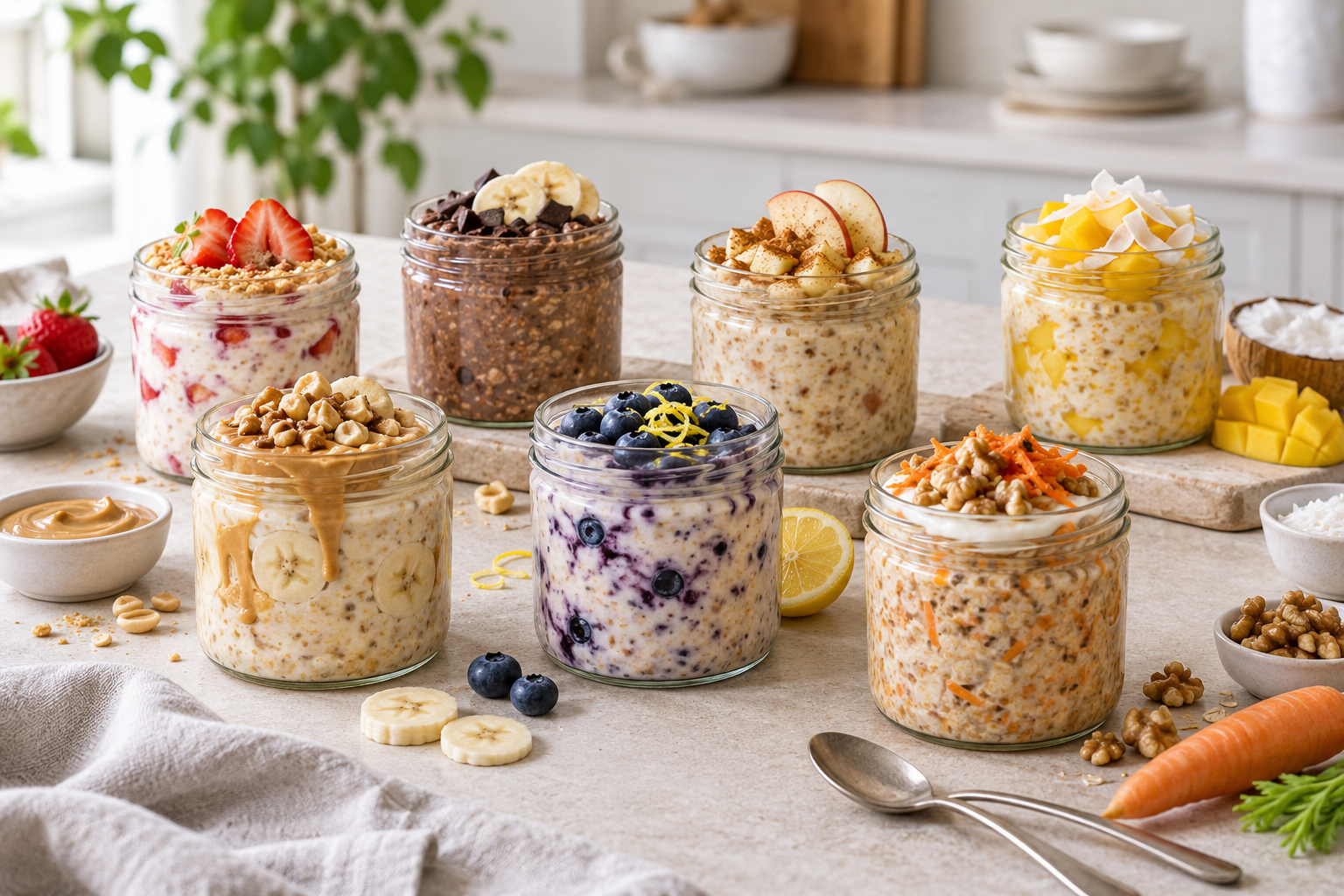
High protein overnight oats are one of the easiest ways to prepare a filling breakfast before a busy morning. This simple no-cook recipe combines rolled oats, Greek yoghurt, milk, chia seeds and protein powder to create a thick, creamy breakfast with approximately 32 grams of protein per serving. Mix it in five minutes, refrigerate it overnight, and breakfast is ready when you are.
This guide gives you a dependable high-protein overnight oats base recipe plus seven genuinely different flavours: strawberry cheesecake, chocolate banana, apple cinnamon, mango coconut, peanut butter banana, blueberry lemon and carrot cake. Every variation includes exact metric measurements and estimated nutrition, so you can choose a breakfast that suits your taste and meal-prep goals.
If you enjoy easy breakfasts with bright fruit flavours, you may also like our creamy mango lassi recipe. For a savoury make-ahead lunch, try the creamy butter bean soup.
Why You Will Love These High Protein Overnight Oats
- Five-minute preparation: stir the ingredients together and let the fridge do the rest.
- About 32 g protein per serving: Greek yoghurt, milk, chia seeds and protein powder work together to make breakfast more satisfying.
- Ideal for meal prep: prepare several jars at once and keep them chilled for up to four days.
- No cooking required: useful when mornings are rushed or the weather is warm.
- Seven tested flavour ideas: the base can change through the week without changing the basic method.
- Easy to customise: use dairy-free milk, plant-based yoghurt, gluten-free oats or a protein powder that fits your diet.
What Are Overnight Oats?
Overnight oats are rolled oats softened in cold liquid instead of cooked on the hob. During refrigeration, the oat flakes absorb milk while chia seeds bind extra moisture. Yoghurt adds body and creaminess, and the result becomes spoonable rather than watery. Although the name suggests they must sit all night, most jars are pleasantly soft after four hours. An overnight rest gives the most even texture.
Traditional versions can be fairly low in protein, particularly when made only with oats and plant milk. This high protein overnight oats recipe solves that by combining several protein sources instead of relying on an oversized scoop of powder. Greek yoghurt provides creaminess, protein powder boosts the total efficiently, chia seeds add fibre, and milk helps everything blend. This balance avoids the dry, chalky finish that can happen when too much powder is mixed into too little liquid.
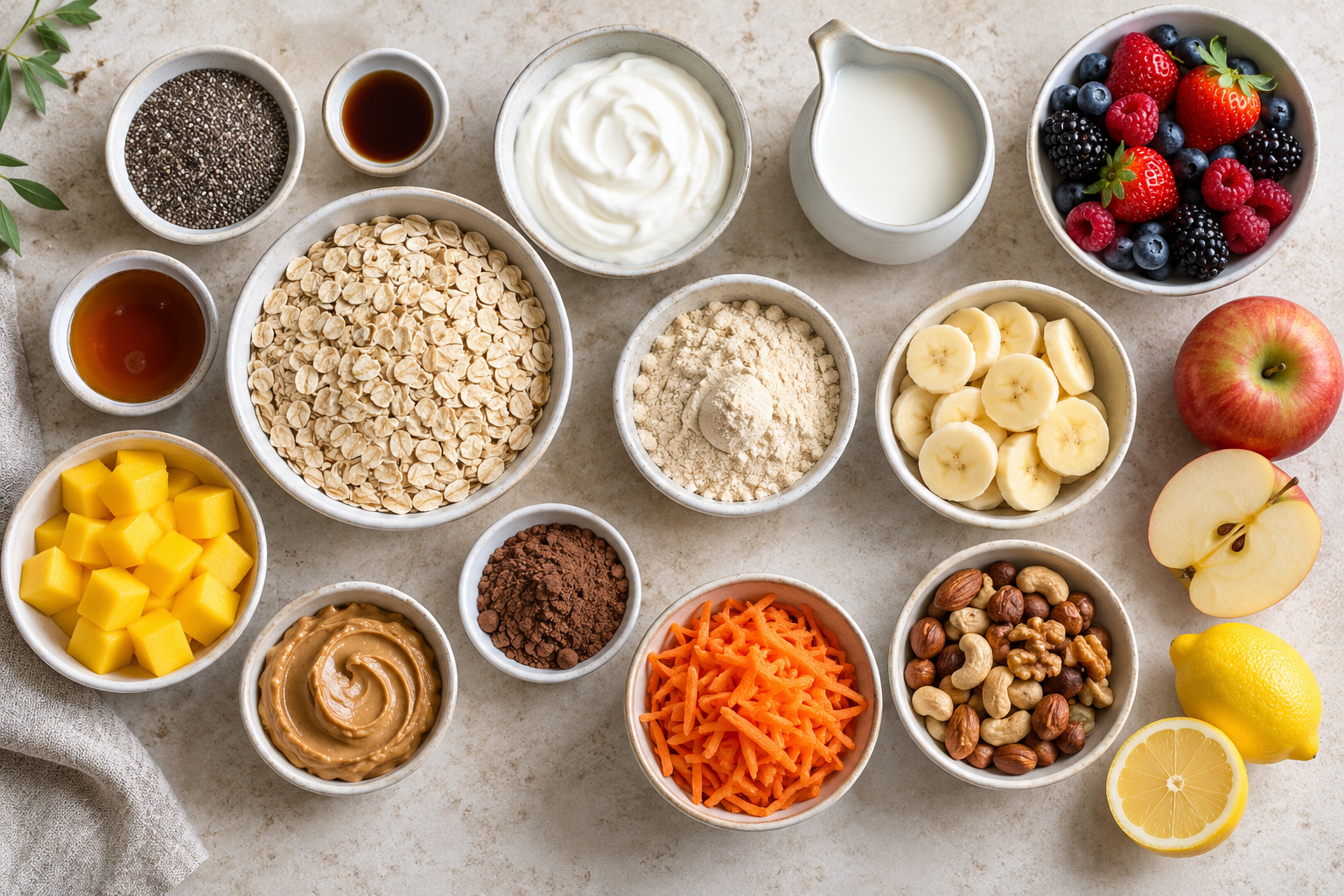
Ingredients for the Base Recipe
The quantities below make one generous breakfast serving. Multiply every amount by the number of jars you want to prepare.
- 50 g rolled oats: old-fashioned rolled oats soften evenly while retaining a little texture. Avoid steel-cut oats, which remain too firm, and instant oats, which can turn pasty.
- 150 g plain Greek yoghurt: use 0%, 2% or full-fat yoghurt. A thicker strained yoghurt creates the creamiest jar.
- 120 ml milk: dairy milk adds protein, but unsweetened soya milk is the strongest plant-based alternative. Oat, almond or coconut drink also works.
- 20 g vanilla protein powder: whey, casein, whey-casein blend or a smooth plant protein can be used. Different powders absorb different amounts of liquid.
- 10 g chia seeds: about one level tablespoon. They thicken the mixture and contribute fibre and healthy fats.
- 1/2 teaspoon vanilla extract: rounds out the flavour and makes the oats taste naturally sweeter.
- 1 teaspoon maple syrup or honey, optional: adjust according to the sweetness of your protein powder and toppings.
- A small pinch of salt: this is easy to overlook, but it sharpens the vanilla and balances sweetness.
Choosing the Best Protein Powder
A vanilla whey or whey-casein blend gives the smoothest, most dessert-like result. Casein thickens strongly, so you may need an extra tablespoon or two of milk. Plant protein powders vary considerably: pea-based blends often absorb more liquid and can taste earthy, while soya protein tends to mix more smoothly. Start with the recipe quantity, then loosen the jar after its refrigeration time if required.
Choose a powder you already enjoy drinking. Overnight oats soften its flavour but cannot disguise a product you dislike. Check whether it is already sweetened before adding maple syrup. For an unflavoured powder, add a full teaspoon of vanilla and sweeten to taste.
How to Make High Protein Overnight Oats
1. Combine the Dry Ingredients
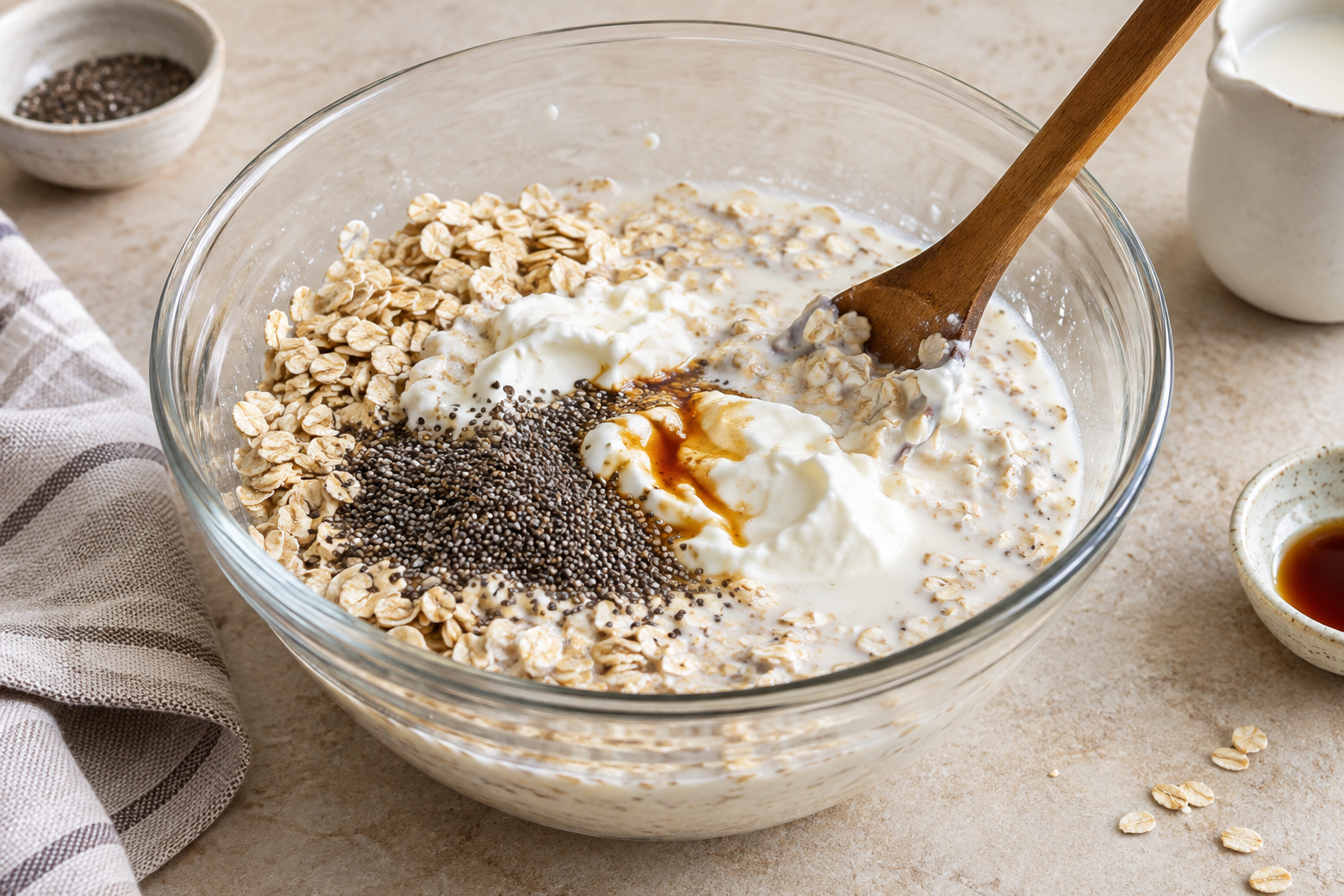
Add the rolled oats, protein powder, chia seeds and pinch of salt to a jar or lidded container with at least 450 ml capacity. Stir them while dry. This distributes the protein powder and chia seeds, preventing gummy pockets from forming when the liquid is added.
2. Add the Wet Ingredients
Spoon in the Greek yoghurt, then pour over the milk, vanilla and optional maple syrup. Stir thoroughly, scraping around the base and corners. Continue until no visible streaks of dry protein powder remain. The mixture should look slightly looser than the texture you want to eat because the oats and chia will absorb liquid.
3. Rest, Stir and Refrigerate
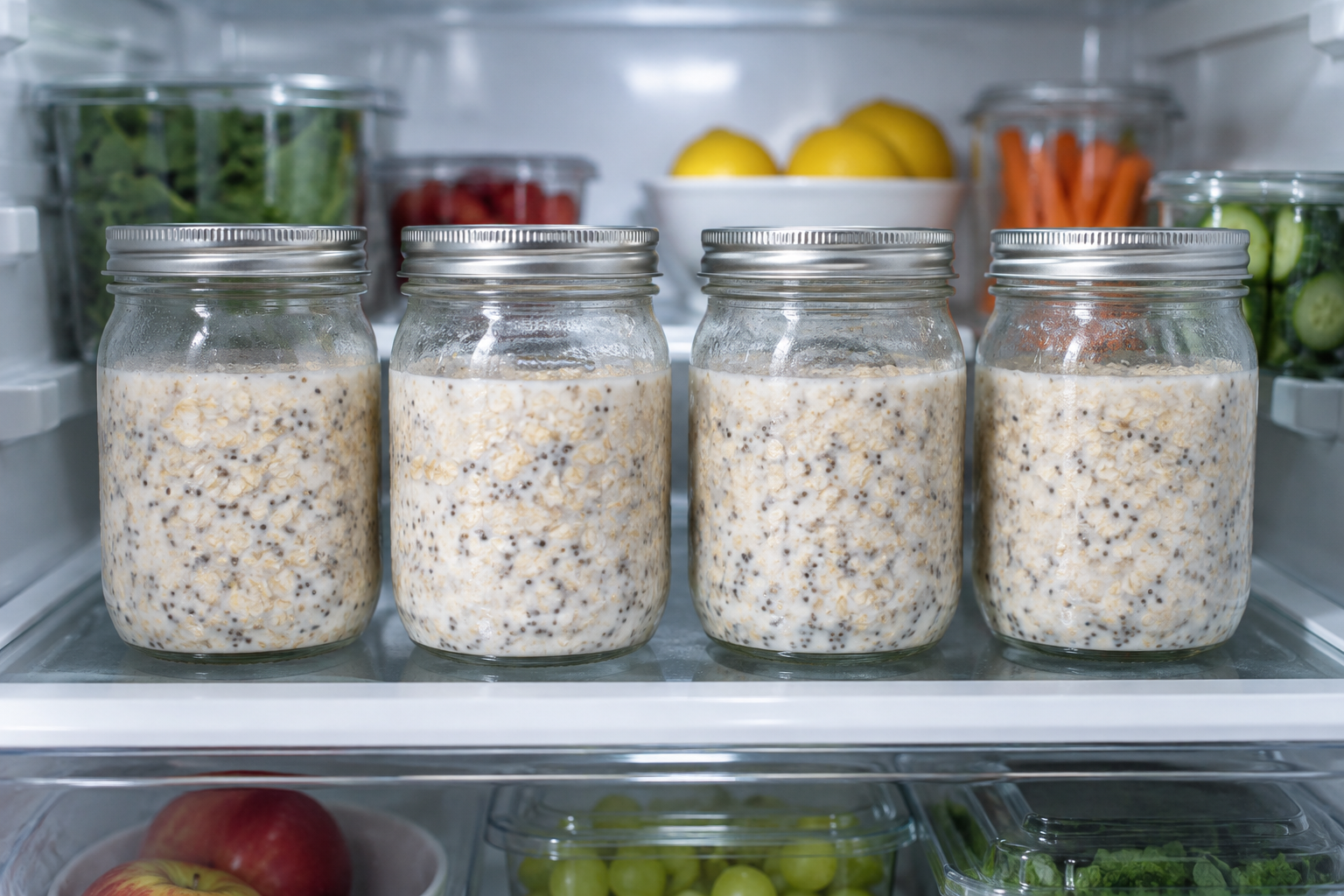
Leave the mixture for five minutes, then stir once more. This quick second stir breaks up chia seeds that may have settled into clumps. Cover tightly and refrigerate for at least four hours, ideally overnight. Keep the jar level while it sets.
4. Adjust and Add Toppings
In the morning, stir the oats from the bottom upwards. If they are thicker than you prefer, add milk one tablespoon at a time. If they seem loose, mix in one teaspoon of chia seeds and wait ten minutes. Add crunchy toppings immediately before eating so they do not soften in the fridge.
Base Recipe Nutrition
Using 0% Greek yoghurt, semi-skimmed milk, vanilla whey protein and one teaspoon of maple syrup, one serving contains approximately:
- Calories: 420 kcal
- Protein: 32 g
- Carbohydrate: 51 g
- Fat: 10 g
- Fibre: 9 g
Nutrition is an estimate and changes with the brands, milk, yoghurt, powder, sweetener and toppings used. For medical or tightly controlled dietary needs, calculate the values from the exact product labels in your kitchen.
Seven High Protein Overnight Oats Flavours
Make the base as written, then use the additions below. Each flavour makes one serving. Where fruit is mixed into the jar, keep a little aside for the top so the flavour is clear at a glance.
1. Strawberry Cheesecake Overnight Oats
Stir 80 g chopped strawberries and 1/2 teaspoon finely grated lemon zest into the base. In the morning, top with 50 g extra Greek yoghurt, 20 g sliced strawberries and 10 g crushed digestive biscuit. For a stronger cheesecake note, replace 30 g of the yoghurt in the base with light cream cheese and whisk it with the milk before mixing.
The berries release juice as they rest, creating pink ribbons through the oats. Fresh berries provide the neatest finish, but thawed frozen strawberries are suitable when fresh fruit is out of season. Drain excess liquid before chopping them.
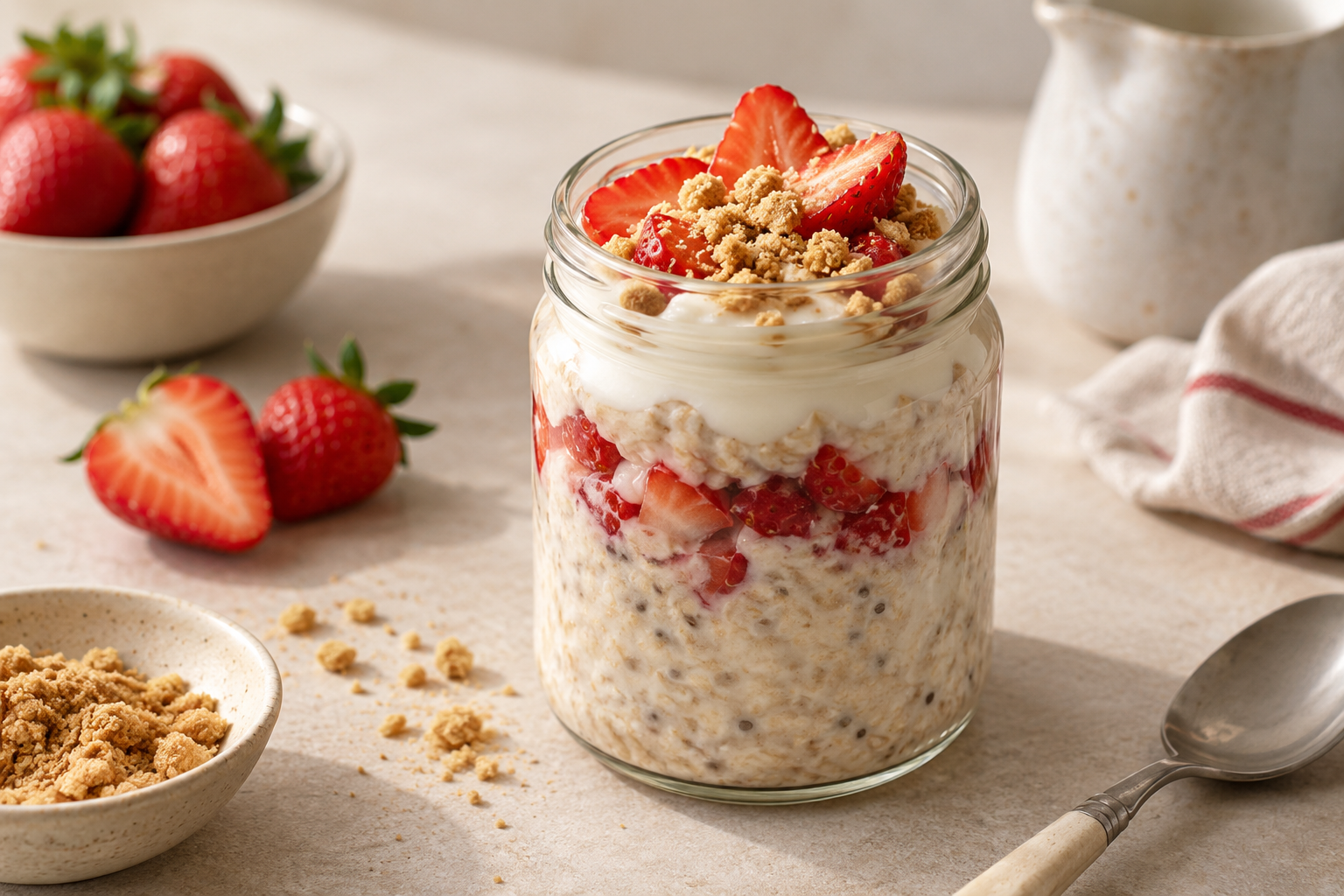
Estimated nutrition: 515 kcal, 38 g protein, 68 g carbohydrate, 11 g fat and 11 g fibre.
2. Chocolate Banana Overnight Oats
Use chocolate protein powder instead of vanilla. Mix 8 g unsweetened cocoa powder and half a small banana, mashed, into the base. Add a further splash of milk because cocoa absorbs moisture. Top with the remaining sliced banana and 10 g dark chocolate shavings just before serving.
A ripe, spotty banana gives natural sweetness and a smooth texture, often making extra syrup unnecessary. To intensify the chocolate flavour without adding much sweetness, mix in a pinch of instant espresso powder. It will deepen the cocoa rather than make the oats taste strongly of coffee.
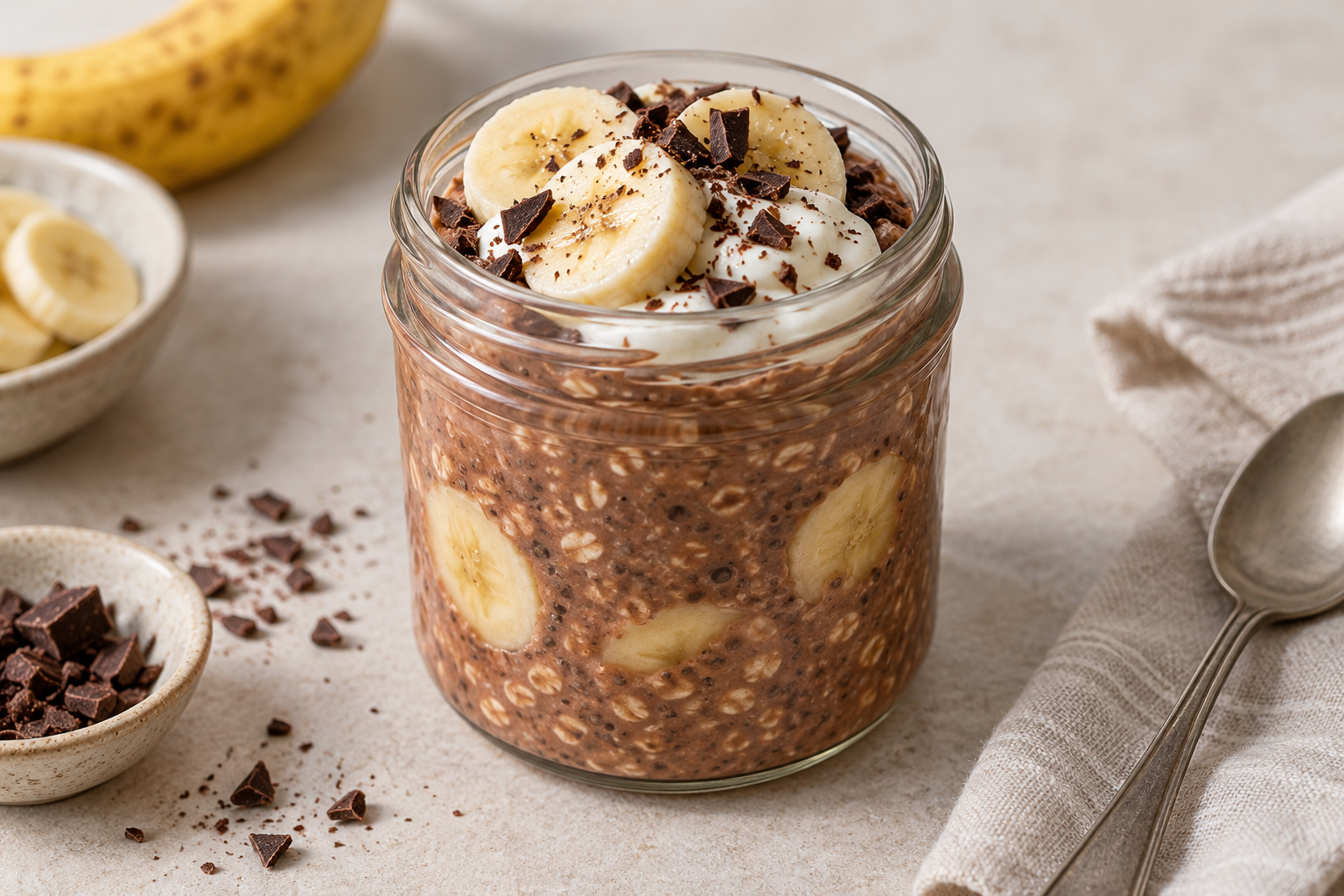
Estimated nutrition: 520 kcal, 35 g protein, 69 g carbohydrate, 14 g fat and 12 g fibre.
3. Apple Cinnamon Overnight Oats
Mix 80 g finely diced apple, 1/2 teaspoon ground cinnamon and a pinch of nutmeg into the base. For softer fruit, microwave the diced apple with one teaspoon of water for 60 to 90 seconds, then cool completely before combining it with the yoghurt. Top with 10 g chopped walnuts in the morning.
Use a crisp eating apple for a fresh bite or a Bramley apple for a tangier, softer result. Leaving the skin on adds colour and fibre. The cinnamon flavour develops as the jar sits, so start with half a teaspoon and add more when serving if desired.
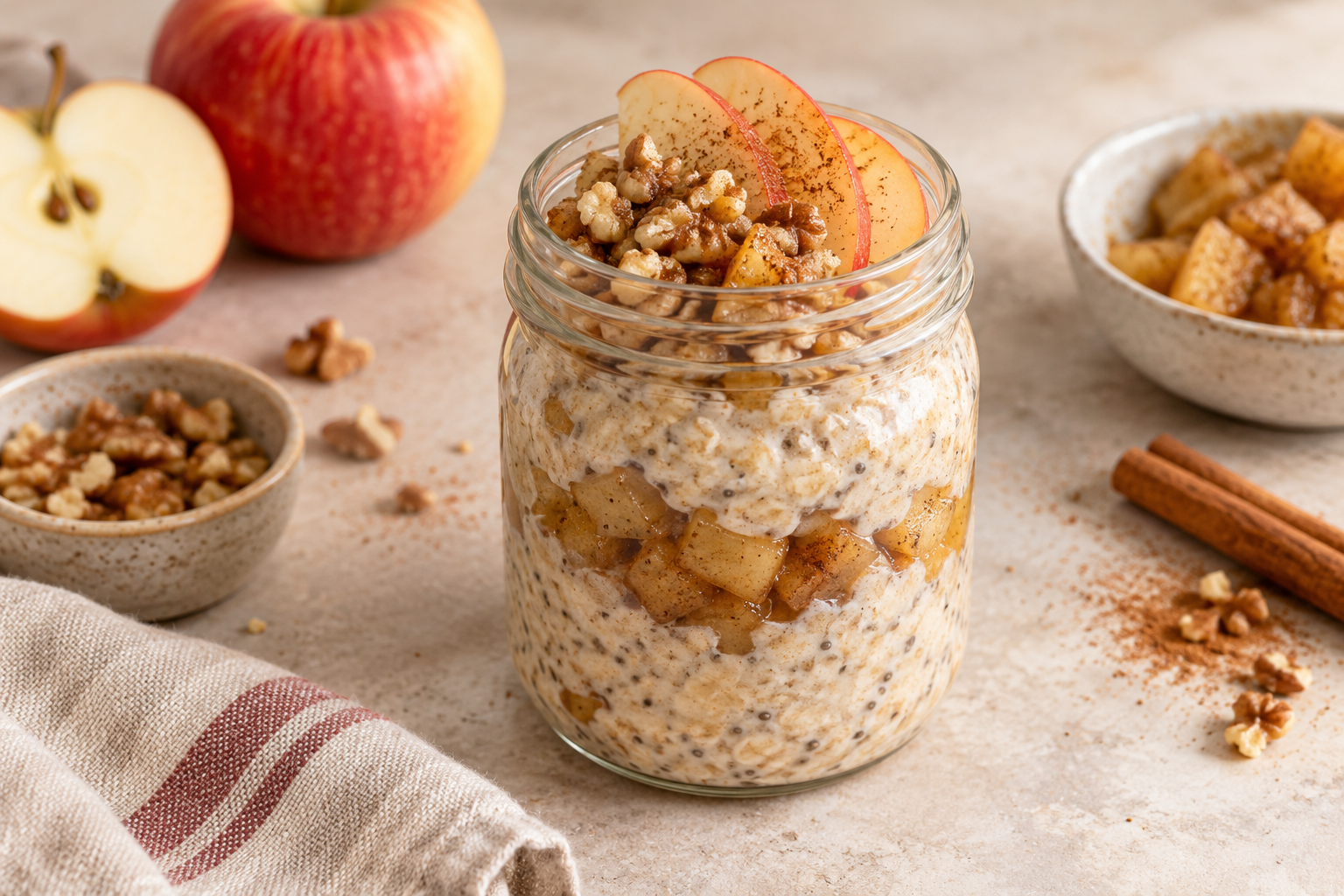
Estimated nutrition: 505 kcal, 34 g protein, 62 g carbohydrate, 16 g fat and 12 g fibre.
4. Mango Coconut Overnight Oats
Replace 40 ml of the milk with light coconut milk. Fold 100 g diced ripe mango into the base and add 1/4 teaspoon ground cardamom if you enjoy its floral warmth. Top with 10 g toasted coconut flakes and a spoonful of mango just before eating.
This variation is especially good in summer and pairs naturally with our mango lassi. Fresh ripe mango provides the best fragrance, although thawed frozen mango works well after being drained and chopped. Avoid canned mango in heavy syrup unless you reduce the added sweetener.
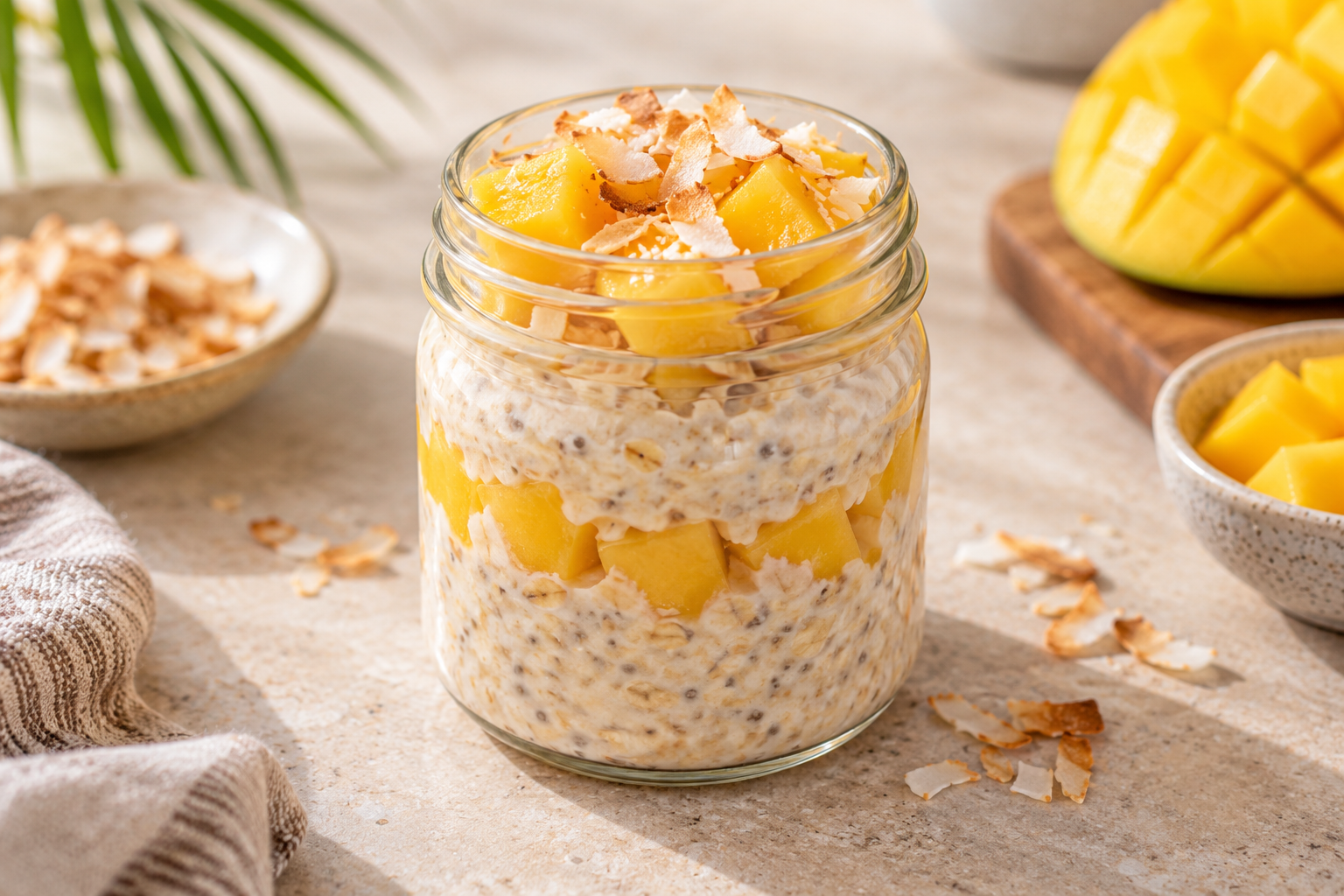
Estimated nutrition: 500 kcal, 33 g protein, 65 g carbohydrate, 14 g fat and 11 g fibre.
5. Peanut Butter Banana Overnight Oats
Mash half a small banana and stir it into the base with 15 g smooth peanut butter. Reduce or omit the maple syrup because the banana adds sweetness. Top with the remaining banana, another 5 g peanut butter loosened with warm water, and a few chopped peanuts for crunch.
Powdered peanut butter can reduce the fat and calories, although the texture is less luxurious. Mix 12 g powdered peanut butter directly with the dry ingredients and add an extra tablespoon of milk. Anyone with a nut allergy can use sunflower seed butter and toasted pumpkin seeds instead.
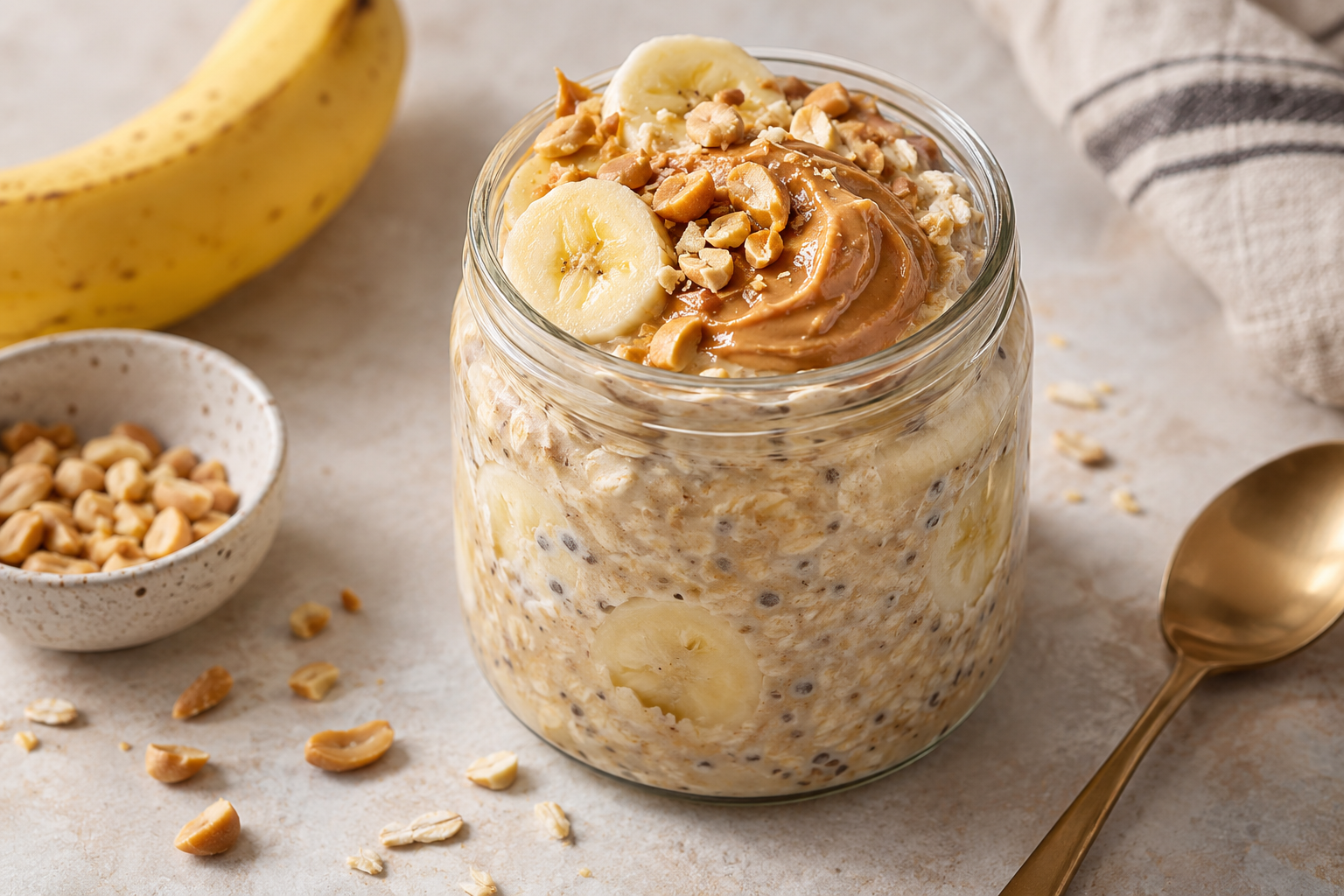
Estimated nutrition: 550 kcal, 38 g protein, 65 g carbohydrate, 19 g fat and 11 g fibre.
6. Blueberry Lemon Overnight Oats
Stir 80 g blueberries, 1/2 teaspoon finely grated lemon zest and one teaspoon lemon juice into the base. Gently crush a few berries against the side of the jar to release their colour. Add 10 g pumpkin seeds in the morning for contrast and crunch.
Both fresh and frozen blueberries work. Frozen berries colour the entire jar purple as they thaw, while fresh berries remain more distinct. Use only the yellow outer layer of the lemon skin, as the white pith underneath is bitter.
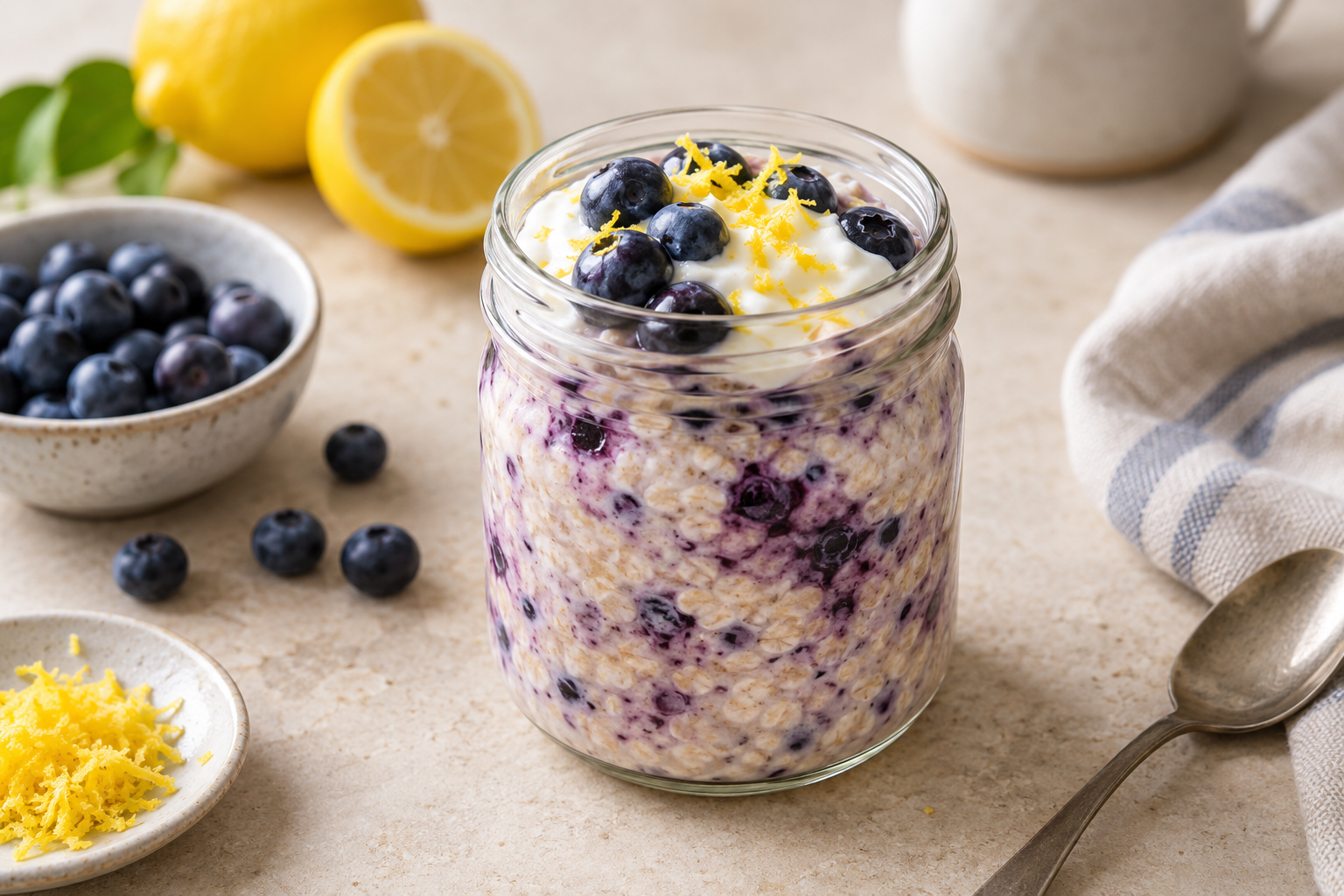
Estimated nutrition: 485 kcal, 35 g protein, 61 g carbohydrate, 13 g fat and 12 g fibre.
7. Carrot Cake Overnight Oats
Stir 50 g finely grated carrot, 15 g raisins, 1/2 teaspoon cinnamon, a pinch of ginger and a pinch of nutmeg into the base. Top with 50 g Greek yoghurt and 10 g chopped walnuts. For a more dessert-like finish, mix the topping yoghurt with a drop of vanilla.
Finely grate the carrot so it softens fully overnight. Coarse shreds can stay too crunchy. If your raisins are firm, soak them in a spoonful of the measured milk for ten minutes before mixing. The spices should support the carrot and vanilla, not overpower them.
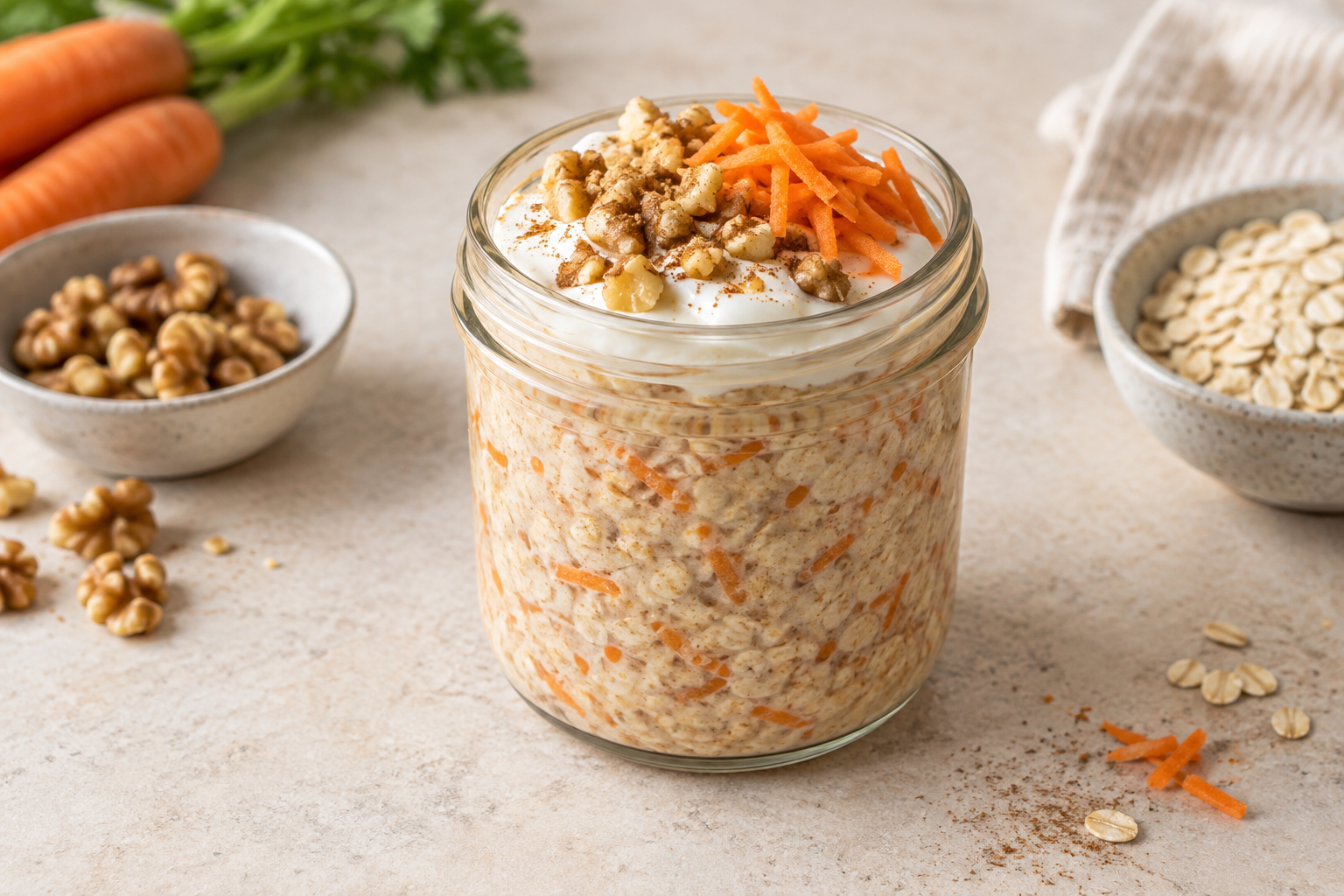
Estimated nutrition: 535 kcal, 39 g protein, 66 g carbohydrate, 17 g fat and 12 g fibre.
How to Meal Prep Overnight Oats for the Week
For four breakfasts, place four clean jars on the worktop and add the dry ingredients to each one. Stir, add the wet ingredients, then choose different flavour additions. Label the lids so you can identify each jar quickly. Refrigerate immediately.
Prepare no more than four days at once for the best flavour and texture. The oats continue to soften over time, so a jar intended for day four can use 10 ml less milk. Keep nuts, seeds, biscuit crumbs, granola and sliced banana in separate containers until serving. Berries, mango, grated carrot and stewed apple can be mixed in ahead.
If you prefer one large batch, multiply the base recipe in a bowl, mix thoroughly, rest for five minutes, stir again and divide equally between jars. Weighing each portion gives the most consistent nutrition. Add flavour ingredients only after dividing, as heavier fruit may sink in a large bowl.
For more easy meal-prep inspiration, the crispy air fryer tofu bowls offer a balanced savoury option, while the perfect jacket potato recipe includes several practical topping ideas.
How to Get the Perfect Texture
The ideal ratio depends on the thickness of your yoghurt and the absorbency of your protein powder. The base recipe is intentionally thick but spoonable. Use these adjustments without changing the whole recipe:
- Too thick: stir in milk one tablespoon at a time just before serving.
- Too thin: mix in one teaspoon of chia seeds, wait ten minutes and check again.
- Chalky: reduce the protein powder by 5 g or add 30 g more yoghurt.
- Gummy: use rolled oats instead of instant oats and do not overmix after soaking.
- Dry on top: press food-safe wrap directly onto the surface or use a smaller airtight jar.
- Clumps of powder: combine all dry ingredients before adding milk and stir again after five minutes.
Ingredient Substitutions
Dairy-Free
Use an unsweetened, high-protein soya milk, a thick dairy-free yoghurt and a plant-based protein powder. Coconut yoghurt tastes rich but is usually lower in protein, so check the label. You may need slightly less liquid if the plant yoghurt is loose.
Gluten-Free
Oats are naturally gluten-free but can be contaminated during growing and processing. Choose certified gluten-free rolled oats when required. Check protein powder, biscuits and flavourings as well.
Without Protein Powder
Replace the powder with 100 g additional Greek yoghurt and reduce the milk by about 30 ml. The protein content will be lower, but the breakfast will still be nutritious and creamy. You can also add 15 g skimmed milk powder if dairy is suitable.
Lower Sugar
Choose an unsweetened protein powder and omit maple syrup. Use berries, cinnamon, vanilla and ripe banana for flavour. Sweetness is personal, so taste the mixture before chilling and again after it has rested.
Higher Fibre
Add one tablespoon of ground flaxseed and another tablespoon of milk. Berries, apple with its skin, grated carrot, seeds and nuts also increase fibre. Make changes gradually and drink enough water during the day.
Serving Ideas
Overnight oats are designed to be eaten cold, straight from the fridge, but they can be warmed. Transfer the mixture to a microwave-safe bowl and heat in 30-second bursts, stirring between each, until just warm. Add fresh fruit and crunchy toppings afterwards.
For a larger breakfast, serve the oats with extra fruit or a boiled egg. For a lighter portion, divide the base between two smaller jars and pair one with a smoothie. The recipe also works as a post-workout snack when divided into smaller portions, although individual energy and protein needs vary.
Storage and Food Safety
Store high protein overnight oats in a clean airtight container in the refrigerator at 5°C or colder. Eat within four days. A jar containing sliced banana is best within two days because the banana browns and softens. Fresh apple may also discolour slightly, though lemon juice slows the process.
Do not leave yoghurt-based oats at room temperature for more than two hours. If you take a jar to work, use an insulated lunch bag with an ice pack and refrigerate it on arrival. Discard oats that smell sour beyond the normal yoghurt tang, show mould, or have been left warm for an uncertain period.
Freezing is possible but not ideal. The yoghurt may separate and the fruit can become watery. If necessary, freeze the plain base without toppings for up to one month, thaw overnight in the refrigerator and stir thoroughly before eating.
Common Mistakes to Avoid
- Using the wrong oats: steel-cut oats remain hard and instant oats become mushy. Rolled oats offer the most reliable middle ground.
- Adding too much protein powder: more powder does not always make a better breakfast. It can create a dry or chalky texture.
- Skipping the second stir: stirring again after five minutes prevents chia clumps and powder pockets.
- Adding crunchy toppings too early: nuts, seeds, biscuits and granola soften overnight. Pack them separately.
- Using a jar that is too small: leave space for stirring and toppings. A 450 to 500 ml container is comfortable for one serving.
- Ignoring brand differences: protein powders and yoghurts absorb liquid differently. Make a small adjustment after chilling.
- Forgetting a pinch of salt: a tiny amount makes vanilla, fruit, cocoa and spices taste clearer.
Frequently Asked Questions
How long do overnight oats need to soak?
Four hours is usually enough for rolled oats to soften, but eight to twelve hours gives a more even texture. A jar made in the evening will be ready for breakfast the next morning.
Can I eat overnight oats every day?
They can be part of a varied diet, provided the ingredients and portion suit your needs. Rotate fruits, nuts and seeds to vary the nutrients and flavours. Anyone managing a medical condition or following a prescribed diet should seek personalised advice from a qualified professional.
Are overnight oats healthy?
This recipe provides wholegrain oats, protein, fibre and calcium-rich ingredients. Health depends on the complete diet rather than one dish, but preparing breakfast at home makes the ingredients and sweetness easier to control.
Can I make high protein overnight oats without chia seeds?
Yes. Leave them out and reduce the milk by 20 to 30 ml, or replace them with one tablespoon of ground flaxseed. The finished oats will be slightly less gelled.
Can I use quick oats?
Quick oats are safe to use but produce a softer, more porridge-like texture. If that is what you have, reduce the milk slightly and check the jar after two hours.
Why are my overnight oats watery?
Your yoghurt may be thinner, your powder less absorbent, or your fruit may have released liquid. Stir in one teaspoon of chia seeds and let the jar stand for ten minutes. Next time, reduce the milk by one or two tablespoons.
Why did my overnight oats become too thick?
Chia seeds, casein and many plant protein powders absorb a great deal of moisture. Add milk gradually until the texture loosens. The flavour will not be harmed.
Can I prepare the recipe in a bowl?
Yes. Any food-safe container with a secure cover works. Jars are convenient for transport and portioning, but they are not essential.
Should protein powder be added before or after soaking?
Add it before soaking so its flavour blends into the entire jar. Mixing it with the other dry ingredients first prevents clumps. If you forget, it can be stirred in later with an extra splash of milk.
Can overnight oats be heated?
Yes. Warm them gently in a microwave-safe bowl, stirring every 30 seconds. Do not heat a cold glass jar unless it is specifically labelled microwave-safe and suitable for temperature changes.
Which flavour is best for meal prep?
Apple cinnamon, blueberry lemon and carrot cake keep particularly well for four days. Banana variations are best earlier in the week, while biscuit crumbs and nuts should always be added when serving.
More Easy Team Foodie Recipes
Once breakfast is organised, keep the rest of the week simple with these tested ideas:
- Air fryer chicken tenders for a crisp, family-friendly lunch or dinner.
- Restaurant-style butter chicken for a comforting main meal.
- Homemade cheesy garlic bread with photographed preparation steps.
- Classic apple crumble for an easy British dessert.
Final Tips for Reliable Overnight Oats
Use rolled oats, stir the dry ingredients before adding liquid, and give the jar a second stir after five minutes. Refrigerate it for at least four hours and adjust the consistency only after the oats have absorbed the milk. Keep crunchy toppings separate and use fruit combinations that fit the number of days you are preparing.
The best high protein overnight oats are not necessarily the ones with the largest scoop of powder. A balanced mixture of oats, Greek yoghurt, milk, chia and a moderate amount of protein powder tastes better and stays creamy. Start with the dependable base, choose one of the seven flavours, and make small adjustments for your preferred texture. Once you know your favourite ratio, preparing several breakfasts takes only a few minutes.