

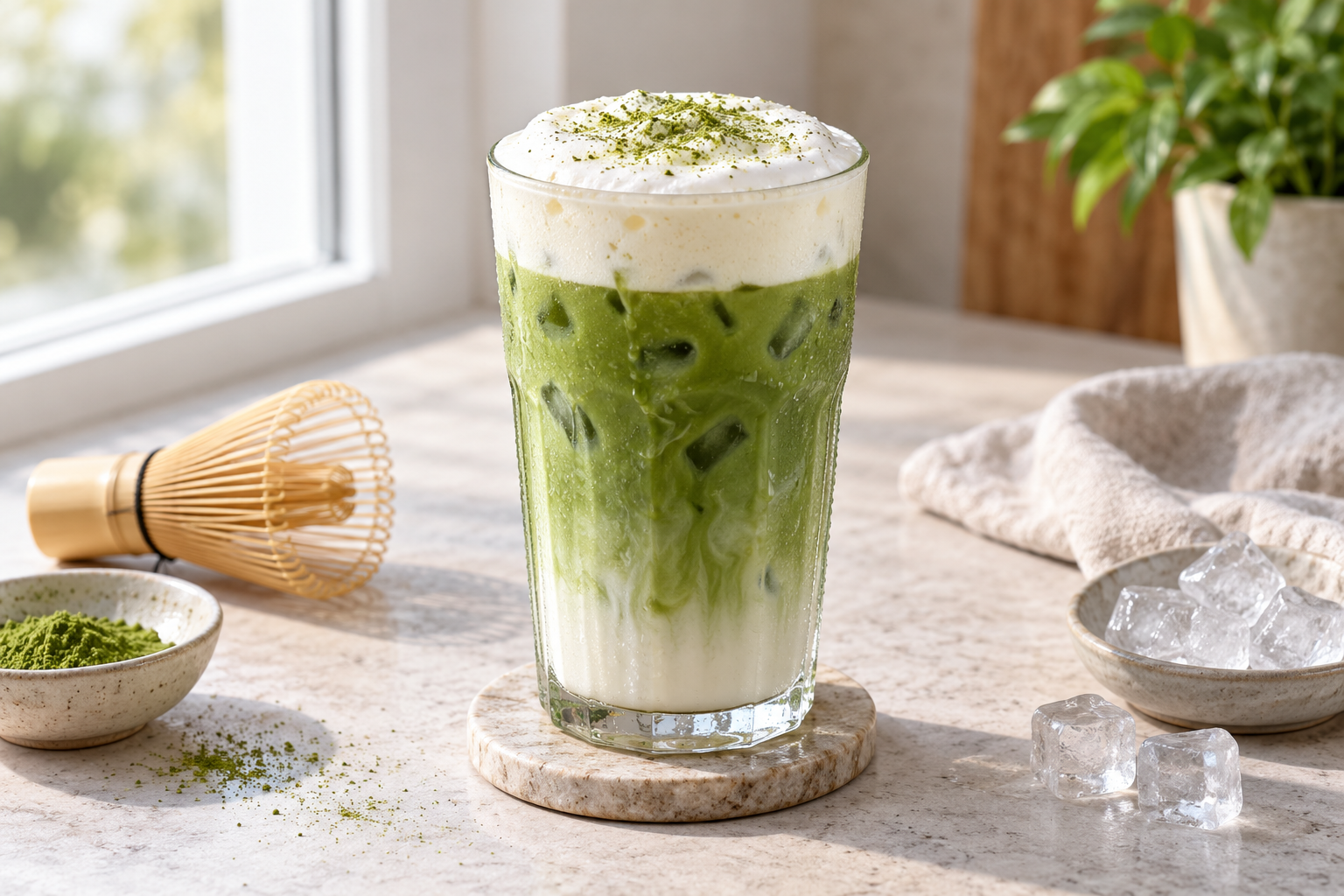
Iced protein matcha latte combines whisked green tea, cold milk, vanilla protein powder and a thick cold-foam topping. This homemade version takes about ten minutes, contains approximately 28 g of protein and gives you control over the sweetness, milk and strength. It is alcohol-free, uses simple metric measurements and costs less than buying a customised café drink.
The drink has three parts. First, matcha is sifted and whisked with warm water. Second, milk and ice form the chilled base. Third, cold milk, vanilla and protein powder are frothed into a creamy topping. Pouring the matcha slowly over the milk creates green and white layers, while stirring before drinking gives an even flavour.
This full guide explains how to prevent matcha lumps, stop protein powder becoming chalky, choose a suitable milk and make cold foam without specialist equipment. You will also find five flavour variations, estimated calories and macros, caffeine guidance, dairy-free instructions and storage advice. For another cold yoghurt-based drink, see our mango lassi recipe.
Why You Will Like This Iced Protein Matcha Latte
- Approximately 28 g protein: milk and protein powder turn a standard latte into a more filling drink.
- Ten-minute preparation: there is no cooking beyond heating a small amount of water.
- Adjustable caffeine: use 1 to 2 teaspoons of matcha according to your taste and tolerance.
- Controlled sweetness: add maple syrup, honey or a sugar-free sweetener only if needed.
- Thick vanilla cold foam: the topping gives a café-style finish with ordinary ingredients.
- Dairy-free option: soya milk and plant protein work well when prepared correctly.
- No alcohol: the recipe and every variation are alcohol-free.
Recipe at a Glance
- Preparation time: 10 minutes
- Total time: 10 minutes
- Servings: 1 large drink
- Best glass size: 450 to 500 ml
- Estimated protein: 28 g
- Estimated calories: 255 kcal
- Estimated caffeine: roughly 50 to 75 mg, depending on the matcha
Ingredients
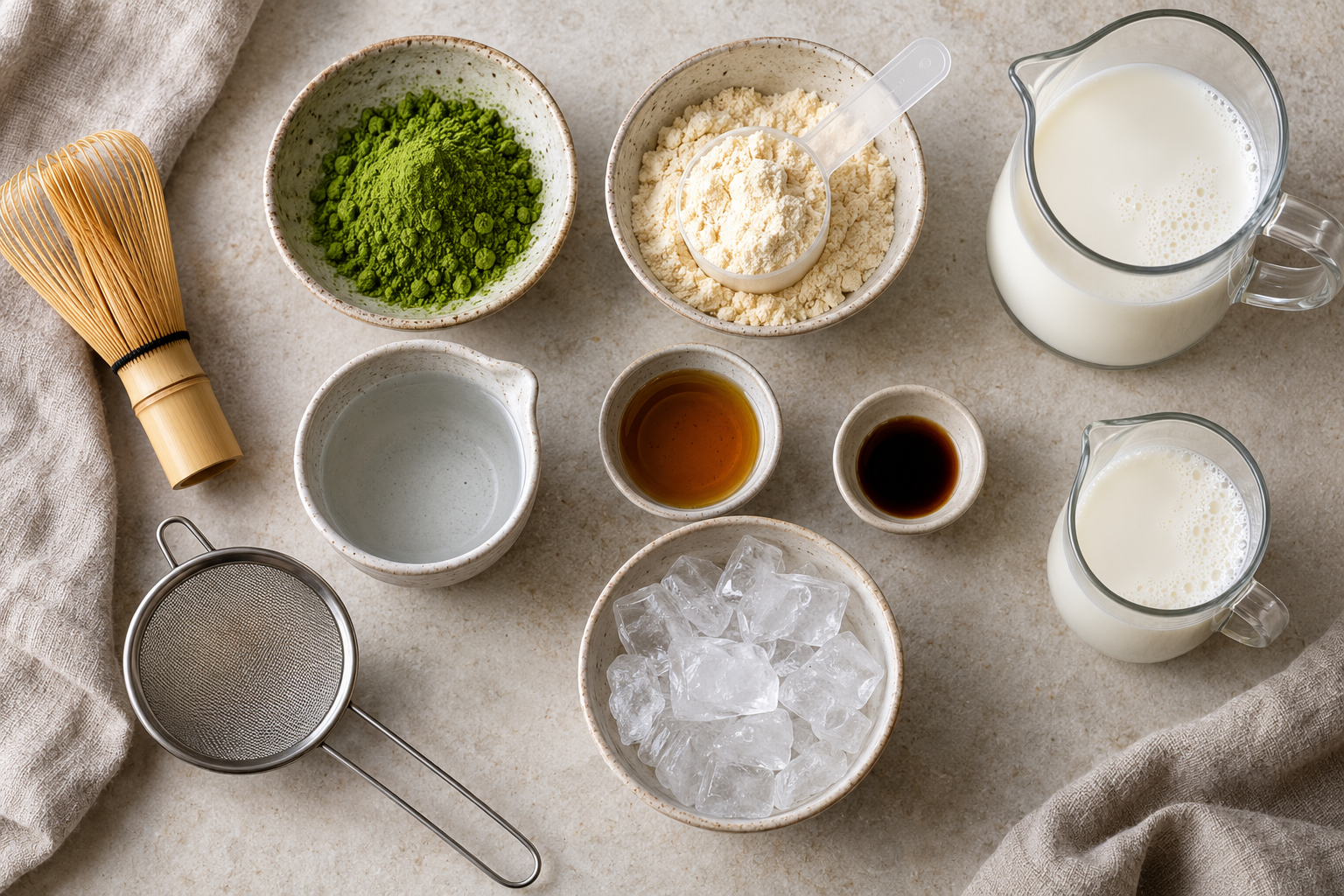
These quantities make one large iced protein matcha latte. The milk is divided between the glass and the cold foam.
- 2 g matcha powder: about one level teaspoon. Use 3 to 4 g for a stronger drink.
- 60 ml warm water: heat it to roughly 75 to 80°C rather than boiling.
- 200 ml cold semi-skimmed milk: for the main latte layer.
- 80 ml cold semi-skimmed milk: for the protein foam.
- 20 g vanilla protein powder: whey, casein, whey-casein or a smooth plant-based powder.
- 1/2 teaspoon vanilla extract: adds flavour without needing syrup.
- 1 teaspoon maple syrup or honey, optional: adjust after tasting.
- 120 g ice cubes: enough to fill the glass about two thirds.
- A tiny pinch of salt, optional: softens bitterness and sharpens the vanilla.
What Is Matcha?
Matcha is finely ground green tea. Instead of steeping leaves and removing them, you whisk the powder into water and consume it as part of the drink. That gives matcha its strong green colour, fine texture and distinctive balance of grassy, savoury and lightly bitter flavours.
Quality varies. Matcha intended for drinking usually has a brighter green colour and a smoother taste than inexpensive cooking-grade powder. You do not need the most expensive ceremonial product for a milk drink, but very dull or brown powder can taste flat and harsh. Buy a small sealed container from a seller with a good turnover, then store it away from heat, moisture and light.
Choosing Protein Powder
Vanilla whey protein creates a light, airy foam and a familiar latte flavour. Casein makes a thicker topping and may need an extra tablespoon of milk. Plant powders can work, but pea-heavy products sometimes feel grainy. A soya, rice or mixed plant powder often gives a smoother result.
Use a protein powder that tastes pleasant when mixed with milk. The matcha will not hide a chalky product. Check the sweetness before adding maple syrup because many vanilla powders already contain sweetener.
Choosing Milk
Semi-skimmed dairy milk provides protein and froths reliably. Skimmed milk makes a lighter, larger foam, while whole milk tastes richer but can produce a denser topping. Unsweetened soya milk is the strongest dairy-free choice because it contains more protein than most nut or oat drinks.
Barista-style oat milk gives a creamy result but increases the carbohydrate and usually lowers the protein. Almond milk is light but its foam can disappear quickly. Whatever you choose, keep the milk very cold. Cold liquid holds air better during frothing and keeps the ice from melting too quickly.
Equipment
- A fine mesh sieve
- A small bowl or wide mug
- A bamboo matcha whisk, small balloon whisk or handheld frother
- A tall jug for the cold foam
- A 450 to 500 ml glass
- A kitchen scale or measuring spoons
- A thermometer for the water, optional
A bamboo whisk is helpful but not required. A small electric frother works quickly, and a tightly sealed jar can make foam in an emergency. Do not shake hot matcha in a closed container because pressure can build.
How to Make an Iced Protein Matcha Latte
Step 1: Heat the Water
Heat fresh water to about 75 to 80°C. If you do not have a thermometer, boil the kettle and let the water stand for five to seven minutes. Boiling water can make matcha taste unnecessarily bitter and may reduce its fresh green appearance.
Step 2: Sift the Matcha
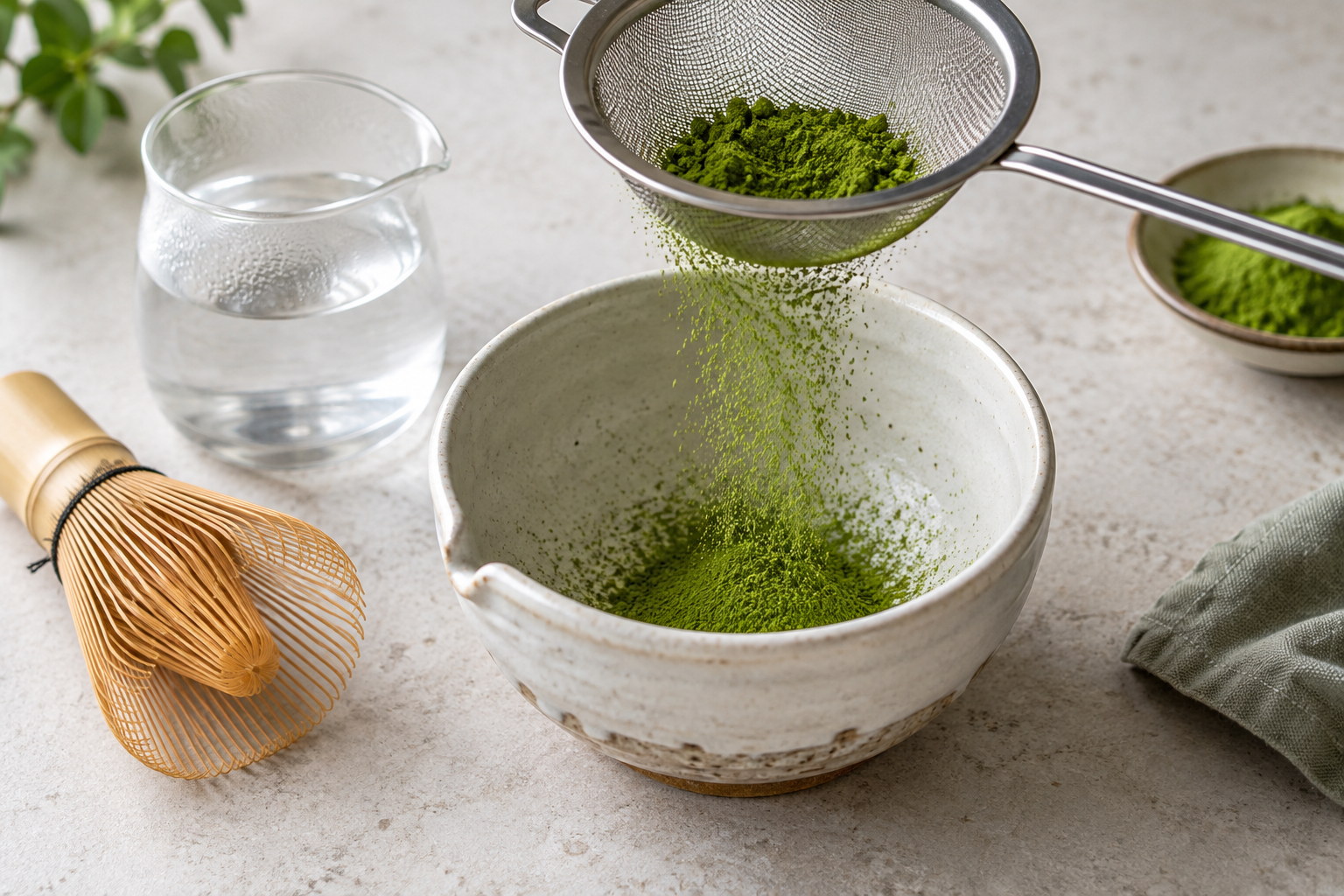
Place a fine sieve over a small bowl. Add the matcha and press it through with the back of a teaspoon. Sifting breaks up compacted particles before water is added. It takes less than a minute and prevents the dark green lumps that are difficult to remove later.
Step 3: Make the Matcha Concentrate
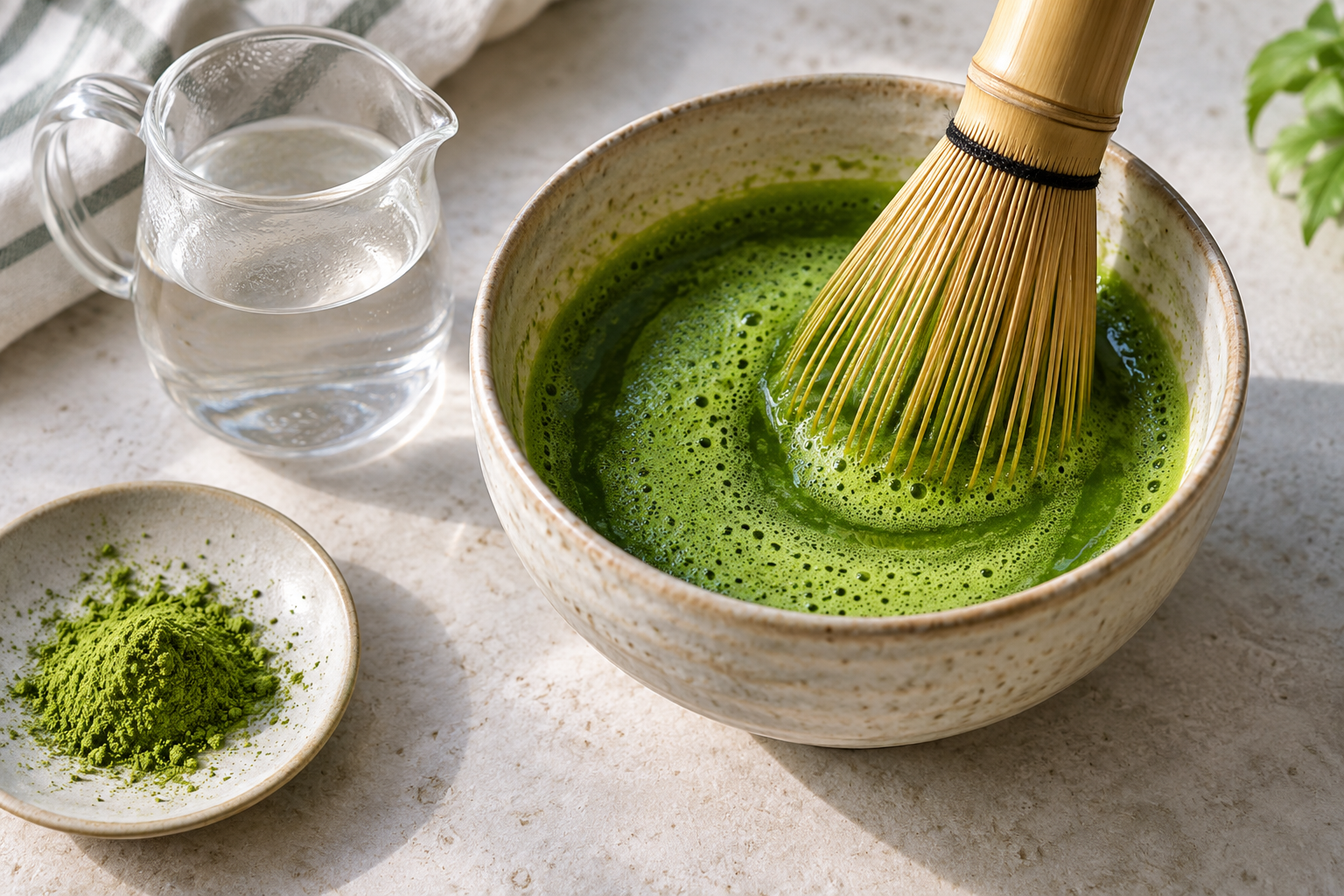
Pour 60 ml of warm water over the sifted matcha. Whisk briskly from side to side in a loose W-shaped motion for 20 to 30 seconds. Avoid pressing the whisk hard against the bottom. The liquid should become smooth with a layer of fine bubbles on top.
If using an electric frother, keep the head just below the surface and move it around the bowl for 15 to 20 seconds. Let the concentrate cool for two minutes before pouring it over ice. Adding it while very hot melts the ice and weakens the drink.
Step 4: Make the Vanilla Protein Cold Foam
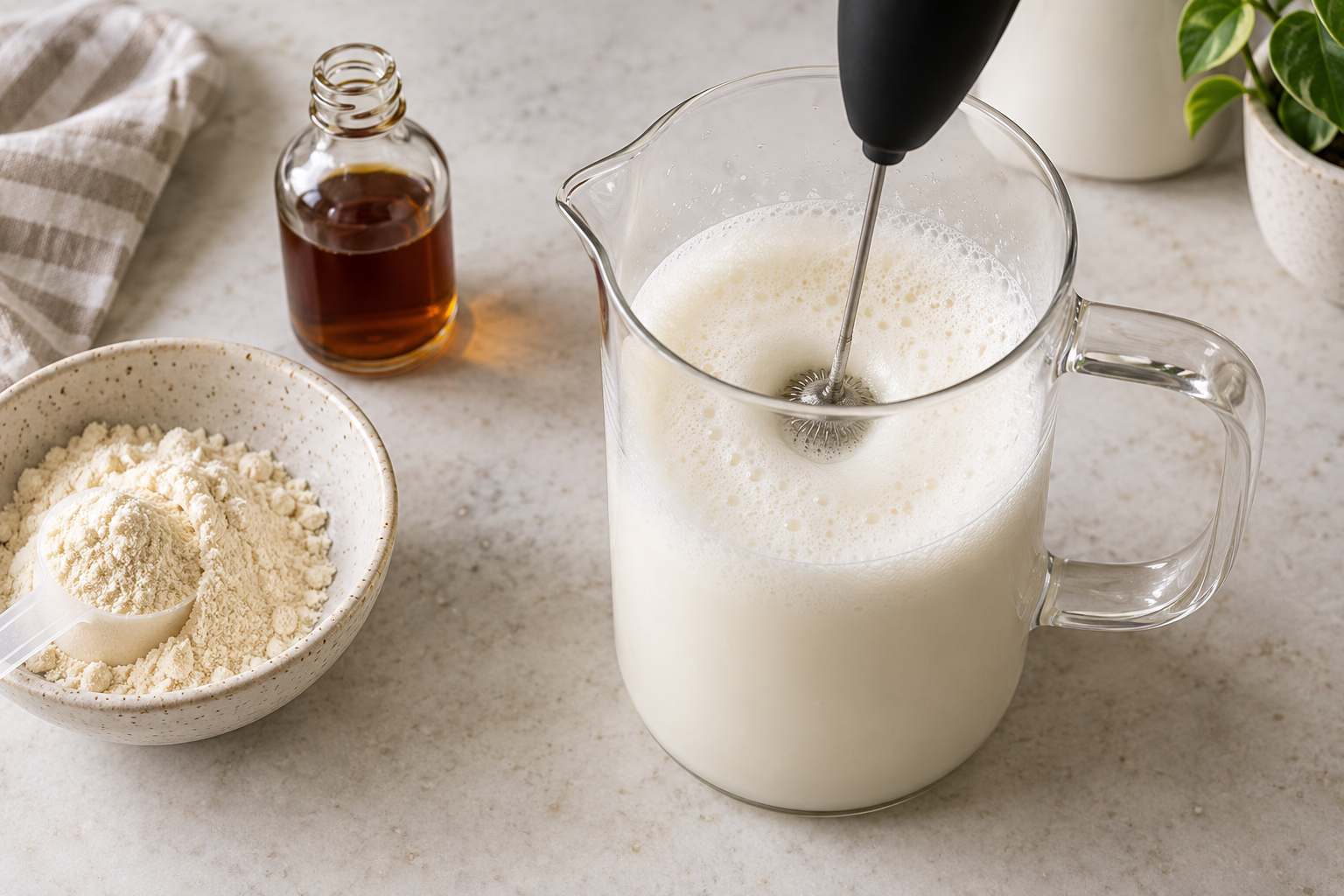
Pour 80 ml of very cold milk into a tall jug. Add the vanilla protein powder, vanilla extract, optional sweetener and a tiny pinch of salt. Stir once with a spoon to wet the powder. This prevents a cloud of dry powder when the frother starts.
Froth for 30 to 45 seconds. Begin with the frother head fully submerged, then lift it closer to the surface once the powder has dissolved. Stop when the mixture has increased in volume and forms a thick but pourable foam. If it becomes too stiff, add one tablespoon of milk and froth briefly again.
Step 5: Fill the Glass
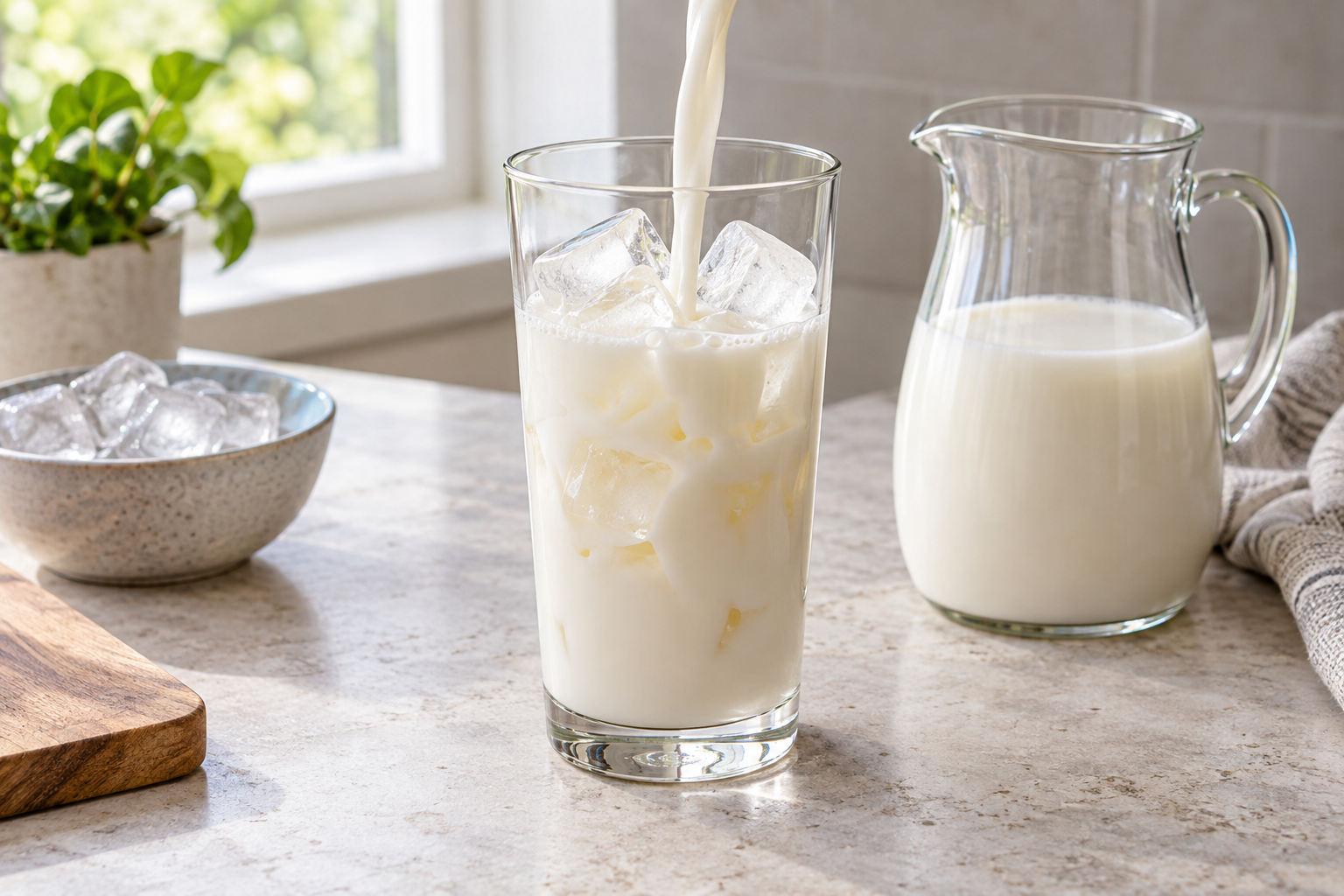
Add the ice cubes to a tall glass, filling it about two thirds. Pour in 200 ml of cold milk. Leave at least 4 cm of space at the top for the matcha and cold foam. If using syrup in the milk rather than the foam, stir it in before adding the ice.
Step 6: Pour in the Matcha
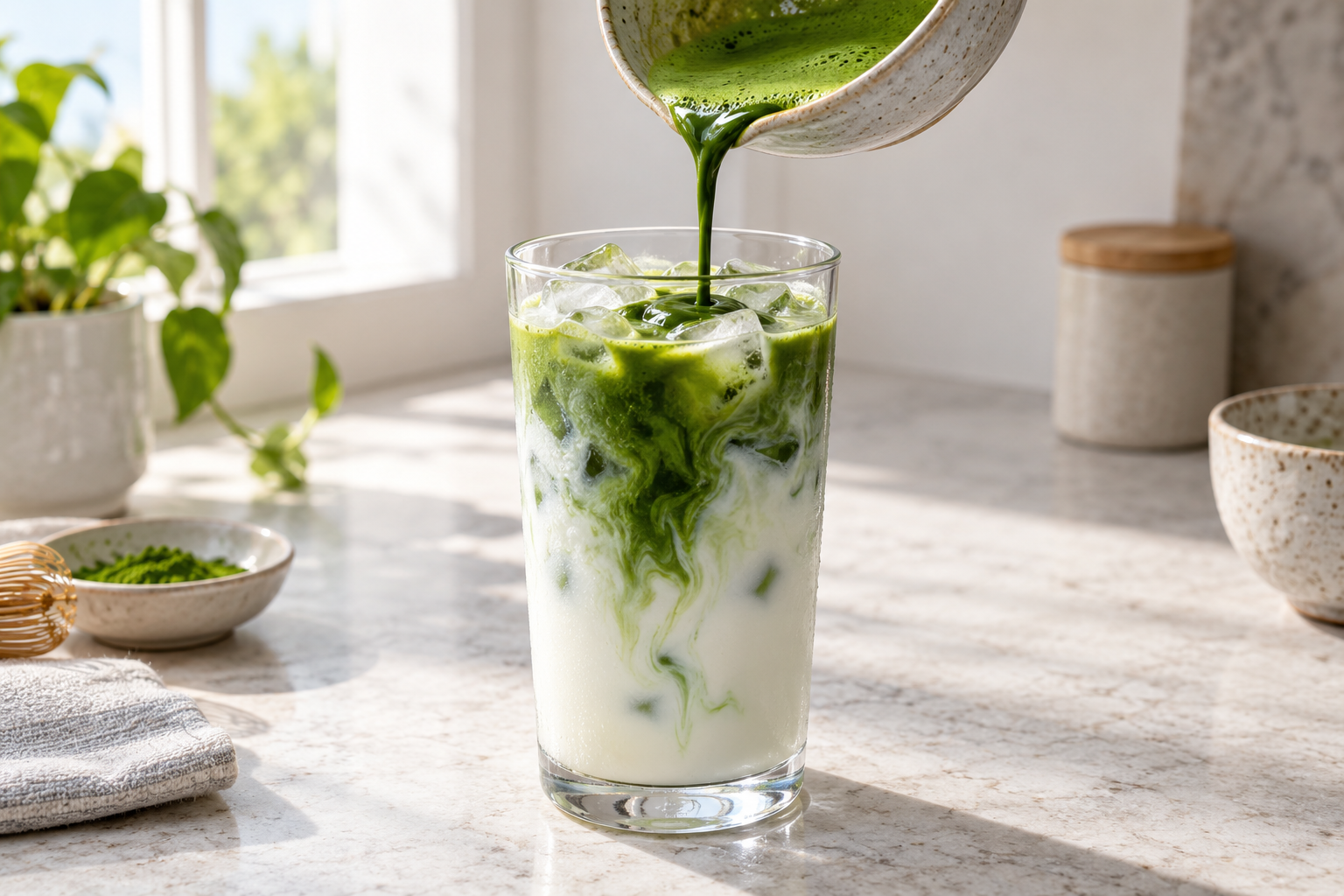
Pour the matcha concentrate slowly over the back of a spoon or directly onto an ice cube. This slows the flow and helps create a distinct green layer above the milk. The layers are decorative, so do not worry if they mix immediately. The flavour will be the same.
Step 7: Add the Protein Cold Foam
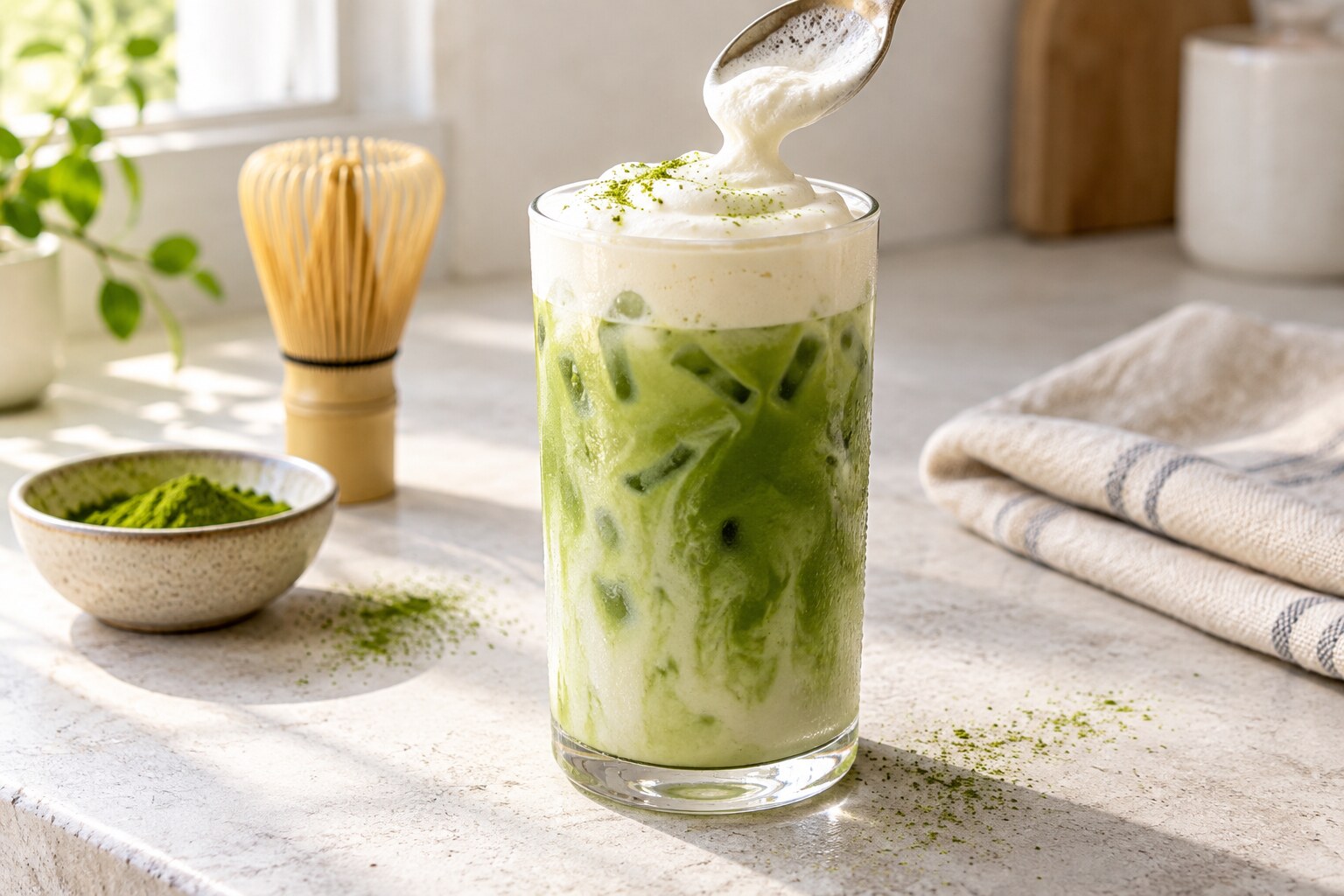
Spoon or pour the vanilla protein cold foam onto the drink. Add a very light dusting of matcha if you like. Serve immediately and stir before drinking so the matcha, milk and foam combine evenly.
Estimated Nutrition
Using semi-skimmed dairy milk, 20 g vanilla whey protein and one teaspoon of maple syrup, one large drink contains approximately:
- Calories: 255 kcal
- Protein: 28 g
- Carbohydrate: 24 g
- Sugars: 21 g, mostly naturally occurring lactose
- Fat: 6 g
- Fibre: 1 g
- Estimated caffeine: 50 to 75 mg
Nutrition varies with the milk, powder and sweetener you use. Matcha caffeine also varies by product and serving size. Calculate from your own labels if you track intake closely.
How Much Caffeine Is in an Iced Matcha Latte?
One level teaspoon of matcha commonly provides roughly 50 to 75 mg of caffeine, but the actual amount can fall outside that range. Growing conditions, processing, powder quantity and brand all affect it. A stronger drink made with two teaspoons may contain considerably more.
If you are sensitive to caffeine, begin with half a teaspoon and avoid drinking it late in the day. Children, pregnant people and anyone advised to limit caffeine should account for other sources such as coffee, tea, cola, chocolate, energy drinks and some medicines. Seek personal medical advice if you are unsure what intake suits you.
How to Stop Matcha Tasting Bitter
- Use water below boiling: aim for 75 to 80°C.
- Measure the powder: too much matcha can overpower the milk.
- Sift before whisking: smooth matcha tastes more balanced than lumpy concentrate.
- Use fresh powder: stale matcha loses its bright flavour and colour.
- Add enough milk: 280 ml across the latte and foam balances one teaspoon well.
- Use a small amount of sweetness: vanilla and one teaspoon of maple syrup can soften bitterness.
- Add a pinch of salt: a tiny amount can reduce the perception of bitterness without making the drink salty.
How to Prevent Chalky Protein Powder
Do not add dry protein powder directly to the finished iced drink. Cold liquid and ice make clumps harder to dissolve. Instead, wet the powder in a separate jug with a small amount of milk, then froth until smooth.
Protein powders absorb liquid differently. Casein and many plant products need more milk than whey. If the foam looks like paste, add milk one tablespoon at a time. If it is thin, use 5 g more protein powder or froth for another 15 seconds.
A blender can make the smoothest cold foam, but it may create too much volume for one drink. Use a small blender cup and pulse briefly. Overmixing can warm the milk and cause large bubbles that collapse quickly.
Five Flavour Variations
1. Strawberry Protein Matcha Latte
Mash 80 g ripe strawberries with one teaspoon of maple syrup. Spoon them into the bottom of the glass before adding ice and milk. Keep the matcha and vanilla foam unchanged. Stir before drinking so the fruit moves through the milk.
Frozen strawberries can be thawed and drained first. A smooth purée gives a café-style result, while hand-mashed fruit leaves small pieces. Add the strawberry layer on the day you plan to drink it.
2. Mango Matcha Latte
Purée 80 g ripe mango with one tablespoon of milk. Add it to the bottom of the glass, then continue with ice, milk, matcha and cold foam. Reduce or omit the maple syrup because ripe mango is naturally sweet.
This variation shares the fruit flavour of our creamy mango lassi, but matcha adds an earthy note and caffeine. Use fresh or thawed frozen mango rather than fruit packed in syrup.
3. Blueberry Matcha Latte
Simmer 75 g blueberries with one tablespoon of water for three minutes, then crush and cool. Spoon the fruit into the glass before adding ice. The purple berry layer looks striking against the green tea, and its tartness balances vanilla powder.
4. Coconut Matcha Latte
Replace 100 ml of the main milk with unsweetened coconut drink. Keep soya or dairy milk for the foam because coconut drink alone may not froth well. Add one drop of coconut extract only if the flavour feels too subtle.
5. Chocolate Matcha Latte
Use chocolate protein powder in the cold foam and add 5 g cocoa powder. Whisk the cocoa with two tablespoons of the milk before adding the remaining milk and protein powder. Chocolate makes the drink richer and slightly less vivid in colour.
Dairy-Free and Vegan Instructions
Use unsweetened soya milk and a plant protein powder. Soya milk provides a useful amount of protein and usually foams better than almond or standard oat drink. Keep it very cold and use a tall narrow jug.
Check the vanilla extract and sweetener if following a strict vegan diet. Use maple syrup rather than honey. Some plant powders thicken quickly, so begin with 15 g powder and add the remaining 5 g only if the foam is still loose.
Lower-Calorie Version
Use skimmed dairy milk or an unsweetened lower-calorie plant drink, omit maple syrup and use a protein powder you enjoy without extra sweetener. The total can fall to around 190 to 220 kcal, depending on the products. Protein may also change, especially with almond or oat drink.
Do not reduce milk so far that the drink becomes mostly ice and powder. A satisfying texture matters. If you want a smaller portion, reduce every ingredient by one quarter rather than removing only the milk.
Higher-Protein Version
Increase the protein powder to 30 g and add another 40 ml of milk to the foam. This may provide roughly 35 g protein, depending on your milk and powder. Use a 500 ml glass because the extra foam needs space.
More powder does not always improve the drink. A very large serving can taste dry and mask the matcha. If your goal is a protein-rich breakfast, pair the standard latte with our high-protein overnight oats rather than forcing excessive powder into one glass.
Making Protein Cold Foam Without a Frother
Using a Sealed Jar
Add the cold milk, protein powder and vanilla to a jar with plenty of empty space. Seal tightly and shake for 45 to 60 seconds. Let it stand for 15 seconds, then spoon the foam onto the drink. This method creates larger bubbles but requires no equipment.
Using a Blender
Put the foam ingredients in a small blender cup and pulse for 10 to 15 seconds. Stop as soon as the mixture is smooth and airy. A large blender jug may struggle with such a small volume.
Using a Whisk
Use a small balloon whisk and beat quickly in a narrow bowl for one to two minutes. The foam will be softer than electric-frothed milk but still adds a creamy top layer.
Make-Ahead Instructions
Matcha tastes best soon after whisking, but you can prepare parts of the drink ahead. Sift individual matcha portions into small dry containers and keep them sealed. Measure the protein powder separately. Refrigerate the milk and have clean glasses ready.
You can whisk the matcha concentrate up to 24 hours ahead and refrigerate it in a sealed container. Shake or whisk again before pouring because fine particles settle. The colour may become slightly duller, so same-day preparation gives a fresher result.
Protein cold foam is best made immediately before serving. Stored foam loses volume and can separate. If necessary, mix the milk, vanilla and powder ahead, refrigerate for up to one day, then froth when needed.
Storage
Store an assembled iced protein matcha latte in the refrigerator only if necessary. Remove the ice first or it will melt and dilute the drink. Keep it covered and drink within 24 hours. Stir or shake before serving.
Do not leave milk-based drinks at room temperature for longer than two hours. In warm conditions, refrigerate them sooner. Discard a drink that smells unusual, has been left warm for an uncertain period or shows unexpected separation that does not resolve after stirring.
Matcha powder should stay in an airtight container away from heat and light. Refrigeration can protect freshness after opening, but allow the sealed container to reach room temperature before opening it. This prevents condensation from adding moisture to the powder.
Common Problems and Fixes
The Matcha Has Lumps
Press the powder through a fine sieve before adding water. If lumps remain, whisk the concentrate again or pass it through the sieve after mixing. Do not try to crush dry lumps after they enter the iced milk.
The Drink Is Too Bitter
Use cooler water, reduce the matcha to 1.5 g and add a little more milk. A small amount of vanilla or maple syrup can help. Old or low-quality powder may remain harsh regardless of preparation.
The Protein Foam Is Too Thick
Add cold milk one tablespoon at a time and froth briefly. Casein and plant powders often absorb more liquid than whey.
The Protein Foam Is Too Thin
Use colder milk, add 5 g more powder or froth for another 15 seconds. A narrow container gives the frother better contact with the liquid.
The Layers Disappeared
Layers depend on liquid density, temperature and pouring speed. Pour the matcha slowly over an ice cube or the back of a spoon. The effect is visual only and does not change the flavour.
The Ice Melts Too Quickly
Cool the matcha concentrate for two minutes, use cold milk and chill the glass. Large solid ice cubes melt more slowly than small or hollow cubes.
Serving Ideas
Serve the latte immediately after adding the cold foam. It works as a morning drink, an afternoon refreshment or a convenient post-exercise option if the protein amount suits your needs.
For breakfast, pair it with overnight oats or a small portion of fruit. For a light lunch, add a bowl of creamy butter bean soup. If you need a full savoury meal later, the crispy air fryer tofu bowls or creamy garlic Parmesan chicken provide structured recipes with nutrition estimates.
Frequently Asked Questions
Can I put protein powder in matcha?
Yes. Mix protein powder with cold milk separately rather than whisking it into hot matcha. This reduces clumps and protects the texture.
Does matcha contain caffeine?
Yes. One teaspoon commonly contains roughly 50 to 75 mg, but amounts vary. Check the product information and reduce the serving if you are sensitive.
Can I make the drink without a bamboo whisk?
Yes. Use a handheld frother, small balloon whisk or sealed jar for the cooled mixture. Sifting the powder matters more than owning a traditional whisk.
Can I use boiling water?
You can, but it often makes matcha taste more bitter. Water around 75 to 80°C gives a gentler result.
Which milk has the most protein?
Dairy and soya milk usually contain more protein than almond, coconut or standard oat drinks. Values vary, so compare labels.
Can I use collagen powder?
Collagen dissolves differently and does not create the same milk foam as a complete protein powder. It can be added, but the nutrition and texture will change.
Can I make it hot?
Yes. Whisk the matcha as written, warm the milk gently and mix the protein powder with a small amount of cool milk first. Combine gradually so the powder does not clump. Do not boil the protein mixture.
Is matcha stronger than coffee?
It depends on the portions. A teaspoon of matcha often contains less caffeine than a large filter coffee but may be similar to some espresso drinks. Product and serving size matter.
Why is my matcha dull green?
The powder may be old, exposed to air or intended mainly for cooking. Hot water can also dull the colour. Store it sealed and use water below boiling.
Can I make two drinks at once?
Yes. Double every ingredient and prepare the matcha in a larger bowl. Froth the protein milk in two batches if your jug is small, then divide evenly between glasses.
Can I drink it every day?
It can fit into many diets, but account for caffeine, calories and the rest of your protein intake. Rotate drinks and foods rather than relying on one recipe for all your nutrition.
More Team Foodie Recipes
- Mango lassi for a creamy, caffeine-free fruit drink.
- High-protein overnight oats with seven flavour options.
- Perfect jacket potato with five topping ideas.
- Classic apple crumble for an easy British dessert.
Final Tips
Sift the matcha, use warm rather than boiling water and whisk until no dry pockets remain. Keep the milk cold, wet the protein powder before frothing and adjust the foam with one tablespoon of milk at a time. These steps give the iced protein matcha latte a smooth texture without specialist café equipment.
Make the standard vanilla version first, then change one element at a time. Fruit purées add sweetness and colour, coconut changes the milk flavour, and chocolate powder makes the foam richer. Keep the measured matcha base consistent so you can judge which variation you prefer.
Serve the drink soon after assembly. The ice stays firm, the matcha remains bright and the protein cold foam holds its shape. Stir before drinking for an even combination of green tea, milk and vanilla.