

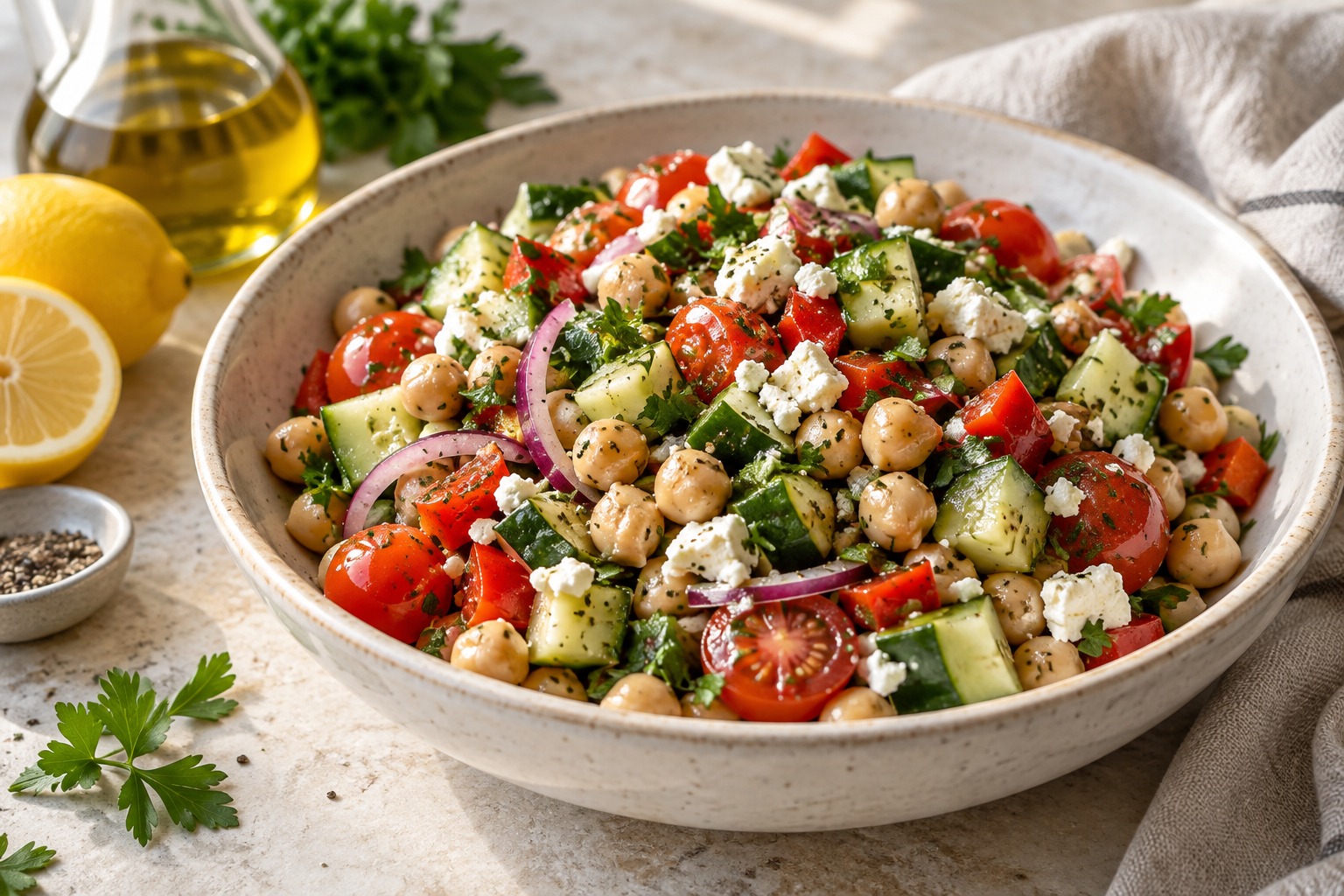
This Mediterranean chickpea salad brings together tender chickpeas, crunchy cucumber, sweet tomatoes and creamy feta in a lemon and olive oil dressing. You can make it without switching on the hob, using two tins of chickpeas and a handful of fresh ingredients. Serve it as a light lunch, spoon it beside a bowl of soup or put it in the fridge for tomorrow.
The recipe takes about 20 minutes to prepare, with an optional 10-minute rest to let the dressing settle into the chickpeas. It makes four lunch portions or six smaller side portions. Below you will find the full metric recipe, step photographs, five measured variations and estimated calories and macros, plus advice on avoiding a watery salad.
Jump to the recipe | Step-by-step method | Calories and nutrition | Storage and meal prep | Frequently asked questions
Mediterranean chickpea salad recipe at a glance
- Serves: 4 as a light lunch or 6 as a side.
- Preparation: 20 minutes.
- Cooking: none when using tinned chickpeas.
- Optional resting: 10 minutes in the fridge.
- Total: 20 minutes, or 30 minutes with resting.
- Equipment: sieve, chopping board, knife, large mixing bowl and small jar or whisk.
- Estimated energy: about 340 kcal per lunch portion.
Quick method: rinse and drain the chickpeas. Chop the vegetables and parsley. Whisk the dressing, toss it through the chickpeas and vegetables, then fold in the feta. Taste before adding salt. Eat straight away or refrigerate briefly before serving.
Ingredients for the salad
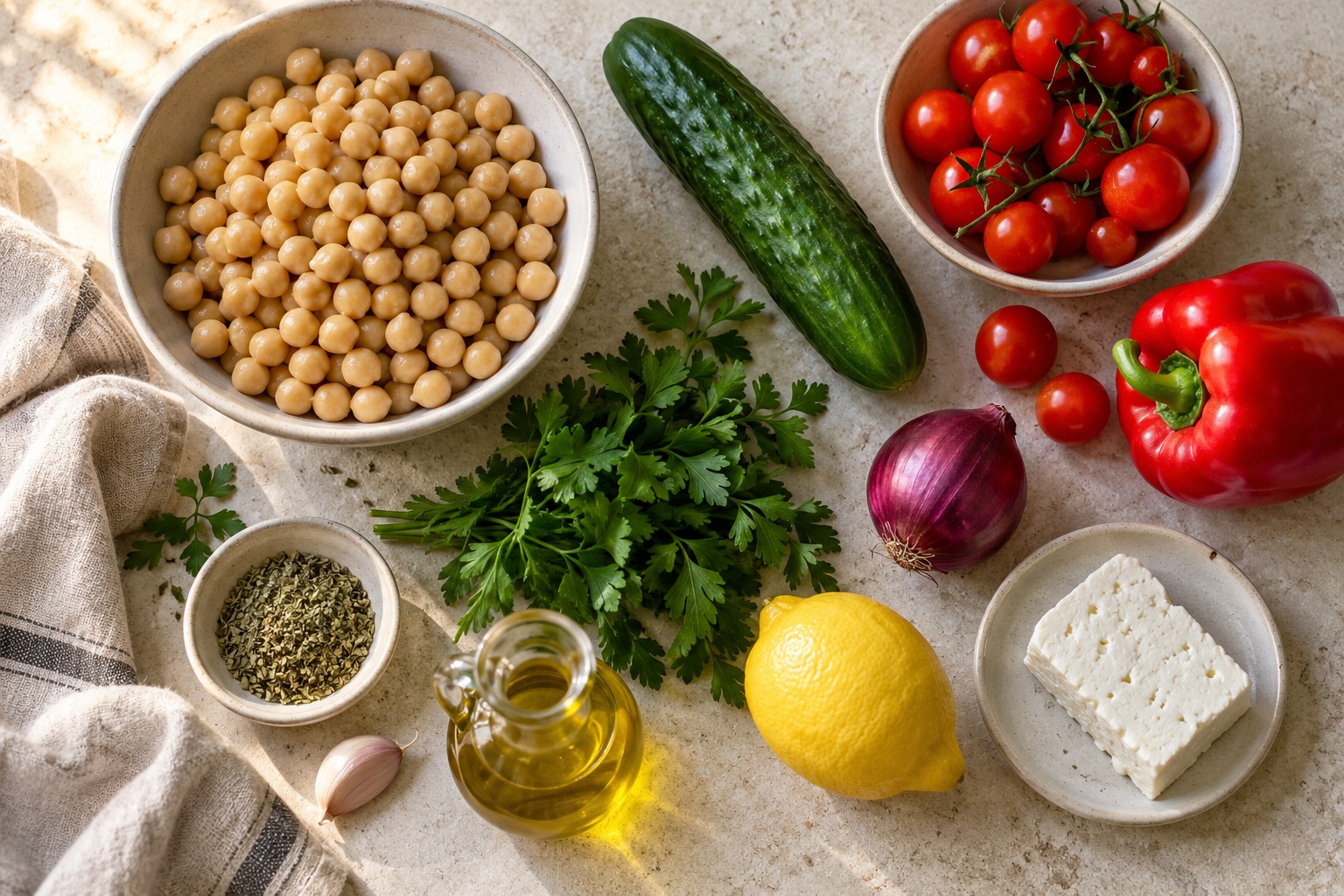
- 2 × 400 g tins chickpeas, drained and rinsed, giving approximately 480 g drained chickpeas
- 300 g cucumber, trimmed and cut into small pieces
- 250 g cherry tomatoes, halved or quartered if large
- 150 g red pepper, deseeded and diced
- 60 g red onion, peeled and thinly sliced
- 100 g feta, preferably a vegetarian-labelled version if required
- 20 g fresh flat-leaf parsley, washed, dried and chopped
Ingredients for the lemon dressing
- 45 ml extra virgin olive oil, approximately 41 g
- 30 ml freshly squeezed lemon juice
- 1 small garlic clove, approximately 3 g, finely grated
- 1 teaspoon dried oregano
- ¼ teaspoon ground black pepper, or to taste
- A small pinch of salt, only if needed after adding the feta
All vegetable weights refer to the prepared edible ingredient. The drained weight matters most for the chickpeas: a 400 g tin includes packing liquid, so two tins do not give 800 g of chickpeas. Check the drained weight on your tins and use approximately 480 g in total.
Why this salad works
Chickpeas provide the body of the salad, while cucumber and pepper keep each forkful crisp. Tomatoes release a little juice that joins the dressing, and feta supplies salt and a creamy finish. Parsley and lemon stop the bowl tasting heavy. The balance depends on keeping these different textures intact, which is why the feta goes in last.
This is a Mediterranean-inspired home recipe rather than a claim to represent one traditional regional dish. It uses familiar ingredients in a practical combination that you can adjust to suit your kitchen. You do not need expensive specialist products, and there is no mayonnaise, pork or alcohol in the recipe.
For a soup-and-salad lunch, pair a smaller portion with our creamy butter bean soup. Keep the salad cold and serve the soup separately so the cucumber stays crisp.
Choosing your chickpeas, vegetables and feta
Tinned chickpeas or home-cooked chickpeas?
Tinned chickpeas keep this a no-cook recipe. Choose chickpeas that feel tender when you bite into one but hold their shape when stirred. Some brands are firmer than others. If yours seem chalky, simmer them in fresh water until tender, following any relevant pack guidance, then drain and cool them before assembling the salad. This adds cooking and cooling time beyond the recipe estimate.
You can also use 480 g of chickpeas cooked from dried. Soak and cook them according to their packet, then measure the cooked, drained weight. Do not add dry chickpeas straight to the salad. Their final yield varies, so weighing them after cooking is more reliable than trying to substitute the same dry weight.
Pick vegetables that keep their shape
A firm cucumber gives a cleaner crunch than a soft one. Leave the skin on if you like it. If the centre contains a lot of loose, watery seeds, scrape out that section with a teaspoon before chopping. You do not need to remove every seed from a firm cucumber.
Cherry tomatoes are convenient because their skins help the halves stay together. Larger tomatoes also work, but cut them into bite-sized pieces and leave obvious pools of juice on the board. Use a red, yellow or orange pepper for sweetness. Green pepper has a more bitter flavour, so use it only if that suits your taste.
Choose feta for flavour, then check the label
A block of feta lets you control the size of the pieces. Crumble it into irregular chunks rather than crushing it into dust. Very fine cheese disappears into the dressing and turns the salad cloudy. A few larger pieces give you a clear taste of feta without needing a bigger quantity.
Feta contains milk, and some cheeses use animal rennet. If you need a vegetarian salad, choose a cheese labelled suitable for vegetarians. A dairy-free alternative makes a different version with different nutrition; check its ingredients and flavour before using the same quantity.
How to make Mediterranean chickpea salad
1. Rinse and drain the chickpeas
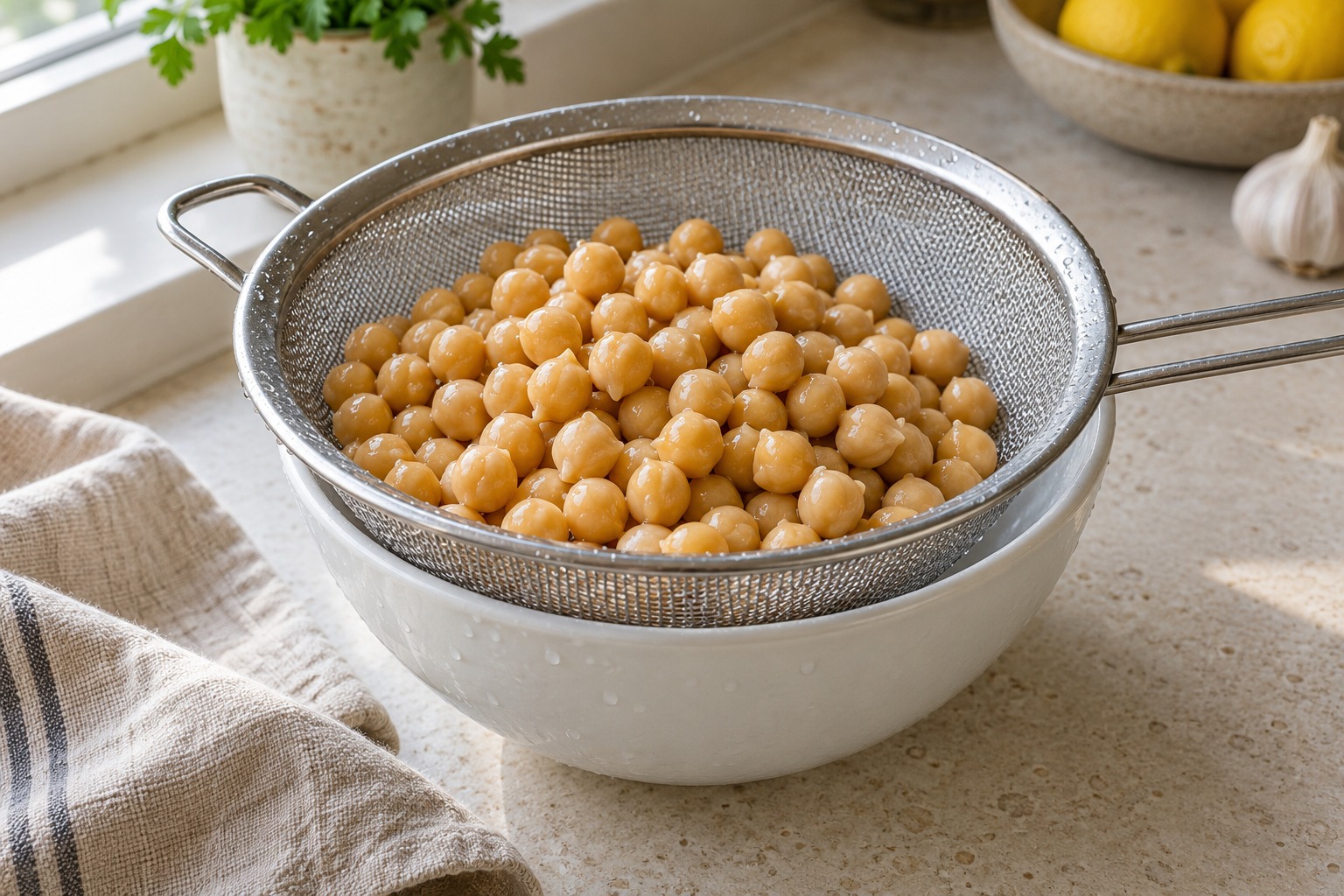
Tip the chickpeas into a sieve, rinse under cold running water and shake off the excess. Leave them to drain while you prepare the vegetables. If they still look wet, spread them over clean kitchen paper and pat them gently. You are removing surface water, not drying them until their skins become tough.
Put the drained chickpeas in a large bowl. Choose a bowl with enough empty space to turn the salad without spilling it. A tightly packed serving bowl makes mixing difficult and encourages you to crush the ingredients. You can transfer the finished salad to a smaller bowl afterwards.
2. Chop the vegetables and parsley
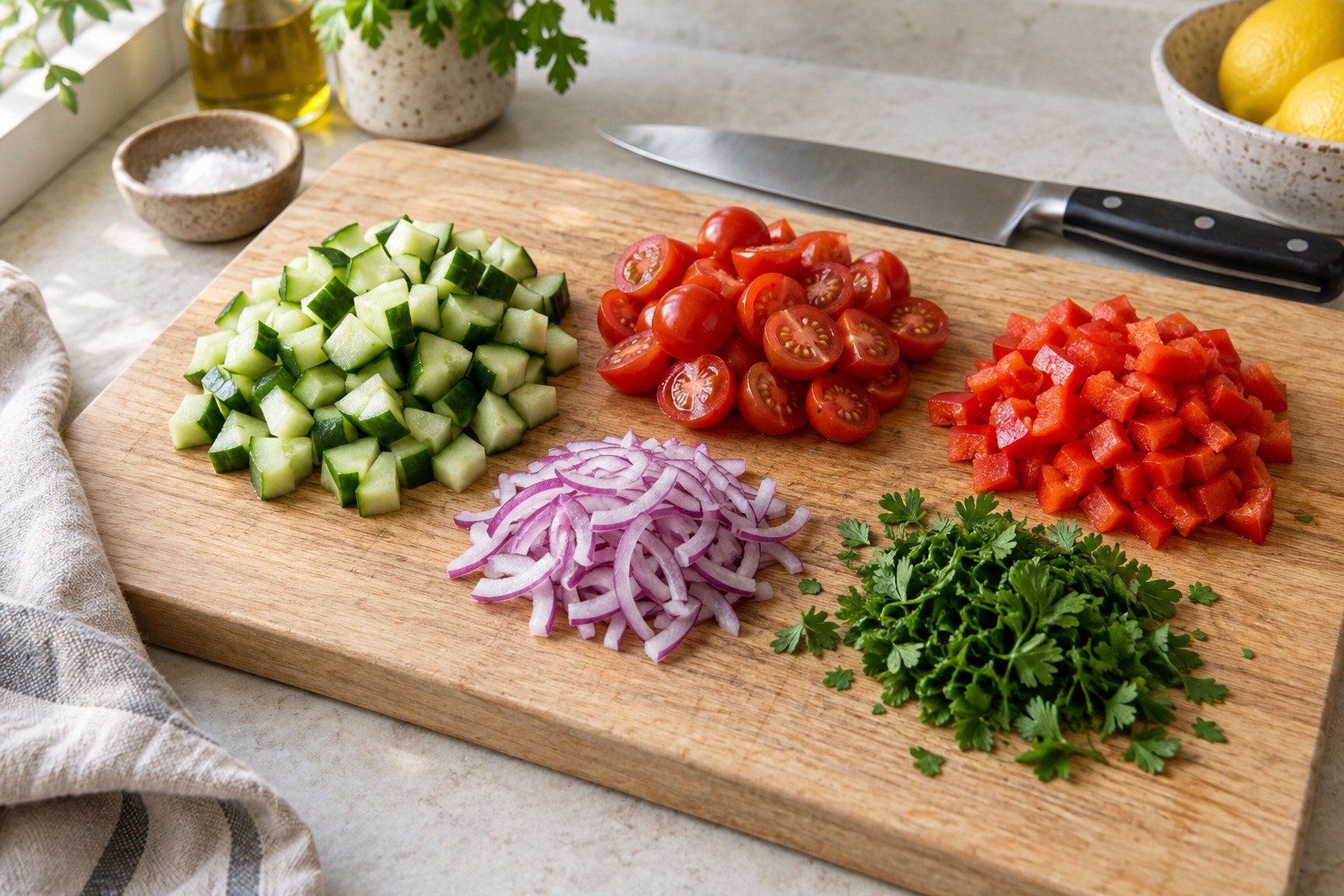
Cut the cucumber and pepper into pieces approximately 1 cm across. Halve the cherry tomatoes and slice the onion finely. Roughly chop the parsley leaves and tender stems, discarding thick stalks. Similar-sized pieces help you get chickpeas, vegetables and dressing in the same bite.
If raw onion tastes too strong to you, soak the slices in cold water for five to ten minutes, then drain and pat dry. This step is optional. Add the prepared vegetables and parsley to the bowl, leaving the feta aside. Avoid adding water from the onion bowl or vegetable chopping board.
3. Whisk the lemon dressing
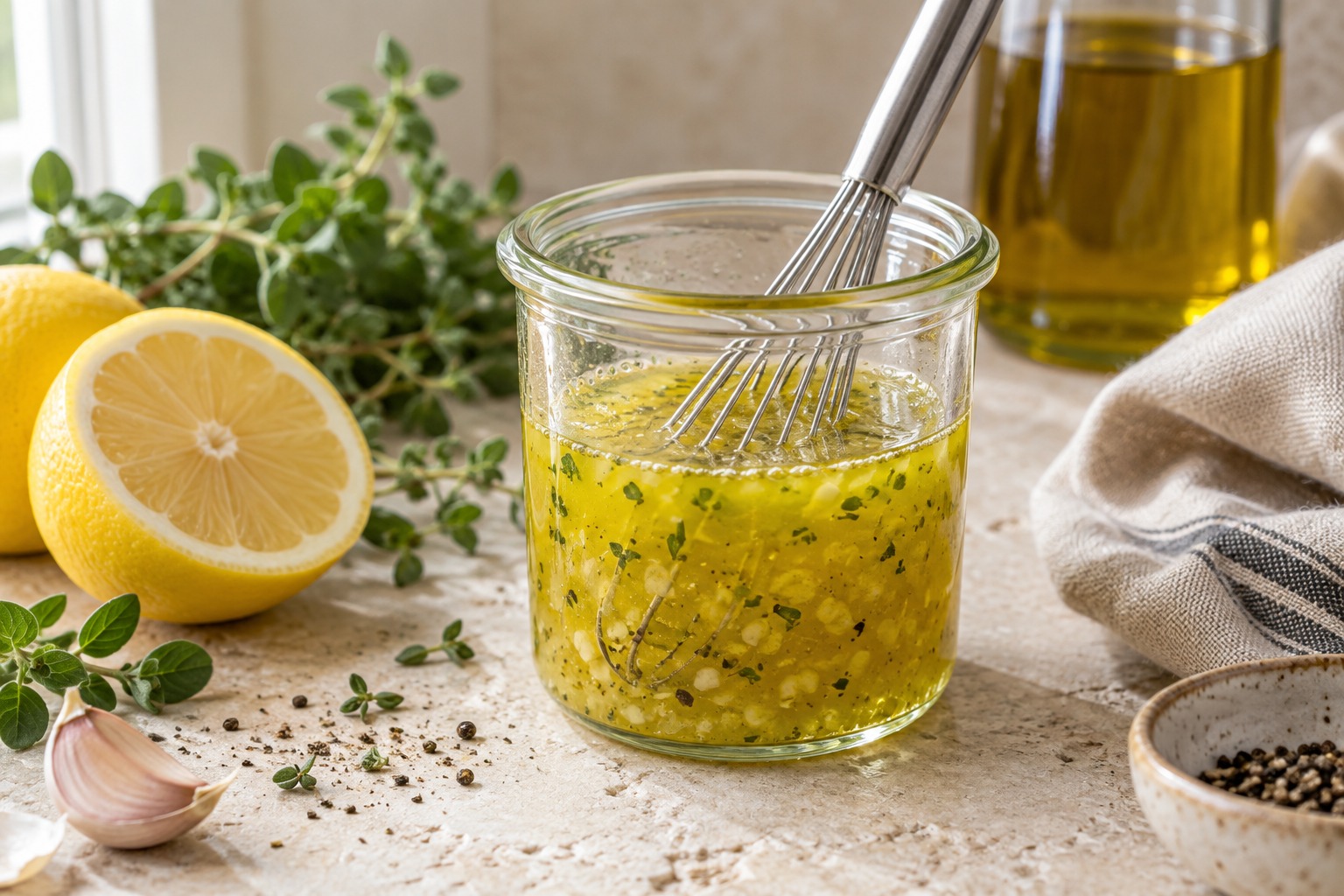
Put the olive oil, lemon juice, grated garlic, oregano and black pepper in a small jar. Close the lid and shake firmly, or whisk the ingredients in a small bowl until they look combined. Freshly grated garlic spreads through the dressing more evenly than chunky chopped pieces.
Taste a drop on a chickpea or piece of cucumber. Dressing tasted alone often seems sharper than it does on a full salad. Keep the salt back at this point because the feta may provide enough. If your lemon is particularly sharp, begin with 20 ml juice and add the remaining 10 ml after tasting the assembled salad.
4. Dress and toss the salad
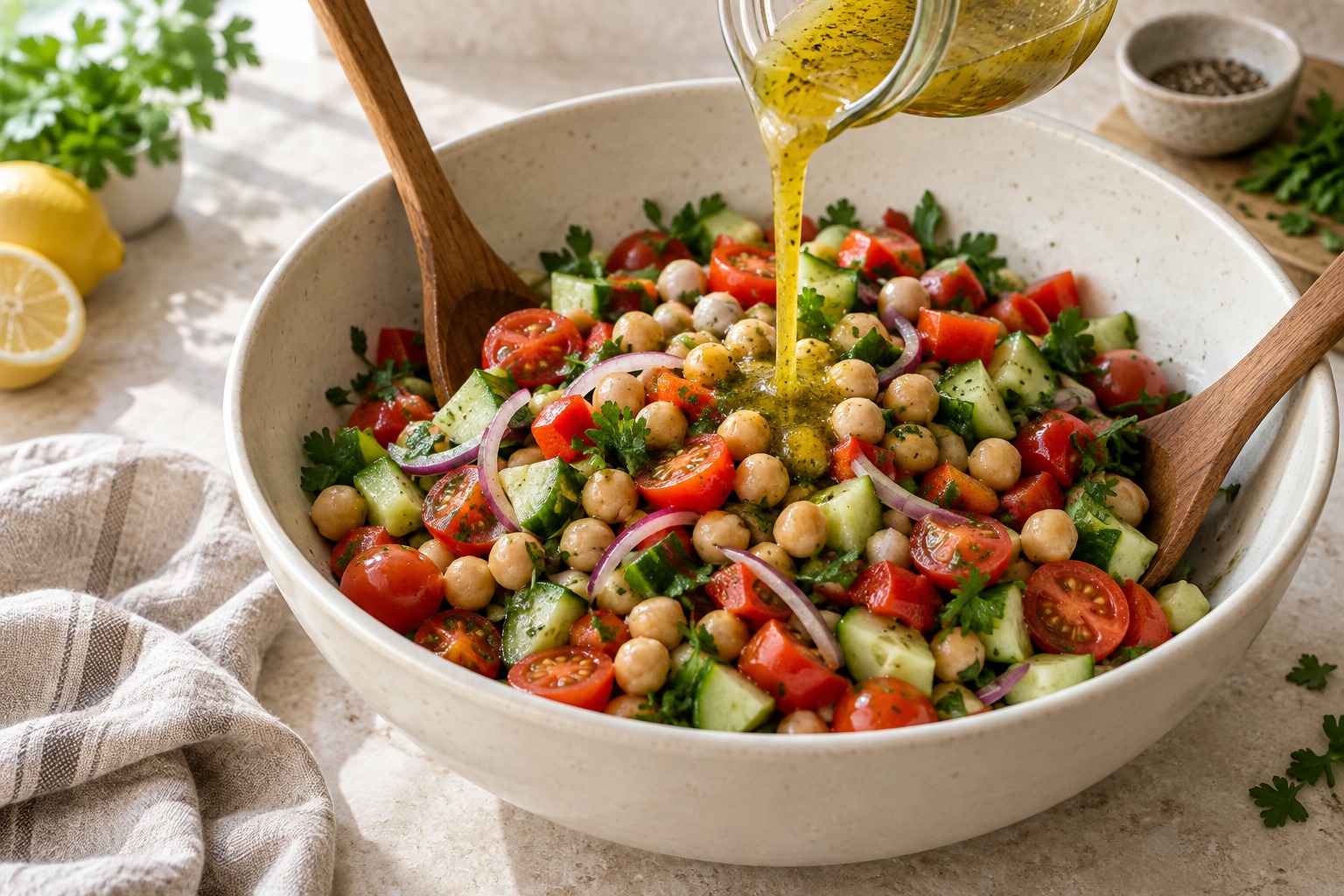
Pour the dressing over the chickpeas and vegetables. Use two large spoons to lift the ingredients from the bottom and turn them over gently. Continue until the parsley and onion look evenly distributed and the chickpeas have a light sheen.
Do not beat the salad or press the spoons hard against the bowl. A small amount of liquid at the bottom is normal, especially after the tomatoes have rested. A deep puddle usually means the chickpeas or vegetables carried too much water into the bowl.
5. Fold in the feta and taste
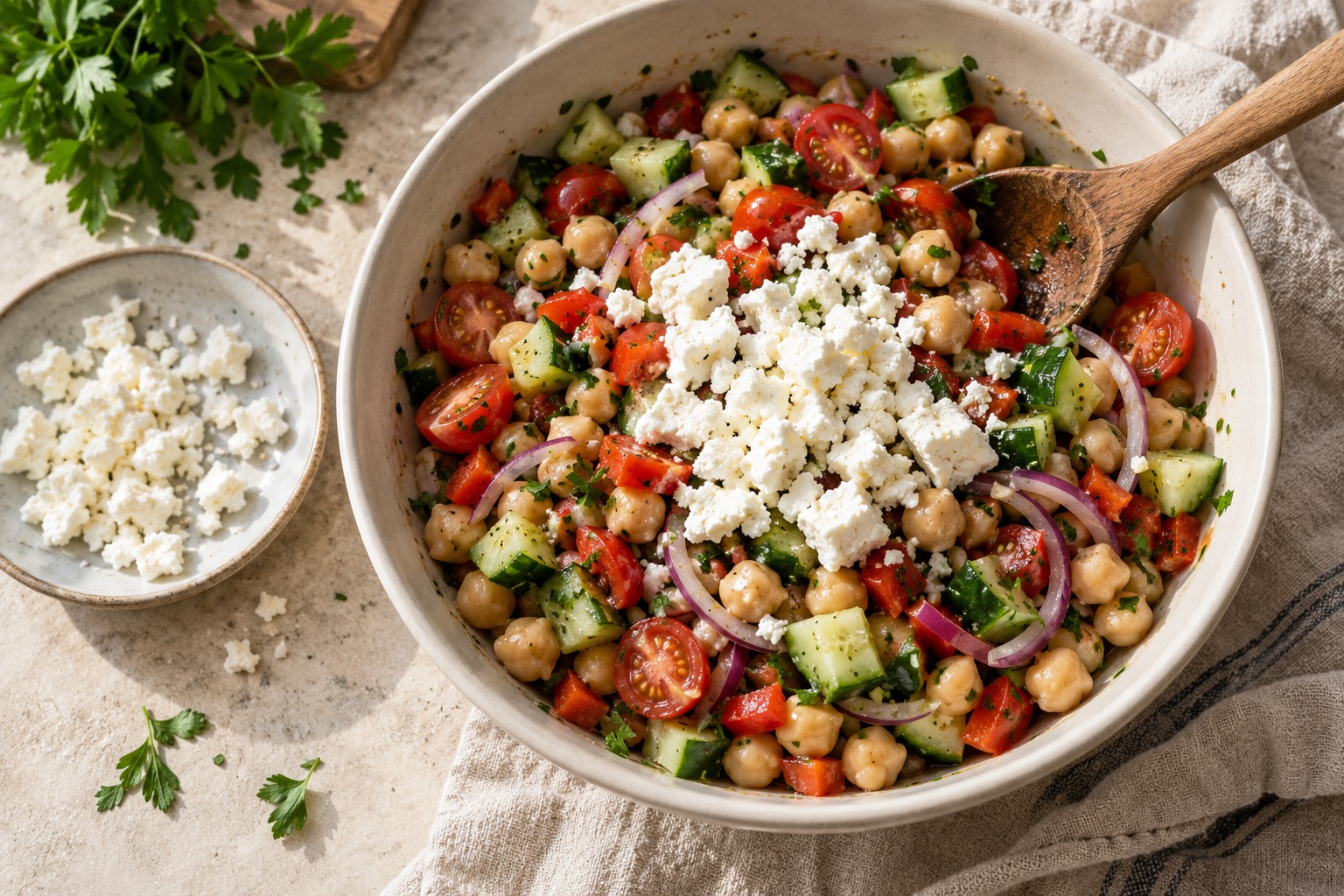
Crumble the feta over the salad and fold it through with two or three gentle turns. Taste a forkful containing feta as well as chickpeas before deciding if it needs salt. Add a little more black pepper or a few drops of lemon juice if you prefer a sharper finish.
You can serve the salad now. For a more settled flavour, cover it and refrigerate for ten minutes, then toss once before portioning. Keep some parsley aside to scatter over the serving bowl if you want a fresher-looking finish. Garnishes are optional and should not replace the measured herbs in the recipe.
Calories and nutrition per serving
The following figures are estimates for the base recipe, including all 45 ml of olive oil and 100 g of feta, divided into four equal lunch portions. They exclude bread, soup, extra protein and optional toppings. Brand differences, particularly in chickpeas and feta, can change the totals.
| Nutrient | Per lunch portion, ¼ recipe | Per side portion, ⅙ recipe |
|---|---|---|
| Energy | Approximately 340 kcal | Approximately 225 kcal |
| Protein | Approximately 13 g | Approximately 9 g |
| Carbohydrate, excluding fibre | Approximately 25 g | Approximately 17 g |
| Fat | Approximately 19 g | Approximately 13 g |
| Fibre | Approximately 9 g | Approximately 6 g |
These rounded figures use typical values for cooked, drained chickpeas, raw vegetables, feta and olive oil. UK-style carbohydrate figures are shown separately from fibre. If you track your intake closely, calculate the recipe using your own packet labels and divide by the portions you actually serve.
Chickpeas supply useful protein, but the base salad is not intended as a particularly high-protein main meal. It also contains a substantial amount of carbohydrate from the chickpeas, so it is not a keto recipe. If you want a lower-carb dinner idea, our creamy garlic Parmesan chicken and broccoli offers a different starting point.
Five ways to vary your chickpea salad
1. Dairy-free chickpea salad
Leave out the 100 g feta and add 80 g diced avocado just before serving. For a salty note, add 30 g sliced olives if you enjoy them. Taste before adding salt, especially if the olives come in brine. This variation removes the milk ingredient, but check any packaged additions for your own dietary requirements.
Avocado softens as it sits, so fold it in at the last moment. If you are packing lunch for the following day, keep the avocado whole until you are ready to eat or accept some browning. The nutrition panel above does not apply unchanged to this version.
2. Chicken and chickpea lunch bowls
Add 300 g cooked chicken breast, chopped or shredded, across the full recipe. Use safely stored cooked chicken and keep the finished salad chilled. This makes a more substantial bowl without increasing the amount of feta or dressing. If the chicken is dry, serve a little plain yoghurt separately rather than pouring more oil through the whole salad.
For a crisp accompaniment made separately, try our air fryer chicken tenders. Serve them beside the salad immediately after cooking; storing the hot tenders in the salad will soften their coating and warm the vegetables.
3. Chickpea and grain salad
Add 200 g cooked, cooled quinoa or bulgur to the full bowl. Keep the chickpea quantity unchanged. Taste after mixing: the grain may need another 10 ml lemon juice and a little extra parsley, but add these gradually. Bulgur contains wheat, while plain quinoa does not naturally contain gluten.
This variation gives you more portions or a larger lunch, depending on your appetite. Do not assume that the original four-portion calorie estimate still applies. Follow the grain packet for cooking and cooling, then use the shorter storage limit of any ingredient in the assembled dish.
4. Roasted pepper and smoky chickpea salad
Replace the raw red pepper with 150 g drained roasted pepper and add ½ teaspoon smoked paprika to the dressing. Pat jarred peppers dry before chopping. Check the jar ingredients if you avoid alcohol-derived ingredients or have specific dietary restrictions; alternatively, roast a fresh pepper yourself and cool it before use.
The result is softer and sweeter than the base salad. Keep the cucumber pieces slightly larger so there is still some crunch. A pinch of chilli flakes works here, but start with a small amount and let people add more at the table.
5. Extra-herby lemon chickpea salad
Keep the 20 g parsley and add 10 g chopped mint or dill. Stir ½ teaspoon finely grated lemon zest into the dressing, taking only the yellow surface of the peel. The white pith underneath can taste bitter. Wash the lemon before zesting it.
This version works well beside warm flatbread or a vegetable soup. If you dislike raw garlic, reduce it to half a clove rather than adding extra lemon to hide its taste. You can always increase the garlic next time, but removing it from a finished dressing is difficult.
How to prevent watery or bland salad
Drain before dressing. Rinsing chickpeas is useful, but any water left clinging to them dilutes the lemon dressing. Let the sieve stand while you chop. Dry the washed parsley too, as a wet bunch can carry more water than you expect.
Cut with a sharp knife. A blunt blade crushes ripe tomatoes and bruises herbs. Clean cuts keep more juice inside the vegetables until you eat them. You do not need identical pieces, just a roughly consistent size that fits comfortably on a fork.
Season the whole bite. Chickpeas can seem plain on their own. Taste them with feta, onion and dressing before adjusting anything. If the salad is still flat, add a few drops of lemon first, then a small pinch of salt if needed. More oil usually does not solve a lack of seasoning.
Keep delicate additions until the end. Feta, avocado and tender herbs need little mixing. Add them after the sturdier ingredients have taken on the dressing. For extra crunch, a small amount of toasted seeds can go on individual portions, but remember that this changes nutrition and may add allergens.
What to serve with Mediterranean chickpea salad
For a simple lunch, serve one quarter of the recipe in a bowl with bread on the side. For dinner, use the smaller side portion next to grilled vegetables, chicken or fish. The dressing already provides acidity, so you may not need another strongly flavoured sauce on the plate.
A warm potato is another useful pairing. Spoon a smaller portion of salad beside our jacket potato recipe, adding the salad after the potato has been cooked and opened. Keep the vegetables away from direct oven heat so they retain their texture.
If you want another plant-based bowl for your weekly plan, see our crispy air fryer tofu bowls. Use that recipe as a separate meal rather than adding its peanut sauce to this lemon dressing. Each bowl has its own balance of flavours.
Storage, packed lunches and meal prep
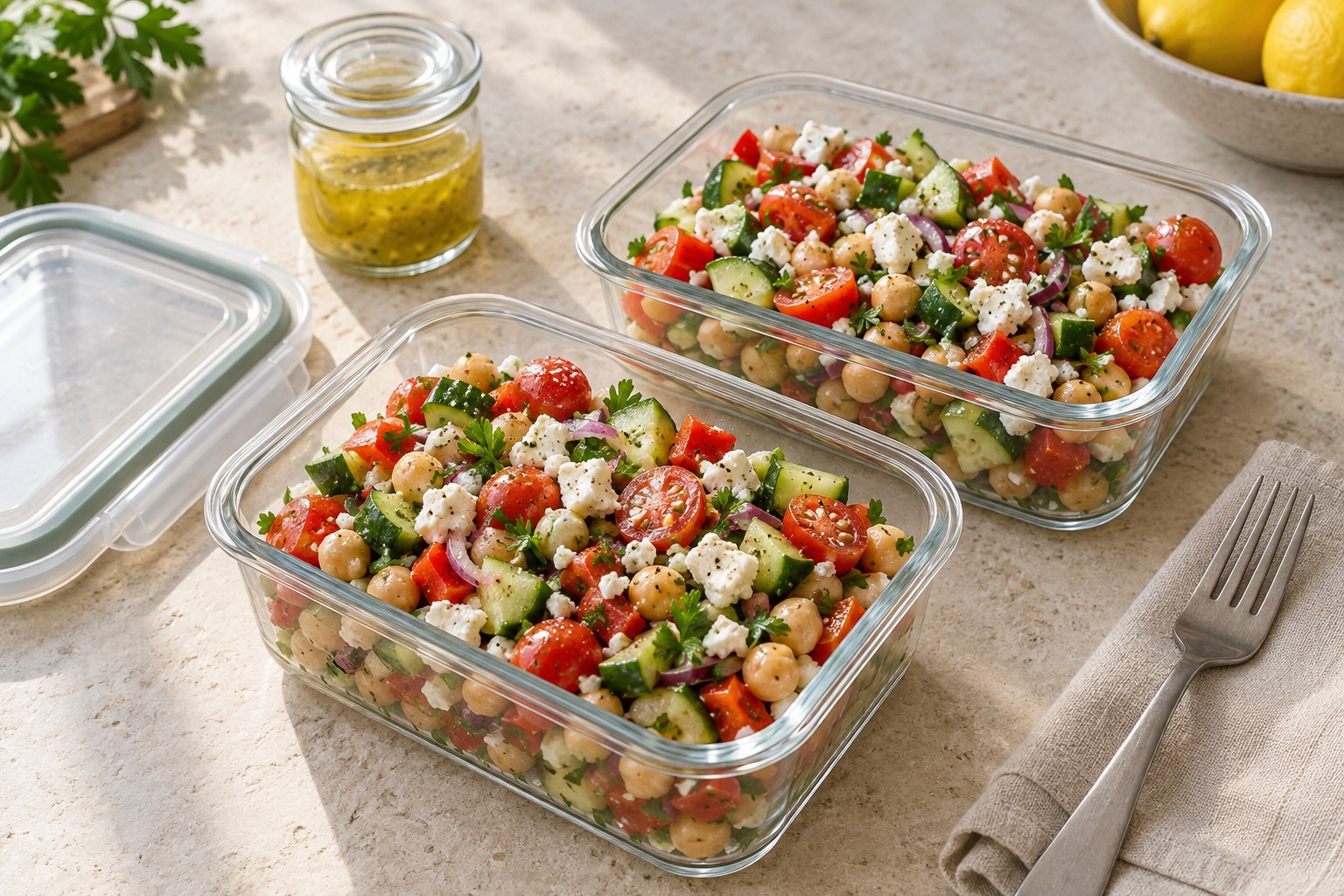
Store the salad in a clean, covered container in the fridge at 5°C or below, and use it within 48 hours. Follow an earlier use-by date or shorter opened-pack instruction if one of your ingredients requires it. Keep the salad chilled until serving and return unused portions promptly to the fridge.
This conservative storage window follows the Food Standards Agency’s general advice to use leftovers within 48 hours. See its chilling guidance for advice on keeping food cold. Lemon dressing adds flavour; it does not make a bowl of salad safe to store at room temperature.
For the crispest packed lunch, store the dressing in a small sealed pot and add it shortly before eating. You can mix the chickpeas, pepper and onion in advance, then keep the cucumber, tomatoes, herbs and feta separate. This takes a little extra container space but reduces the liquid that collects overnight.
Use an insulated lunch bag with an ice pack if you cannot put the salad in a fridge during transport. A glass or plastic container is fine as long as it is food-safe, clean and closes securely. Pack bread separately so it does not absorb dressing before lunchtime.
Freezing the assembled salad is not recommended for texture: cucumber and tomato soften heavily after thawing, and feta can become grainy. If you batch-cook chickpeas, freeze those separately according to suitable storage guidance, then defrost in the fridge and add fresh vegetables when making the salad.
Scaling the recipe and keeping waste down
To make two lunch portions, halve every ingredient and use one tin of chickpeas with a drained weight of approximately 240 g. Half the dressing needs 22.5 ml oil and 15 ml lemon juice. A measuring spoon or small jug is useful here; pouring directly from the bottle makes it easy to add far more oil than intended.
For eight lunch portions, double the recipe and mix in two bowls if your largest bowl feels crowded. Keep the extra portion chilled until you need it. At a buffet, put out smaller amounts and replenish from the fridge rather than leaving the whole batch on the table.
Use leftover parsley in soup, chop spare pepper into tomorrow’s lunch or keep the remaining feta according to its packaging. If you already have a cucumber and tomatoes that need using, this recipe is a practical way to use them, but start with produce that is still fresh and in good condition.
Frequently asked questions
Can I eat chickpeas straight from the tin?
Ordinary tinned chickpeas are already cooked. Follow the pack instructions, then drain and rinse them for this salad. Dried chickpeas are different: they need preparation and cooking before use. Check which product you have rather than judging by appearance alone.
Can I make Mediterranean chickpea salad the night before?
Yes. Keep it covered in the fridge and use it within the storage window above. For the best crunch, hold back the dressing, cucumber and feta until serving. If you dress it fully the night before, give it a gentle stir and expect a little more liquid in the container.
Can I leave out the onion?
Yes. Leave it out or replace it with 30 g finely sliced spring onion for a milder version. You can also add a little extra pepper instead. The salad will taste less sharp, so adjust the lemon only after tasting the finished bowl.
Is this recipe gluten-free?
The base ingredients do not naturally contain gluten, but check labels and preparation conditions if you need strict gluten avoidance. Packaged cheese alternatives, seasonings and accompaniments can change that. The bulgur variation contains wheat and is not gluten-free.
Can I use bottled lemon juice?
Yes, although its flavour may be sharper or less fragrant. Start with 20 ml, mix the salad and add more to taste. Fresh lemon is useful because you can use the zest in the herby variation, but bottled juice is a practical cupboard option.
Why does the dressing separate?
Oil and lemon juice separate naturally after standing. Shake or whisk the dressing again immediately before pouring it over the salad. A little separation in the bottom of the bowl is normal; turn the ingredients gently before serving so each portion gets some dressing.
How do I make it more filling?
Choose one measured addition, such as the chicken or grain variation, or serve it with bread or a potato. Adding everything at once can make a large, heavily dressed bowl. Start with the base recipe, decide what the meal needs and adjust the portion size to suit your appetite.
Can I serve it warm?
You can serve freshly cooked chickpeas slightly warm with the dressing, but the cucumber and feta will soften. For the crisp salad shown here, cool the chickpeas before mixing. If you prefer a warm meal, keep the vegetables on the side and assemble individual bowls immediately before eating.
Make the base Mediterranean chickpea salad once, then adjust one ingredient at a time. Well-drained chickpeas, crisp vegetables, a measured dressing and feta added at the end give you a bowl that is easy to repeat for lunch or a side dish.