

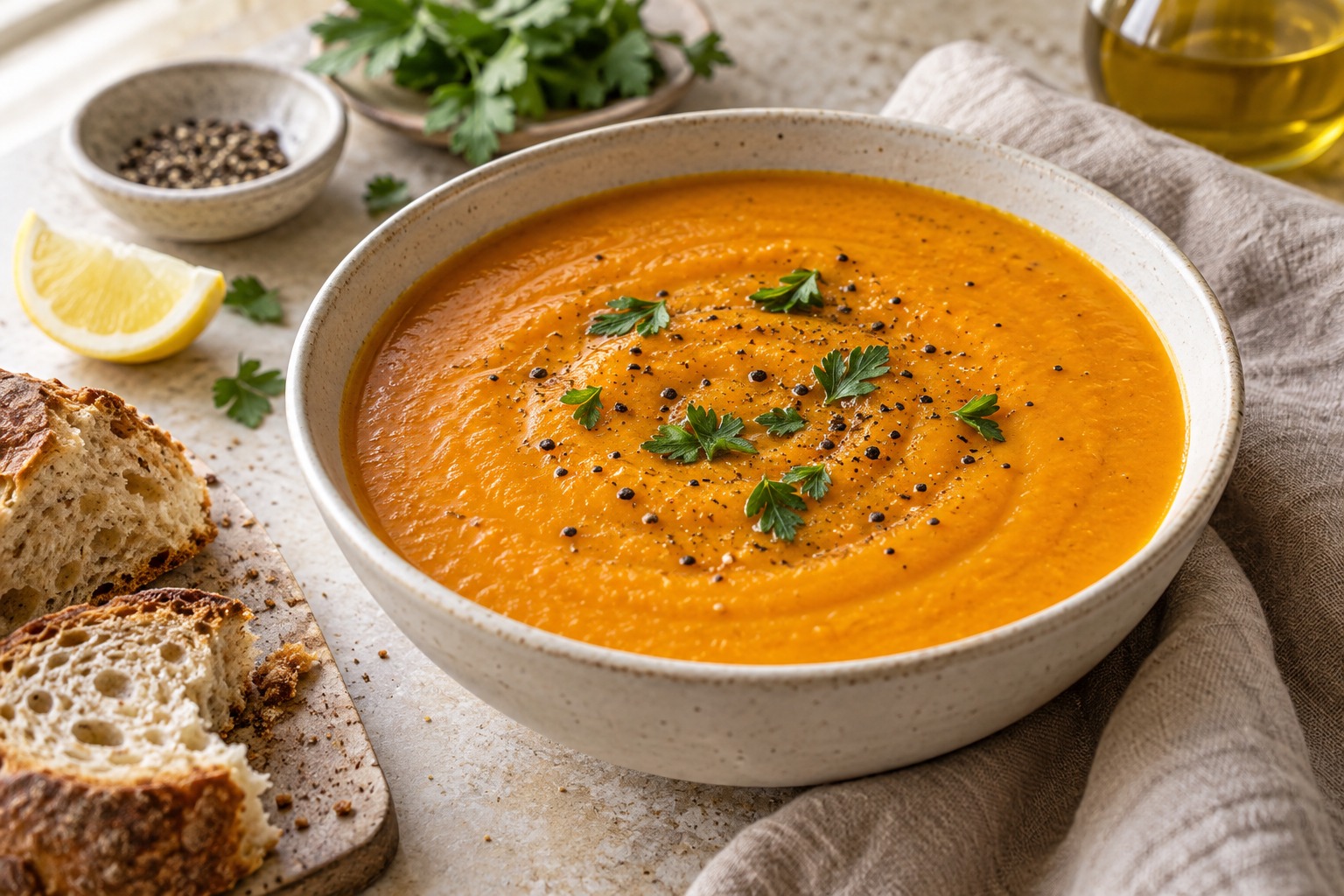
This roasted carrot and red lentil soup combines caramelised carrots, soft red lentils, cumin and a squeeze of lemon in a thick, comforting bowl. Roasting brings out the carrots’ sweetness, while the lentils give the soup body without cream, flour or potatoes. It is a practical lunch to make ahead and an easy starter when you want something warm before dinner.
The recipe makes four generous portions and uses ordinary supermarket ingredients. You roast the carrots while the lentils simmer, so the two parts cook at the same time. Once everything is tender, blend, adjust the consistency and finish with lemon. The result should be smooth enough to sip from a spoon but substantial enough to serve with bread.
Jump to the recipe · Step-by-step method · Variations · Calories and nutrition · Storage · FAQs
Roasted carrot and red lentil soup recipe
Serves: 4 · Preparation: 15 minutes · Cooking: approximately 35 minutes · Total: approximately 50 minutes. Roasting and hob cooking overlap. Allow a little longer if your carrot pieces are large or your oven heats slowly.
Equipment: a large roasting tray, a large saucepan or casserole with at least 3 litres capacity, a sieve, a chopping board, a sharp knife and a stick blender suitable for hot soup.
Ingredients
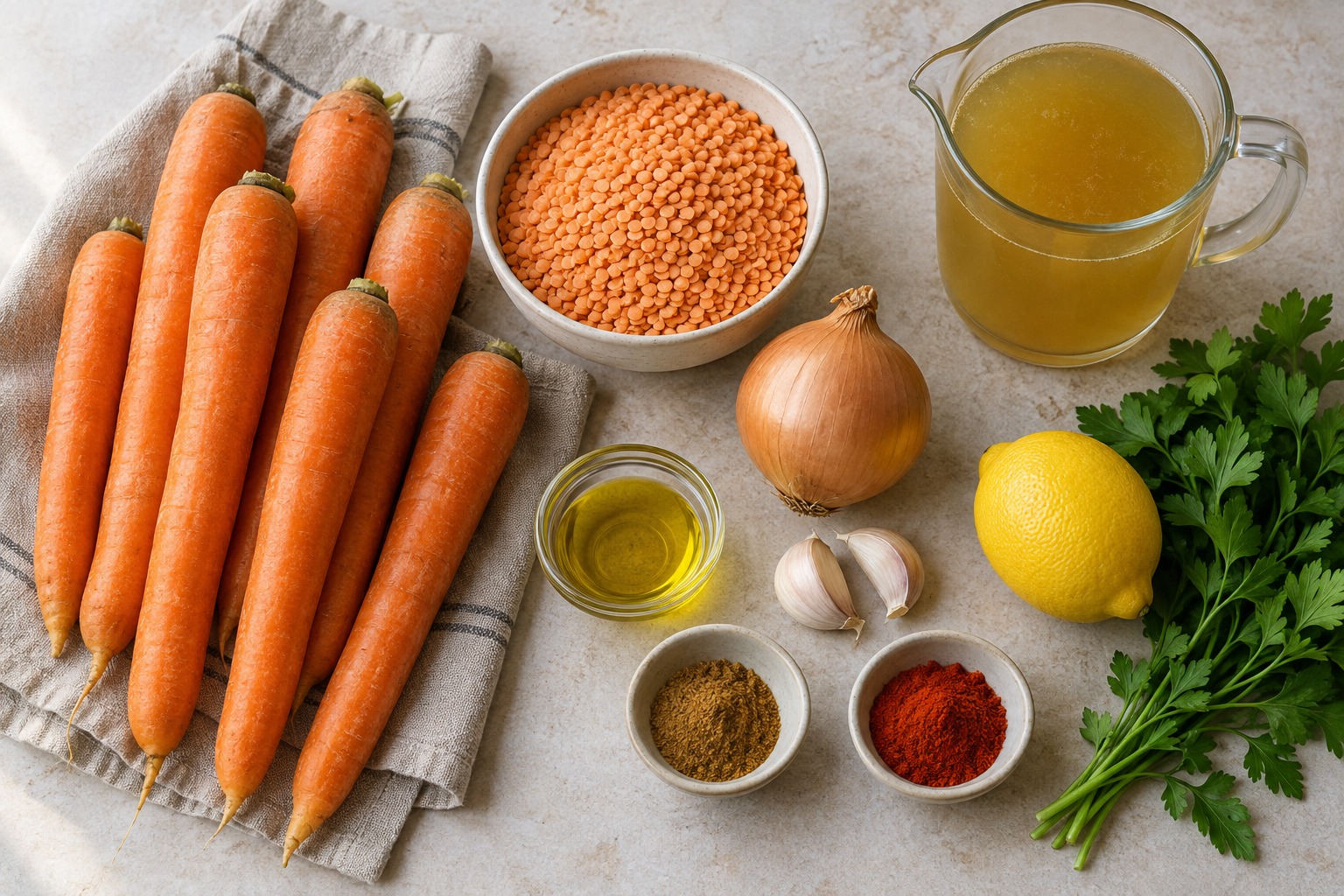
- 600 g carrots, trimmed and scrubbed or peeled, weighed after trimming
- 150 g dry split red lentils, rinsed and drained
- 1 medium onion, about 150 g, finely chopped
- 2 garlic cloves, about 6 g, finely chopped
- 30 ml olive oil, divided
- 1 teaspoon ground cumin
- ½ teaspoon smoked paprika
- 1 litre prepared vegetable stock, preferably reduced-salt, plus water as needed
- 15 ml lemon juice, plus a little extra to taste
- Black pepper and salt, to taste
- Optional: chopped parsley, plain unsweetened yoghurt or plant-based yoghurt, and bread to serve
Quick instructions
- Heat the oven to 220°C conventional / 200°C fan. Cut the carrots into approximately 2 cm pieces. Toss with 15 ml oil and spread over the tray. Roast for 25–30 minutes, turning halfway, until tender with golden edges.
- Meanwhile, heat the remaining 15 ml oil in the saucepan. Cook the onion over a medium-low heat for 6–8 minutes until softened. Add the garlic, cumin and paprika and stir for 30 seconds.
- Add the rinsed lentils and stock. Bring to a boil, then reduce to a gentle simmer. Partly cover and cook for 15–20 minutes, stirring occasionally, until the lentils are soft and beginning to collapse.
- Add the tender roasted carrots and any golden tray juices. Simmer together for about 5 minutes. Add a splash of water if the mixture becomes too thick.
- Take the pan off the heat. Blend carefully with a suitable stick blender until smooth. Add hot water a little at a time to reach your preferred consistency.
- Stir in the lemon juice. Taste, then add pepper and salt only as needed. Rewarm gently if necessary and divide into four equal portions. Add optional toppings at the table.
Why roast the carrots?
Carrots cooked in stock make a pleasant soup, but roasting creates a different flavour. Some moisture evaporates in the oven and the exposed surfaces turn golden. Those browned edges add depth to the finished bowl, especially when balanced by the earthy cumin and fresh lemon. You do not need to add sugar or honey.
The useful target is tenderness with some colour, not a dark crust. A knife should slide through the centre of a carrot piece without resistance. If the edges look ready but the centres remain firm, lower the heat slightly and continue cooking. Blending cannot reliably disguise undercooked vegetables; they can leave the soup gritty even when it looks smooth.
Spread the pieces over a roomy tray. When piled together, carrots release steam into the gaps and brown less evenly. A small batch on a large tray usually gives a better result than squeezing a double batch onto one shelf. If you are cooking for eight, use two trays and rotate them if your oven has hot spots.
Choosing the ingredients
Carrots: ordinary orange ones work well
You do not need expensive young carrots. Standard orange carrots provide the familiar colour and enough sweetness for this recipe. Scrub them thoroughly and remove damaged areas, or peel them if the skins are tough. Weigh the prepared carrots so the ratio of vegetables to lentils stays consistent.
Very thick carrots are easier to roast evenly if you split the broad ends lengthways before chopping. Aim for similar thickness rather than perfectly identical shapes. Rainbow carrots can be used, but purple ones will change the colour of the soup and may produce a less bright result.
Use split red lentils
Dry split red lentils soften and break down quickly. Their texture is the reason this soup becomes creamy without dairy. They are different from whole green or brown lentils, which tend to hold their shape and need different cooking times. For the method and timing given here, use the red split variety.
Rinse them in a fine sieve under cold running water and check for any small debris. There is no need to soak them for this recipe. If your packet gives a longer minimum cooking time, follow it and judge doneness by texture: the lentils should crush easily, with no firm centre.
Stock and seasoning
Stock is a large part of the finished soup, so use one whose flavour you enjoy. Make it up according to the packet instructions rather than adding extra cubes for strength. Reduced-salt stock gives you more control when seasoning at the end. Some stocks contain celery, wheat or other allergens, so check the label if that matters for your household.
Cumin brings a warm, earthy note. Smoked paprika adds a gentle savoury edge without making the soup hot, provided you choose a mild version. Lemon lifts the final flavour after blending. Add it at the end so you can judge the balance against the sweetness of the carrots and the saltiness of your stock.
How to make roasted carrot and red lentil soup
1. Prepare and roast the carrots
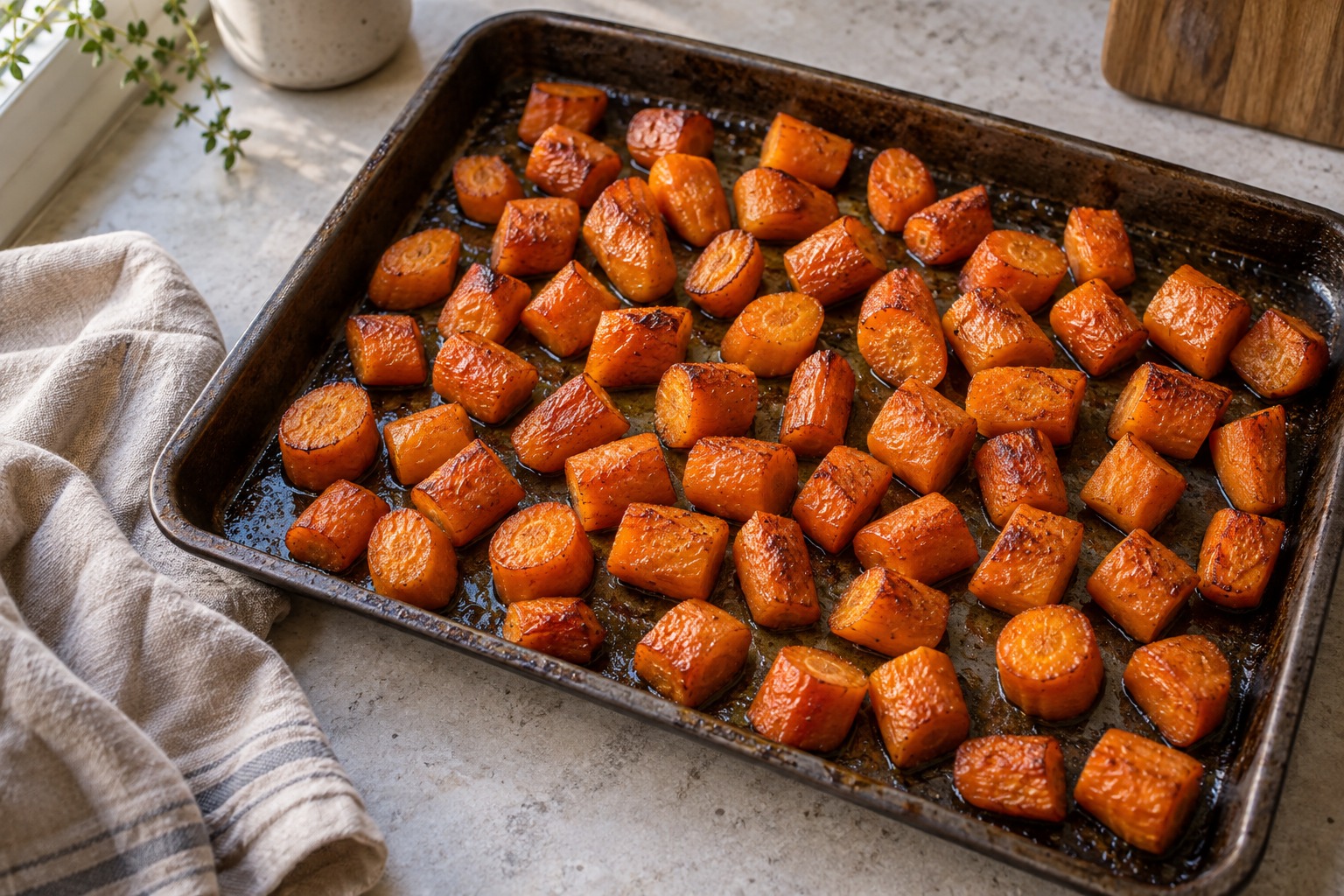
Preheat the oven before putting the tray in. Cut the prepared carrots into roughly 2 cm pieces and toss them with half the oil. Use your hands or a spoon to coat the surfaces lightly, then spread everything into a single layer. The pieces can be close together, but avoid a deep pile.
Roast for 25–30 minutes, turning once around halfway through. Start checking a few minutes early if your pieces are small. The photograph shows the golden edges you are looking for. A little uneven browning is normal; a whole tray of blackened corners is not the aim.
If the carrots finish before the lentils, leave the tray somewhere safe while the pan catches up. If the lentils finish first, turn their heat down or briefly take the saucepan off the hob. There is no benefit in boiling the lentils dry while waiting for the oven.
2. Soften the onion and wake up the spices
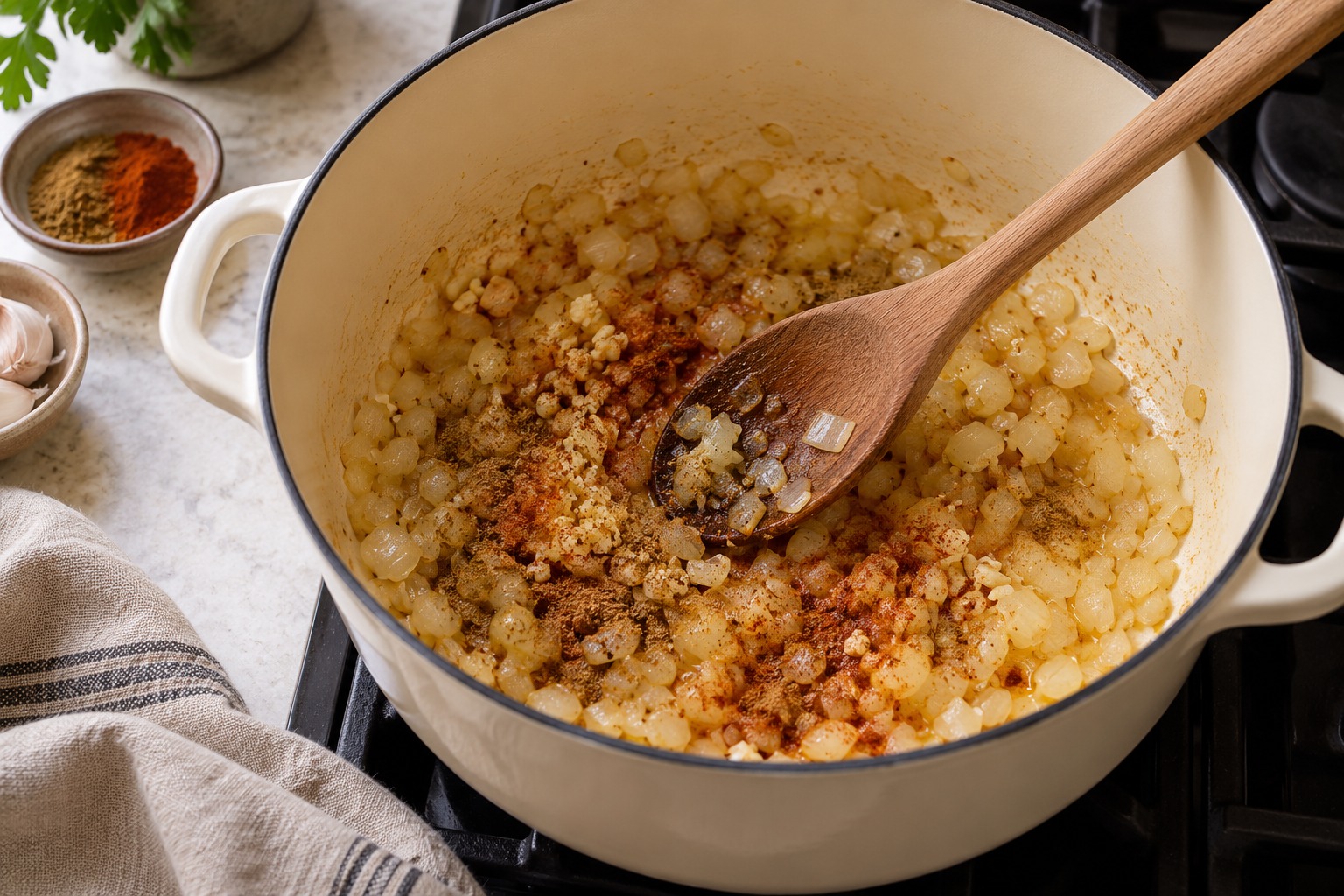
Heat the remaining oil in your saucepan over a medium-low heat. Add the chopped onion and cook for 6–8 minutes, stirring regularly. It should become soft and translucent, with at most a little gold around the edges. If it sticks, lower the heat and add a spoonful of water.
Add the garlic, cumin and smoked paprika. Stir for about 30 seconds, just until fragrant. Ground spices and finely chopped garlic can burn quickly in a dry pan, so have the stock ready before starting this step. If the mixture catches slightly, the stock will loosen ordinary golden residue; severely burnt garlic is better replaced.
3. Simmer the lentils
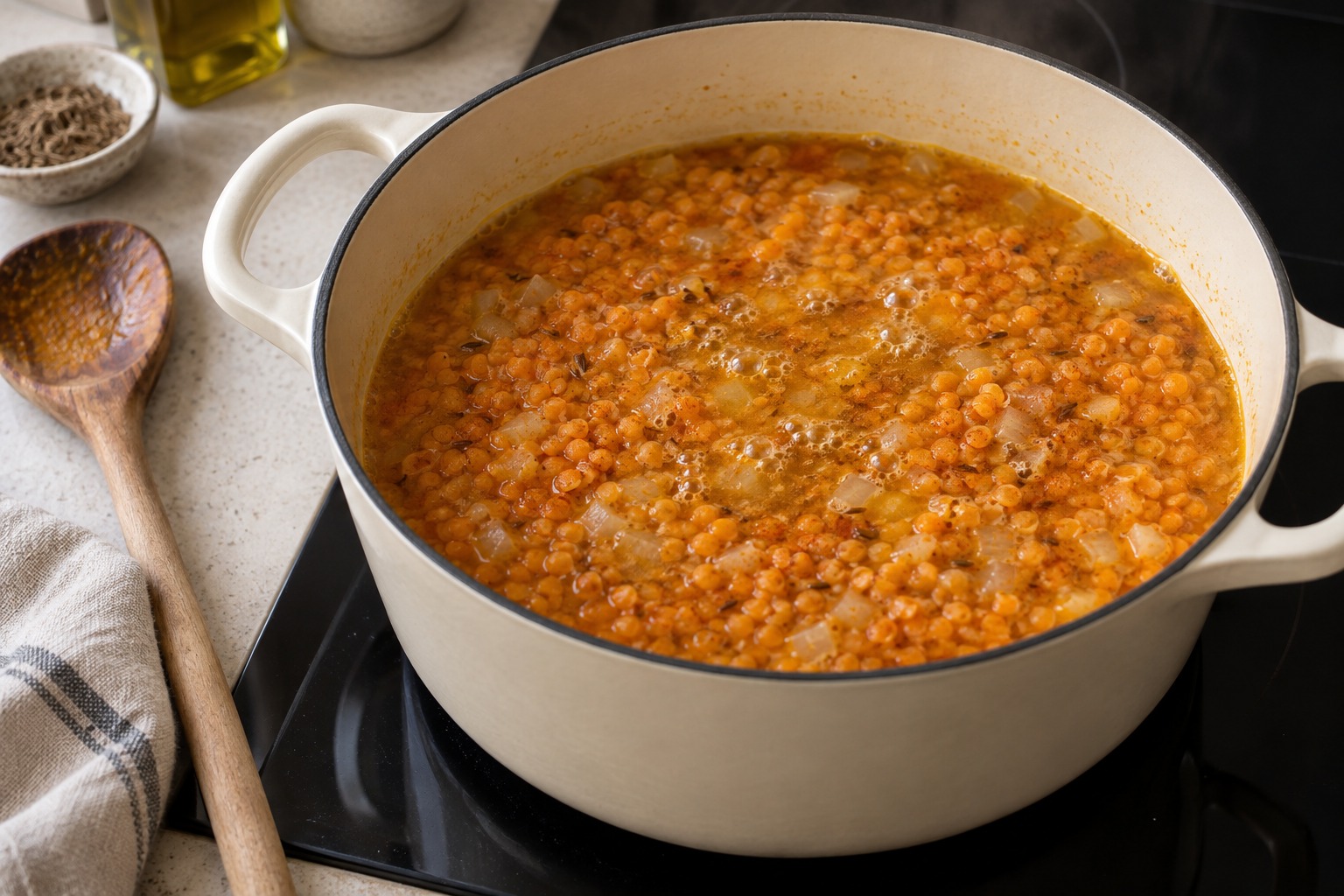
Tip in the rinsed lentils, pour over the stock and stir well, including around the base of the pan. Bring the liquid to a boil, then lower the heat to a gentle simmer. Partly cover the pan so steam can escape while the lentils cook.
Cook for 15–20 minutes, stirring occasionally. Red lentils settle and can stick as they thicken, especially in a thin-bottomed saucepan. If the mixture looks dry before they are tender, add a little water. Their colour will become less vivid as they soften; this is expected and is not a sign that anything has gone wrong.
4. Combine the two parts
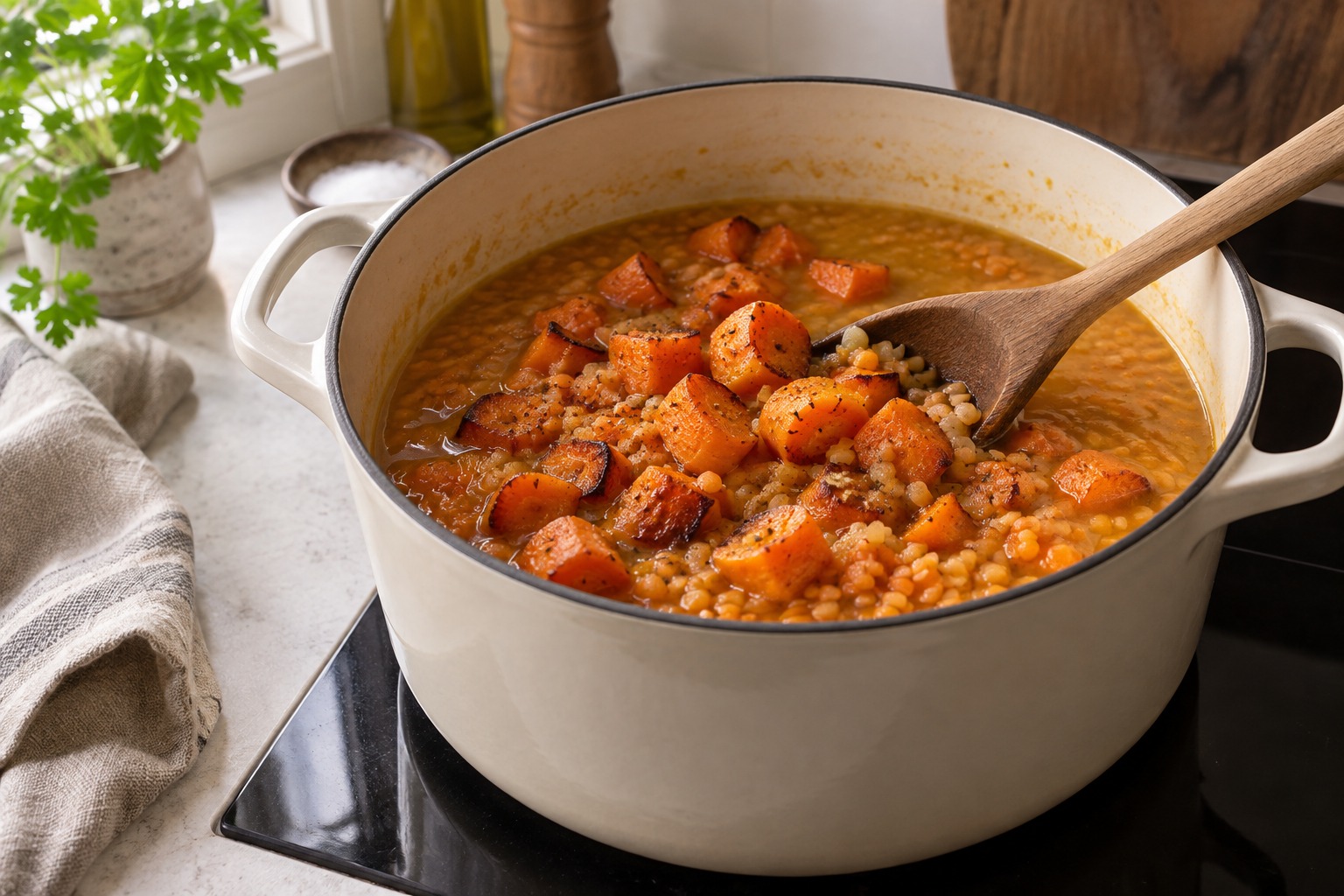
Add the roasted carrots to the softened lentils. Scrape in any golden juices with a heat-safe spatula, leaving behind any genuinely blackened scraps. Stir and simmer together for about 5 minutes so the flavours combine and the carrots are thoroughly soft.
At this stage the pan should contain a loose, spoonable mixture rather than a dry mash. Add a splash of water if required. Test one of the largest carrot pieces before blending; if it resists the edge of a spoon, continue simmering until it yields easily.
5. Blend and adjust the consistency
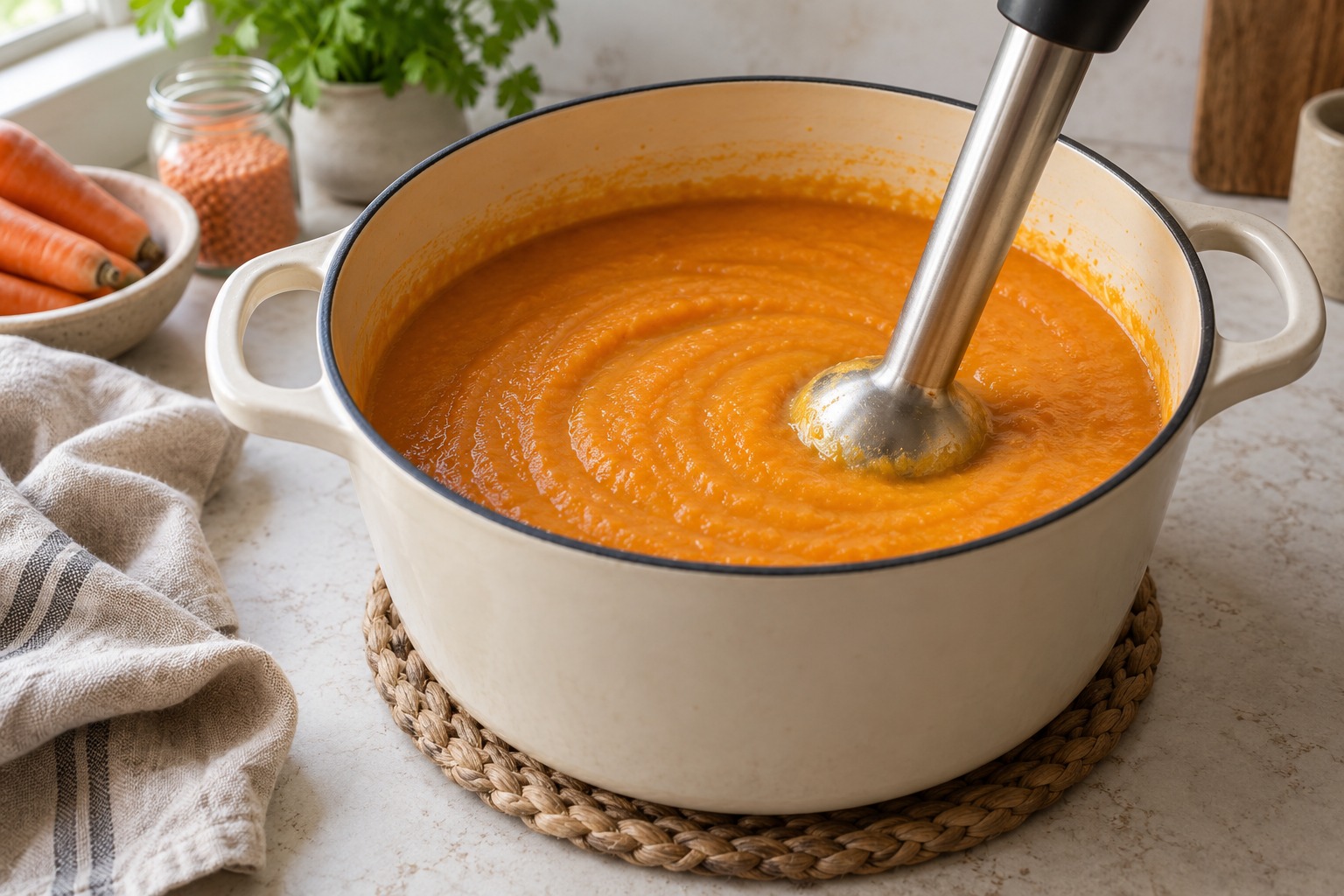
Move the pan off the heat onto a stable, heatproof surface. Use a stick blender that is suitable for hot food and follow its instructions. Keep the blade guard beneath the soup surface while it is running, and stop the motor before lifting it out. This helps prevent hot splashes.
Work around the pan until no obvious pieces remain. If the blender struggles to circulate the mixture, add a little hot water and continue. A thick soup still needs enough liquid to move around the blade. Do not press hard against the pan or run a blender beyond its recommended operating time.
A jug blender is an alternative only if its manufacturer allows hot liquids. Follow its filling and venting instructions, process small batches and never put hot soup into a sealed smoothie cup. If your blender is not rated for hot food, cool the soup appropriately before blending, then reheat the portion you intend to eat.
6. Finish and serve
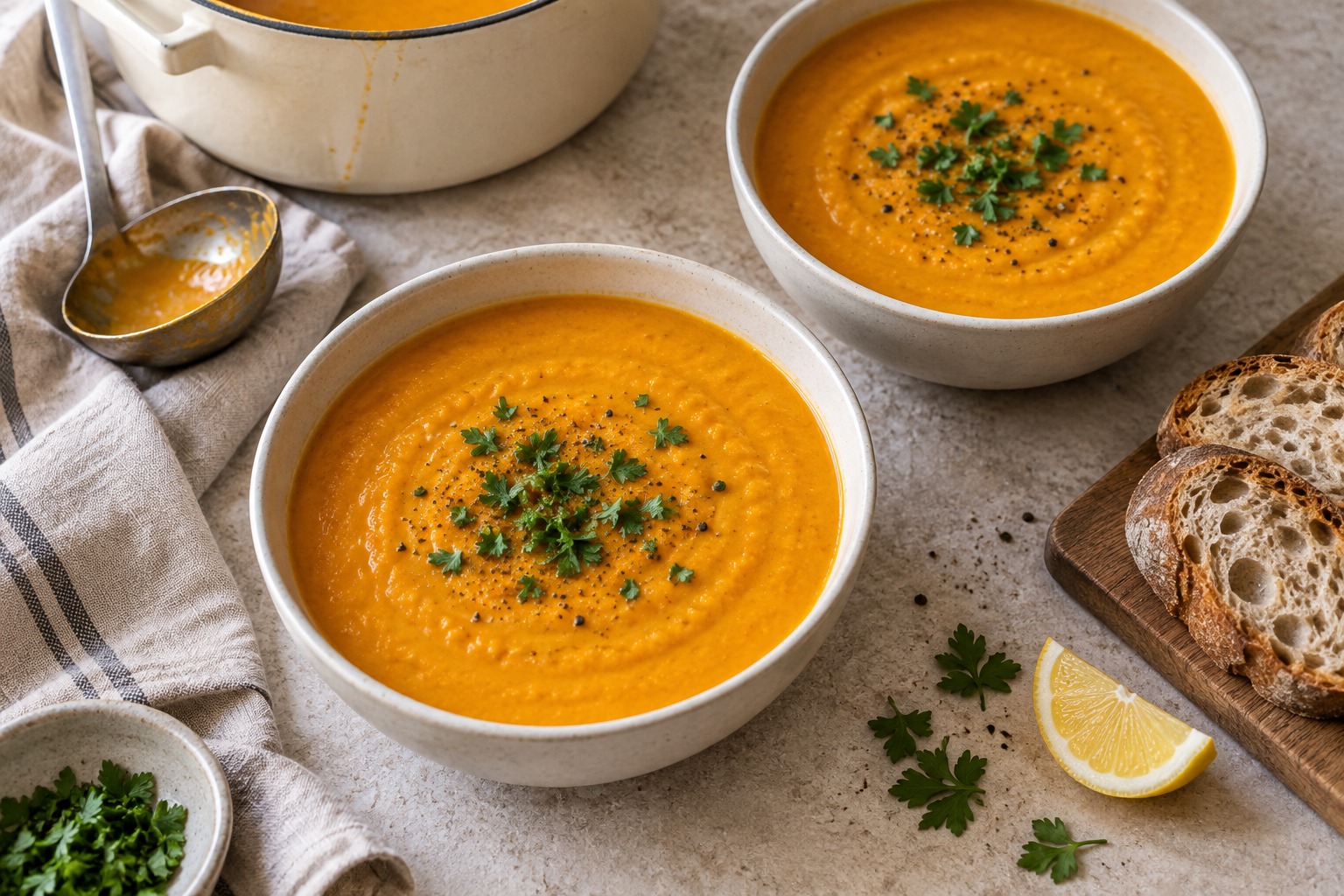
Stir in 15 ml lemon juice, then taste a small spoonful once it has cooled enough to assess comfortably. Add pepper and, if needed, a little salt. If the flavour still seems heavy or overly sweet, another small squeeze of lemon may be more useful than more salt.
Divide the soup into four equal portions. Parsley adds freshness, while a spoonful of plain yoghurt gives a tangy contrast if you want it. The base recipe is vegan when made with suitable vegetable stock; use an unsweetened plant-based yoghurt or leave the topping off to keep it that way.
Variations and substitutions
Carrot, lentil and ginger soup
Add 10 g peeled, finely grated fresh ginger with the garlic. Keep the cumin at one teaspoon, or reduce it to half a teaspoon if you want the ginger to lead. Fresh ginger brings warmth without the same effect as chilli. Begin with the smaller amount before adding more to a future batch.
A gently spicy version
Add a quarter teaspoon of chilli flakes with the ground spices. The heat of chilli varies considerably, so that is a starting point rather than a promise of mildness. For people sharing a pan with different preferences, keep the soup mild and offer chilli flakes or a little chilli oil separately.
Coconut carrot and lentil soup
Replace 200 ml of the stock with 200 ml unsweetened coconut milk, adding the coconut milk when the carrots go into the pan. Keep the remaining 800 ml stock for the lentil stage and add water if needed. This changes both the flavour and nutrition; full-fat coconut milk makes a richer soup with more calories and saturated fat.
Part carrot, part sweet potato
Replace up to 200 g of the prepared carrots with the same weight of peeled sweet potato. Cut it into similar pieces and roast alongside the carrots, checking both for tenderness. Sweet potato can make the finished soup thicker, so you may need more water after blending. Keep the lentil quantity unchanged for the first attempt.
No oven available
For a hob-only version, finely dice the carrots and add them after the onion has softened. Stir for a few minutes, then add the spices, lentils and stock. Simmer until both carrots and lentils are fully tender before blending, allowing extra time as needed. This produces a lighter vegetable flavour because the carrots have not browned.
If you prefer a different pulse altogether, our creamy butter bean soup is a useful alternative with tomatoes and spinach. It is a separate recipe designed around cooked beans, so you do not need to guess a direct swap for the dry lentils here.
Troubleshooting the texture and flavour
The soup is too thick
Add hot water in 50 ml increments, stirring or blending briefly between additions. Lentils continue to thicken as the soup stands, so a pan that was perfect at lunchtime may need loosening when reheated. Water is often better than extra stock at this point because it avoids making an already seasoned soup too salty.
The soup is too thin
Simmer it uncovered over a low heat, stirring often, until some liquid evaporates. A wide pan reduces faster than a narrow one. Do not add a handful of uncooked lentils to the finished soup as a quick fix: they still require their full cooking time and can catch on the bottom.
The texture is grainy
Check whether the vegetables and lentils were completely tender. If either still feels firm, return the soup to a gentle simmer with a little water, cook longer and blend again. A modestly powered blender may leave a more rustic texture than a high-powered one even when the ingredients are cooked properly.
The flavour seems flat
First check temperature and consistency. Very thick soup can feel heavy, while a cold tasting spoonful may seem less aromatic. Adjust with a little water if required, then try lemon, pepper and finally salt in small amounts. Adding several seasonings at once makes it harder to identify what helped.
The soup tastes bitter
Burnt carrot edges, scorched garlic or burnt ground spices can introduce bitterness. Lemon will not remove a strong burnt flavour. Prevent the problem by watching the short spice step and leaving blackened scraps on the roasting tray. If only the base of the pan has caught, avoid scraping it into the rest of the soup.
What to serve with carrot and lentil soup
For an uncomplicated lunch, serve the soup with toast or warm bread. Cheesy garlic bread makes a richer accompaniment, although it changes the meal’s calories and contains dairy. Plain toasted bread is a simpler choice if you want the soup’s flavour to stay central.
For a bigger dinner, offer a smaller bowl alongside a crispy jacket potato. Alternatively, balance the warmth with a crunchy salad. Keep dressing separate until serving so the vegetables remain crisp while the soup is reheated.
If you are planning several lunches rather than one large meal, alternate this soup with our crispy air fryer tofu bowls. They offer a different texture and make it easier to use soup as one option in the week rather than eating the same bowl every day.
Calories and nutrition per serving
One serving is one quarter of the base recipe. Estimated nutrition is approximately 280 kcal, 11 g protein, 34 g carbohydrate, 8 g fat and 9 g fibre. These rounded estimates exclude optional yoghurt, parsley garnish, bread and any additional finishing oil. Brands, produce and the amount of soup left in the pan affect the final result.
The estimate uses 150 g dry red lentils, 600 g prepared carrots, 150 g onion, 30 ml olive oil, garlic, spices, lemon and prepared vegetable stock. Carbohydrate is presented separately from fibre in the style of UK food labelling. Stock is especially variable, so use your own ingredient labels if you need a more precise calculation.
Adding water changes the volume and thickness but does not change the calories in one quarter of the original batch. Dividing the same pan into six starter portions instead of four gives approximately 187 kcal per portion before toppings. Portion by weight if you want the bowls to be as even as possible.
Lentils contribute protein and fibre, but this recipe is not intended as a keto meal. Carrots and lentils both contribute carbohydrates.
Storing, freezing and reheating
Cool leftover soup promptly in smaller, shallow containers rather than leaving a large covered pan on the hob. Refrigerate within one to two hours and keep the fridge at 5°C or below. Eat refrigerated leftovers within 48 hours, or freeze portions you will not use in that time. This follows the Food Standards Agency’s chilling guidance.
Freeze the cooled soup in suitable containers with some space for expansion. Label each portion with the recipe name and date; using it within three months is a practical quality target. Freeze the plain soup without yoghurt or bread, then add those fresh when serving.
Defrost in the fridge and use within 24 hours of fully defrosting. Reheat only the quantity you intend to eat, stirring until piping hot throughout. A thick soup can have a hot surface and a cooler centre, so stir well rather than relying only on a few bubbles around the edge. Reheat leftovers only once.
On the hob, use a low to medium heat with a splash of water. In a microwave, use a suitable covered container with a vent, stir partway through and follow the appliance guidance. Check again after the standing time. Keep any yoghurt topping separate until the soup is hot and ready to serve.
Frequently asked questions
Can I use cooked or tinned lentils?
They are not a direct substitution for the dry lentils in this method. Cooked lentils contain more water, need less cooking and may stay firmer. For the intended creamy texture and reliable liquid ratio, use dry split red lentils. A recipe developed for tinned pulses is easier than trying to preserve all these quantities unchanged.
Do I have to peel the carrots?
No, provided you scrub them well and remove any damaged or tough areas. Peeling can give a slightly smoother finish when skins are thick. The important measurement is 600 g after trimming and any peeling, rather than the weight of an unprepared bag.
Can I make it without a blender?
Yes, but expect a rustic soup. Chop the carrots smaller before roasting and mash the fully cooked mixture thoroughly with a potato masher. The lentils will help thicken it, but pieces of carrot and onion will remain. Add liquid gradually so it still feels like soup rather than vegetable mash.
Is the soup gluten-free?
The main ingredients do not require wheat, but the answer depends on your stock, spice products and serving choices. Use ingredients labelled suitable for your needs and check for cross-contamination information where relevant. Ordinary bread served alongside is a separate source of gluten.
Can I double the recipe?
Double the ingredients and use a larger saucepan with room for stirring and blending. Roast the carrots on two trays rather than crowding one. Cooking time will not simply double, but bringing a larger pan to a simmer takes longer. Check tenderness and allow extra cooling space for the leftovers.
Why did it thicken overnight?
That is normal for a lentil-based soup. Stir in a little water while reheating, then taste again after it is hot. Add lemon or seasoning only after correcting the consistency, because thinning changes how concentrated the flavours seem.
Serve this roasted carrot and red lentil soup with your preferred bread, keep the toppings simple and freeze any extra portions promptly. The most useful checkpoints are tender carrots, fully softened lentils and a final taste after adding lemon.